The cultural ties between Armenia and Italy are long and layered. Perhaps Armenians are southern Italians without the coastline; perhaps Italians are Armenians who perfected the art of rebranding early on. What is certain is that both cultures organise life around the table with animated conversation, generous portions and the familiar question, «Have you eaten yet?», which functions less as small talk and more as an expression of care. The most enduring connections, it seems, are forged not in boardrooms but in kitchens.
A homecoming, served Italian
Mina is a natural starting point for any conversation about Yerevan’s new Italian dining scene. Here, place, timing and authorship align. Aram Mnatsakanov, an influential restaurateur who helped shape a generation of Italian-led fine dining in Moscow and St Petersburg has finally opened a restaurant in his homeland.
For Mina, he chose a house on Saryan Street and painted it a vivid orange, the colour of a Sicilian orange at dusk. The building is now unmistakable, radiating a sense of warmth and confidence that mirrors the restaurant itself. Inside, the mood is pared back and precise: no overt displays of luxury, just honest materials, natural light and a clear focus on what matters most, food and people.
The kitchen operates at the intersection of two worlds. Slow-cooked apricots with soft cheese sit comfortably alongside characterful fattoush, risotto and a pizza widely considered among the best in the city. Much of this unfolds in what is arguably Yerevan’s most appealing courtyard, open to the sky and just cool enough in the evenings to encourage guests to linger.
Mina is where Western Armenian and Italian cuisines meet as they should: with respect for ingredients, confidence in simplicity and a generosity that turns any meal into an occasion. The setting adds further depthб the restaurant occupies the former home and courtyard of noted architect Varazdat Harutyunyan. Care has been taken to preserve the spirit of the house and restore its original details, a gesture that feels both considered and sincere.
Italian classic on Northern Avenue
Italian gastronomy has firmly taken root in Yerevan from chef-led projects on Saryan Street to the arrival of major restaurant groups. Lucky Group, a well-established force on Moscow’s dining scene, has opened La Piazza in the very centre of the Armenian capital, on Northern Avenue. The name was deliberately retained: the address has long been familiar to local audiences, making the decision both practical and respectful of the site’s history. The concept is that of a Roman piazza, carefully translated into Yerevan’s urban context.
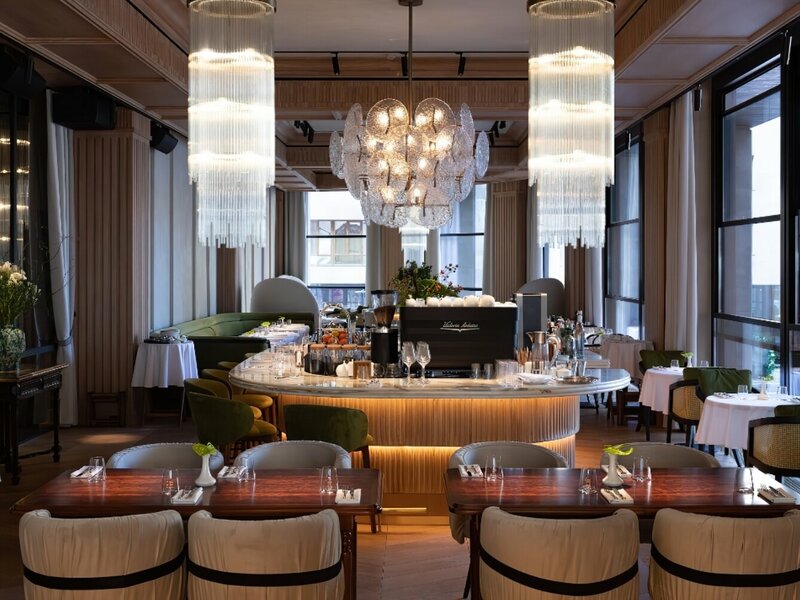
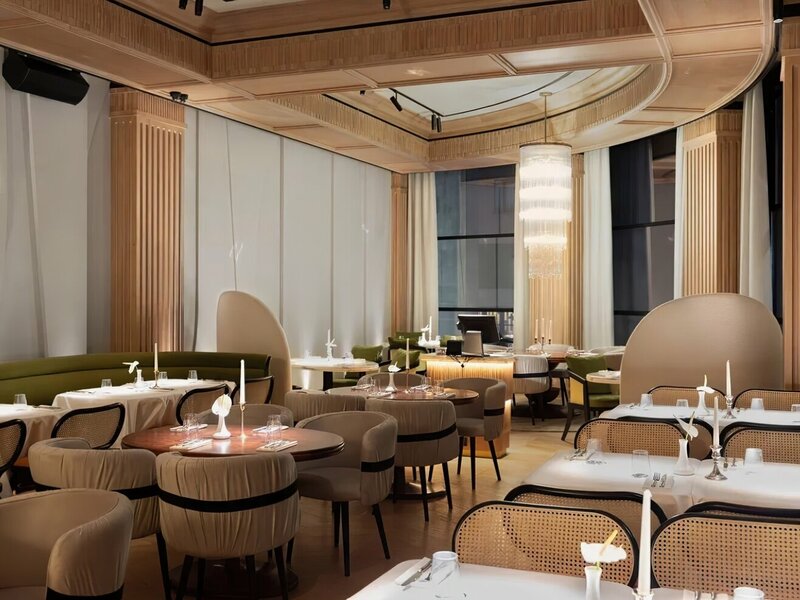
Outside, a generous terrace occupies much of the avenue. Inside, the interior is measured and classically inclined: well-chosen materials, softened lighting and an absence of visual noise. Panoramic windows allow guests to observe the life of the street while remaining in a space that feels calm and comfortably insulated. The kitchen delivers confident, recognisable Italian pasta prepared by the book, a signature cheesecake that has become something of a ritual order, and neatly executed starters, without any urge to reinvent the form.
The restaurant is consistently full, particularly in the evenings, a reliable mark of quality in Yerevan in 2025. La Piazza’s strength lies in delivering exactly what guests expect, but at a level that exceeds those expectations.
All roads lead to Loona Yerevan
Yerevan is fast becoming a city one might fly to for an Italian food tour and, to be fair, nobody seems to mind. Given how effortlessly pasta, cheese and tomatoes take root here, along with the shared belief that «one more glass is always possible, ” this feels less like a culinary trend and more like a form of cultural synchronisation.
By the end of 2025, a new voice joined this chorus: Loona, a project by Anton Pinsky, Vitaly Istomin and Artem Losev. The kitchen is contemporary Italian in spirit crudo, house-made pasta, pizza (including a dough-free version, yes, built on almond and cauliflower), and truffle added to almost anything on request.
Loona is currently overflowing so much so that stumbling in by chance is often easier than securing a reservation. The interior is calm and restrained: no design acrobatics, no loud colours. There is something quietly symbolic about its location on Isaakyan Street, not far from the Cascade. On one side, a museum of contemporary art; on the other, a plate of pasta with cheese that, for a brief moment, makes you forget you are still in Yerevan.
A photogenic Italian corner of Yerevan
There are places that, over time, become visual markers of a city. De Angelo, set on the corner of Pushkin Street and Yeznik Koghbatsi, is no longer just a restaurant but a recognised point of reference for those keen to signal that they have been to Yerevan.
Its façade, with a distinctive sign that changes with the seasons and festive calendar, and the row of tables lining the wall, has become part of the city’s visual code, a familiar backdrop for photographs across social media. The venue describes itself as a «modern Italian bistro with a Parisian and New York atmosphere, ” and the positioning makes sense: the outdoor seating recalls a Paris café, while inside, at the bar, it is easy to imagine Manhattan.
The kitchen is reassuring and classically Italian in its leanings: pasta, pizza, straightforward starters and crowd-pleasing desserts. There is no attempt to experiment or surprise. The emphasis is on consistency and universality, and it works.