A gastronomic atlas of Armenia on a single menu
Any list of places worth discovering Armenian cuisine should logically begin with Chinar, located on Moskovyan Street, just a short walk from Saryan. One of Yerevan’s longest-standing restaurants, Chinar remains a rare example of how to work with local cuisine without simplifying it or slipping into folkloric clichés.
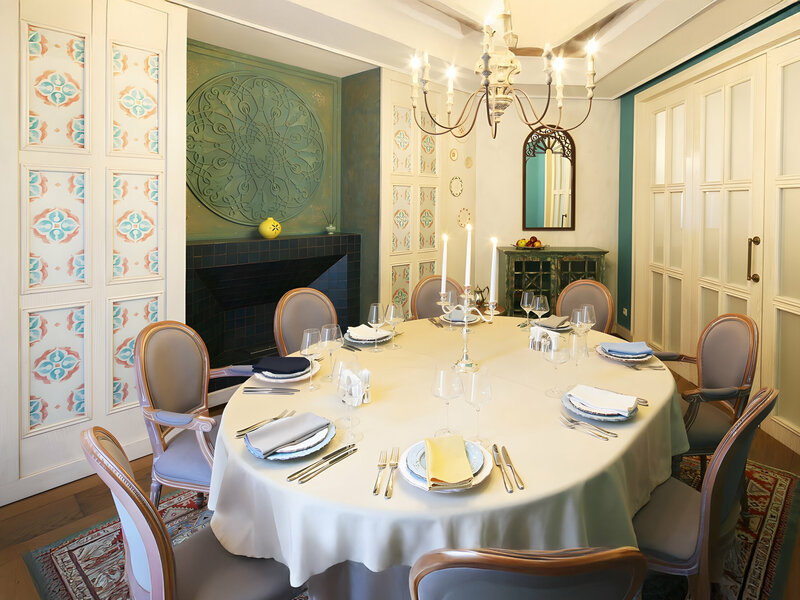
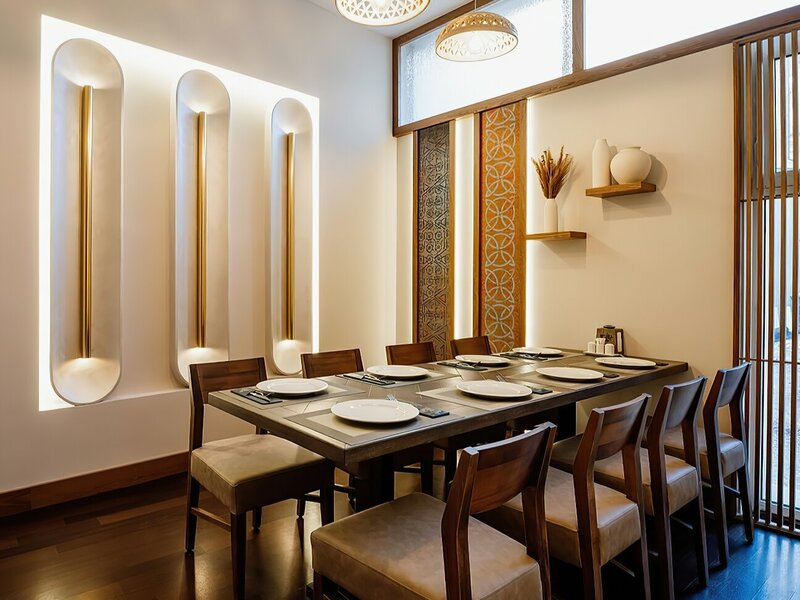
The interior is restrained yet warm. Instead of predictable «ethnic» décor, the space relies on carefully assembled visual references, composed with balance and calm. The atmosphere is unhurried; the details feel considered, but never showy.
At Chinar, the menu is the main event. It offers an almost complete panorama of regional Armenian cooking from familiar gastronomic markers to dishes with less obvious backstories. Among them are tatar-boraki (jokingly referred to here as Armenian pasta, served with a matsun-based sauce); spas, the classic tan soup with grains, presented in its traditional form and accompanied by ishli-kufta; arishta, Armenian noodles; tabbouleh with basturma; and the essential selection of herbs and cheeses without which an Armenian table feels unfinished.
Portions are generous and unapologetically traditional, designed for tables where guests insist on feeding one another. Lavash is served constantly, warm and replenished without question. The wine list is extensive, yet thoughtfully integrated into the overall culinary logic.
Guardians of harissa on Abovyan Street
A place that’s almost too easy to miss, Dalan Art Gallery & Restaurant is tucked away in the courtyard of a residential building on Abovyan Street, one of Yerevan’s oldest thoroughfares. The façade offers little guidance: a modest souvenir shop filled with Armenian symbols, behind which a quiet courtyard opens up. Few suspect that this is where you’ll find both an art gallery and a restaurant serving some of the city’s best harissa.
The Dalan gallery itself is an intimate space, showcasing paintings and art objects by local artists. From time to time, it hosts exhibitions that are genuinely worth seeking out.
Abovyan 12, the restaurant, is hidden even deeper within the courtyard. Wooden furniture, brick walls and generous greenery create a sense of privacy between tables, lending the space a calm, almost domestic rhythm. The menu is compact but meaningful, built around its centrepiece: harissa, a dense, slow-cooked dish of wheat and meat, prepared over many hours, as it should be.
If you’re looking to experience Yerevan’s quieter side, not ceremonial, but lived-in and everyday this is the archway to walk through.
A domestic cult of food, without unnecessary words
It’s impossible to talk about Armenian hospitality without mentioning ‘Artashi Mot’, a restaurant that, for more than two decades, has remained one of the clearest strongholds of classic home-style cooking. There is no fashionable fusion here, no fermentation philosophy, no chefs with résumés built in Copenhagen. What you’ll find instead is exactly what comes to mind first: shashlik and lavash.
The name Artashi Mot («At Artash’s place») is no coincidence. In Armenian culture, the host’s name is both an invitation and a guarantee. Artash is a collective figure: an uncle, a neighbour, a family friend, someone whose table is always set. And that is precisely how the restaurant works. It feels like being in someone’s home, where the food is served with such generosity that refusing is impolite, and leaving always feels premature.
Khash, lilac and the Sunday house where the table is always set
Among the undisputed leaders of Armenian cuisine is the Yasaman restaurant group. There is one in the very heart of Yerevan, another on the shores of Lake Sevan where legendary crayfish appear at the table, along with kebabs made from the same and a third in the resort town of Tsaghkadzor. But let’s begin with the capital.
Yerevan’s Yasaman feels like a museum-grade reconstruction of an Armenian family table from the choice of crockery to the way the tables are arranged. Everything is designed to feel as though you’ve arrived for a Sunday lunch with relatives.
It’s always risky to use the word «best, ” but this may well be the khash by which others are judged. If you’re in Yerevan during khash season, Yasaman is not an option․․․it’s a necessity. Outside the winter rituals, the restaurant holds its ground just as confidently: from tolma to pastries, everything is rich, generous and unapologetically full-bodied.
Then there is a detail worth noticing. According to local lore, the name Yasaman which translates from Armenian as «lilac» was chosen in honour of the founder’s mother’s favourite flower. A small but telling gesture, pointing to a deeper structure within Armenian culture, where the female figure her taste, memory and habits often becomes the foundation of tradition. Like a lilac bush planted in a courtyard so that it blooms every spring, for everyone.
It’s no surprise that the restaurant is consistently busy, particularly in the evenings and at weekends, so reservations are strongly advised. Winter khash mornings also require a call ahead, a practice that, in itself, reflects good manners: taking care of the guest even before they sit down at the table.
Photos: restaurant websites and social media, Yandex Maps