It is hard to imagine Yerevan today without the breadth of Armenian cuisine—but it wasn’t always this way. Western Armenian cuisine, as a distinct presence in the capital, emerged only five to ten years ago, and not by chance. Why «Western Armenian»? Because this is the food of Armenians whose roots lie in historical Western Armenia. In the 2010s, Armenia saw an active return of compatriots from Lebanon, Syria and Jerusalem, people who carried with them histories of exile, memory and longing. Alongside these stories came recipes infused with Middle Eastern notes, family legends passed down through generations, and perhaps most importantly, a deeply ingrained culture of hospitality. Today, Western Armenian cuisine in Yerevan is not merely about food. It is about diaspora and return, about the delicate thread between a childhood home and a city where a new life is being built. It is about hummus from Beirut or Aleppo that suddenly feels closer than the dolma of one’s childhood. About how «Armenia, ” in taste, becomes broader than its map revealing its cultural richness through the language of the table.
Western Armenia, like home
This guide feels right to begin with something less obvious with a place known mostly to insiders and in no need of publicity. One of those rare addresses you share sparingly, almost possessively.
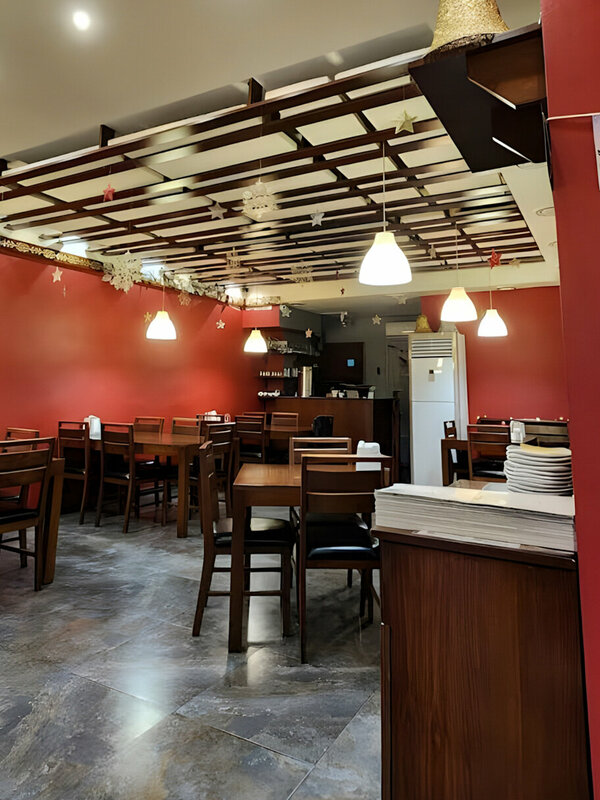
Anteb is not the most Instagrammable spot in the city. Its old-fashioned interior makes it clear that the owner has little interest in perfect angles, curated design or menus printed on recycled paper. What matters here is the food and there is little to fault. The cooking is comfortingly domestic, and the lahmajoun is among the best in Yerevan: paper-thin dough, spiced meat, a squeeze of lemon and it vanishes almost instantly.
There is a distinctly familial atmosphere at Anteb. It feels less like a restaurant and more like a visit to a favourite aunt’s house, with waiters serving dishes as if they were feeding a beloved relative.
When a restaurant is called «Mother, ” everything is already clear
To speak of Western Armenian cuisine without mentioning Mayrig is like forgetting to raise a toast at a wedding. The family restaurant was founded more than 20 years ago in Beirut by the Armenian Aline Kamakian, who set out to preserve the flavours inherited from her grandmothers. It became a legend there before arriving in Yerevan as a franchise.
This, however, is not merely another outpost, but a carefully transported sense of home complete with memories, culture and recipes. The interior wraps you in soft light; the bill arrives in vintage leather wallets, as if retrieved from a 1920s sideboard. The dining room is a cross-section of life: families with children and grandmothers sharing soup, quiet business meetings unfolding at nearby tables, and lively groups celebrating a child’s christening. In the evenings, live music fills the space, turning dinner into a small celebration, even on an ordinary Tuesday.
The kitchen is, unsurprisingly, generous, aromatic and Western Armenian in every sense. There is fattoush with pomegranate, and a proper tabbouleh meant to be eaten wrapped in a cabbage leaf. The final, theatrical note is an apricot dessert flambéed with cognac. One taste is enough to ensure you’ll return, again and again.
A garden in the heart of Yerevan
This is the kind of place where you step through a gate and, for a couple of hours, forget that you are in the middle of the capital. Rehan is tucked away in a courtyard on Isaakyan Street, just a short walk from the Cascade. Yes, that one, with all its tourist bustle. Turn off the main path, however, and the noise and urgency of the city are left behind the gates.
In warm weather, Rehan is especially enchanting: tree shadows fall across the stone paving, while the kitchen sends out plates of mante with yoghurt sauce. If you think mante are simply smaller, baked dumplings, think again. Mante are the pride of Western Armenian cuisine tiny boats of dough filled with spiced meat, baked until crisp, then finished with garlicky yoghurt and a touch of sumac. It is a flavour carried across different corners of the Armenian world, and at Rehan it feels particularly precise.
In fact, everything here is done properly: the range of kebbeh, the mutabbal, the Beirut-style hummus and a glass of tan to bring it all together.
Where flavour matters more than image
In the very heart of Yerevan, Zeituna is an unpretentious address, free of decorative excess or any urge to perform. Everything here revolves around a single, clear idea: to cook well. Created by Syrian Armenians, the restaurant treats food as a language of memory and hospitality, a way of carrying the taste of the wider Middle East, gently interwoven with Armenia. It is always busy, animated, yet warmly so.
A particular kind of magic unfolds just outside, in Misak Manushyan Square, arguably one of the city’s loudest and most alive public spaces. Hidden within the square is the restaurant’s terrace, where, over spiced baklava and hummus, people watch high-stakes matches, argue, commentate, embrace after victories and sigh after defeats. It is a form of street theatre that cannot be staged or bought only experienced.
Western Armenia’s idea of quiet luxury
Turn off Pushkin Street onto Arami and you find Baron a restaurant where everything rests on tone and taste. This is not luxury that announces itself, but a more intimate, restrained version, grounded in respect for tradition, for its name, and for every guest who walks in.
The name Baron refers to the Western Armenian pronunciation (with a hard «b») of paron (պարոն), meaning «sir» or «gentleman.» The word itself carries the atmosphere of old Western Armenia, of a time when respect was not a formality but a condition of daily life.
Inside, the emphasis is measured and deliberate: soft arches, warm light, tables shared by diplomats, cultural figures, and Armenian regulars from Marseille or Beirut, some in Yerevan for a season, others for much longer. And, of course, there is the reason people return: the flavour. The lula kebab, in particular, is among the best in the city.