Kuksi, the beloved cold noodle dish of the Koryo-saram, has become a fixture of summer in Uzbekistan — and one of Tashkent’s favourite ways to beat the heat. For our latest tasting, we set out to find the places serving it at its best. This edition also marks a milestone: the 10th instalment of Vkusomer. To make the occasion a little more special, and to bring another perspective to the table, we invited well-known food blogger Golodny Kim to taste alongside us.
Golodny Kim: «Every ingredient shapes the flavour of kuksi, but the noodles and the muri — the Korean term for the broth at its base — are what really define it. I like my muri distinctly sour, though across Tashkent, particularly outside the city, you’ll often find a much sweeter style of kuksi.»
Polyot
Almost everyone around Kadyshev Market seems to know Polyot, a neighbourhood café loved for its straightforward food and cosy summer terrace tucked away in the courtyard. The menu is firmly rooted in Koryo-saram classics, from fluffy steamed pigodi and spicy kimchi jjigae to juicy bulgogi.
The kuksi arrives in a deep metal bowl, and it is a generous serving. What sets it apart is the icy-cold muri: rich in flavour, lively with acidity and refreshingly free of sweetness. The handmade wheat noodles have a satisfying spring to them, stretching well while still holding their bite. The toppings are arranged in neat, colourful piles — tomatoes, cabbage salad, cucumber and meat — around a generous mound of finely sliced omelette.
There are two versions. The classic comes with boiled meat and spicy kochi-tirimi. The special kuksi is made with fried beef and served with hot fried chilli and kimchi.
Golodny Kim: «They use boiled meat here, but the noodles are anything but factory-made. Somewhere just outside Tashkent, a woman makes them by hand at home — wonderfully springy, properly stretchy noodles — and the restaurant buys them directly from her.»
Price: UZS 43,000 / 49,000 (0% service charge)
Chenson
Chenson has been part of Tashkent’s dining scene since 1999 and now has several branches across the city. The location near Kuylyuk is divided into three areas: a main dining room and private booths on the ground floor, karaoke rooms upstairs, and a separate banquet hall for larger celebrations. The menu stays close to Korean tradition, with an extensive selection of chae salads, hearty soups and grilled meat dishes, alongside a range of familiar European favourites.
Price: UZS 49,000 (15% service charge)
Golodny Kim: «Chenson is something of a Tashkent institution — it’s been around since 1999. You can tell just by looking at the bowl that the noodles are good. The muri, though, is very sweet; if anything, it feels like it could use a little more salt.»
Elephant
Chenson’s kuksi is relatively restrained in appearance, without the generous crown of toppings seen in some other versions. The freshly pressed noodles — often referred to simply as varyonka — are a real strength: springy, nicely textured and firm enough to hold their shape throughout. The sweet-and-sour muri is gentle and slightly muted, so it never overwhelms the rest of the bowl. The toppings themselves are kept fairly simple, though kadicha, braised cabbage and hot pepper arrive separately in small dishes. As elsewhere, there are two classic options: one with boiled meat, and a special version with fried beef.
Elephant is a family-run café with more than 30 years of history, now carried on by the founder’s son. Although it sits just off the road, the café itself is tucked behind simple gates in a courtyard, giving it the feel of a private home. The space is split between a small indoor dining room and a large covered courtyard, cooled by water misters in summer. The menu is broad, bringing together traditional Korean soups and salads, familiar European dishes and juicy Caucasian-style shashlik.
The detail that sets Elephant’s kuksi apart — and draws people from across Tashkent — is the ice. It is frozen from broth rather than water, so the soup stays cold without losing flavour as the ice melts. The muri is sweet and sour, with a noticeable but well-balanced sweetness. The noodles are pressed on site using a special machine, though they can be replaced with traditional soaked noodles on request.
The presentation depends on the version. The special kuksi arrives in a dark bowl with fried meat and braised cabbage, and no omelette. The classic is served in a lighter bowl, topped with thin slices of boiled beef and freshly dressed cabbage.
Price: UZS 34,000 / 36,000 (15% service charge)
Golodny Kim: «The noodles are good. The pressed version is easy to chew and less stretchy than the soaked noodles.»
Key Town
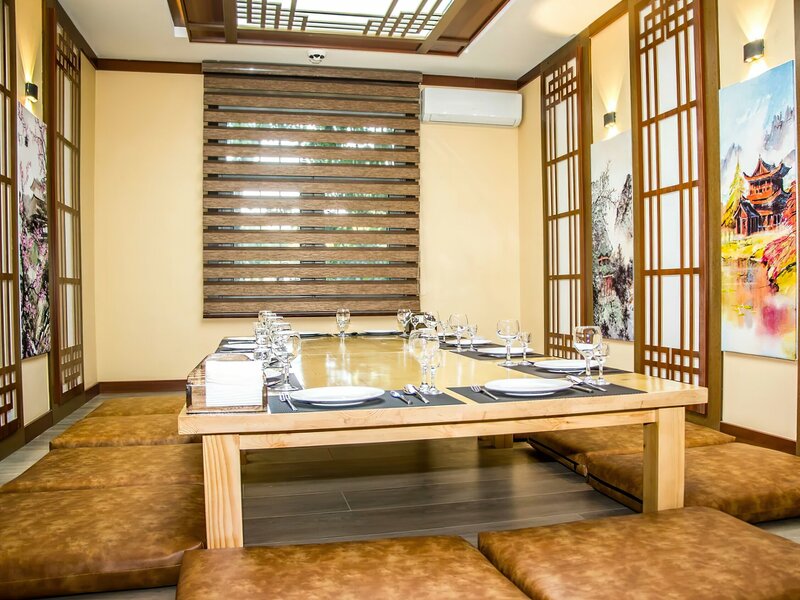
Key Town brings together the culinary heritage of the Koryo-saram and the traditions of modern South Korean cooking. The restaurant is designed in the style of a traditional hanok, with intricate red latticework, painted walls and decorative details such as straw hats and dried gourds. Small wooden bridges cross a stream of blue pebbles on the way to the private dining rooms, while some tables in the main hall are fitted with built-in grills for Korean barbecue. The menu spans traditional Koryo-saram recipes, popular South Korean dishes, as well as sushi and rolls.
The kuksi makes an impression straight away: a generous portion arrives in a golden bowl, crowned with a mound of bright yellow omelette. There are two noodle options — freshly pressed varyonka or the more traditional soaked noodles. The toppings are particularly generous, with fried aubergine and fresh radish adding something a little different. There is plenty of beef too, though the larger pieces are slightly on the firm side. Chunky tomatoes and an assortment of salads give the bowl plenty of texture, while the muri leans towards a lively, refreshing sourness. A selection of banchan — traditional Korean side dishes — comes alongside.
Price: UZS 43,500 (20% service charge)
Golodny Kim: «The first thing you notice is that it’s a little warmer than you’d want — I’d definitely prefer it colder. But the broth gets my like: it’s really full of flavour.»
Assorti
Assorti is located inside Le Grande Plaza, the hotel many Tashkent residents still remember as Tata. The restaurant has a classic, polished feel, pairing clean contemporary interiors with more decorative Eastern touches — most notably the columns built from traditional ceramic bowls. The menu lives up to the name, bringing together a broad mix of Korean classics, popular Asian dishes, European favourites and local specialities.
The kuksi is made in the traditional style, using only soaked noodles. The portion is generous and neatly assembled, with fine strips of omelette, vegetables and meat arranged on top. The muri has a pronounced sourness, giving it the same refreshing edge as the version at the first restaurant in this list. The only real drawback is the price, which is almost twice the city average. Otherwise, it is a substantial, well-made bowl of kuksi.
Price: UZS 78,000 (20% service charge)
Golodny Kim: «The flavours are very well balanced — I really like it. There’s also a generous amount of vegetables and salads.»
Final thoughts
We decided against putting the restaurants into a strict ranking or declaring one kuksi better than another — the differences are too personal for that. Each place has its own strengths and is well worth trying. Which one becomes your favourite is entirely up to you.
TasteScope x Golodny Kim: Where to Eat Kuksi — Открытая кухня