Ultima Guide was developed in several stages. First, an AI analyzed over 1500 venues in Astana and Almaty based on 100+ criteria, narrowing it down to a longlist of 455 contenders. Next, around 11,000 Yandex Go users and 102 local experts — restaurateurs, chefs, and influencers — voted for their favorites. The 30 establishments with the highest scores earned a spot in Ultima Guide and were awarded brass pearl spheres. The statuettes will serve as a mark of distinction for the city’s culinary gems.
Any restaurant can qualify for Ultima Guide, regardless of partnership with Yandex Go. However, venues under three months old, as well as traditional bars, coffee shops, food halls, and chain restaurants, were excluded — these formats require a different approach and other evaluation criteria.
This Japanese restaurant in the city’s Golden Square is a gem in its own right, with wagyu nigiri and tuna sashimi crafted with jeweler’s precision. Chef Vyacheslav Kim trained in Tokyo, and his menu showcases the fine dining experience — rolls with truffles and black caviar, and real crab even in noodles and gyoza. The cocktails feature black soy gin, sparkling wine foam, and soju, with mixology developed by Nikita Ivankin, former bartender of Moscow’s Insider (#13 on The World’s 50 Best Bars 2021). The interior remains minimalist, like a Bashō haiku (with only a bonsai and red brick bar as accents): More than just a meal— / Akami inspires us / To write a haiku.
Auyl deserves a story as long as the Silk Road — here’s a brief synopsis. Location: in the mountains near the Medeu skating rink, in Dinmukhamed Kunaev’s modernist residence with ethnic interiors — UNESCO’s Prix Versailles 2024 featured Auyl among the top 16 most beautiful restaurants in the world. Team: Almaty’s leading restaurateurs abr (Spiros, Ogonyok, to name a few) and the phenomenal brand chef Ruslan Zakirov. Concept: a modern interpretation of nomadic cuisine where water, flour, and meat reign supreme. Bone marrow samsa, Dungan noodles with spiced duck, beshbarmak with four types of horse meat (900 portions monthly!). Why: The World’s 50 Best Discovery, La Liste, The New York Times, and Condé Nast Traveller all agree — this place is a must.
No, it’s not about Tower guards or gin: this beef eater is a tenderloin connoisseur and a fan of medium rare. The menu features dry-aged steaks, cuts from local Kazbeef farms and US imports, tartares and burgers, brisket and ribs, horse meat and venison. Even dessert comes as a heart glazed with berry «blood» — indistinguishable from the real thing without a wine glass. Fortunately, the 500-label global wine list comes with modest markups — a Solo Group signature also seen at Nuala and Beefeater Samal.
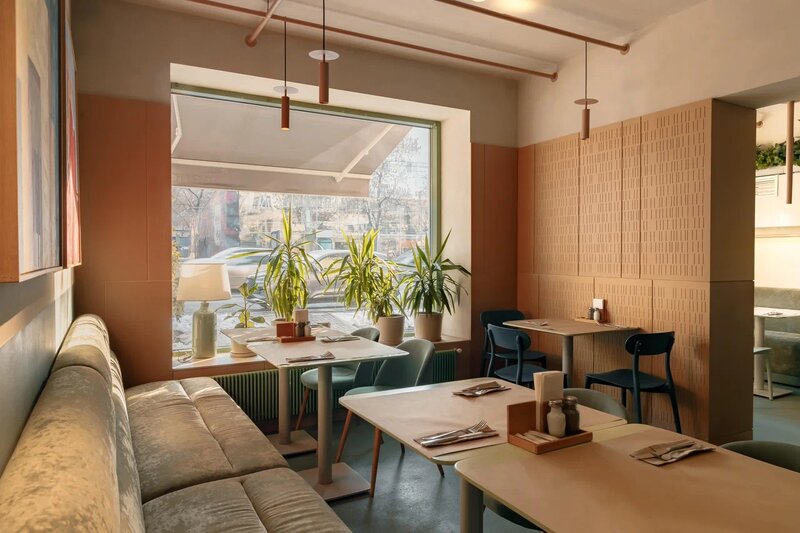
A modern urban café: breakfasts served from morning till closing: mini pancakes, porridges, bagels, syrniki, potato pancakes — nearly fifty options. Drinks include dressed-up basics: halva raf coffee, Moroccan tea, and a modest selection of wines and cocktails. The kitchen is helmed by skilled chef Oleg Petrichenko with experience from Moscow’s Coffeemania to New York. His main menu features bowls, hummus, cutlets, schnitzel, and burgers — comfort food perfectly suited to the surroundings: Benedict is just one step away from the bustling pedestrian Panfilov Street and two from Arbat, yet inside it feels like a therapeutic oasis of calm in pastel tones —even the abstract paintings seem to be made of children’s blocks.
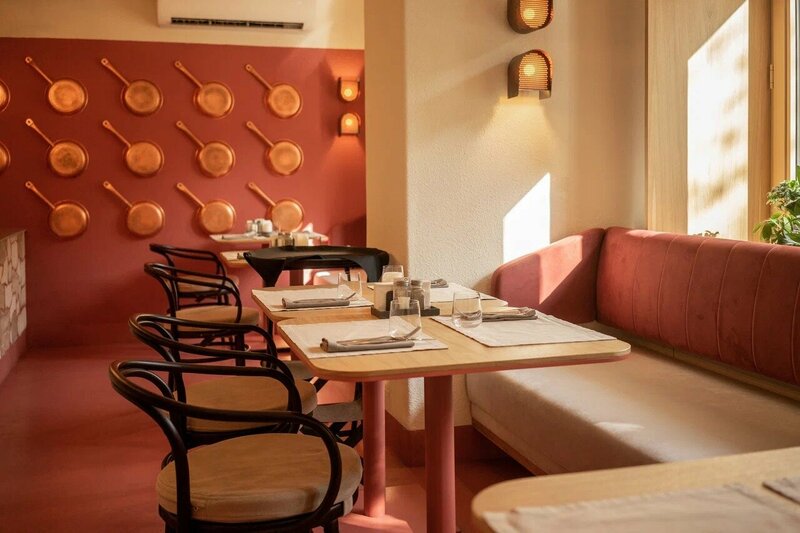
«Bitanga» means «hooligan» or «bandit» in Transcarpathia; it’s also the title of an Alina Pash song that inspired Karaganda native Yermek Smailov to blend pop and ethnic vibes — in a gastronomic setting instead of music. Modern Ukrainian cuisine on Panfilov starts with the classics: zharyokha, deruny, Kyiv-style cutlet, and borscht with pampushka and garlic butter. Then it switches to freestyle: halushky served with duck leg, green spinach varenyky, and a burger with potato pancakes instead of buns. Plus Cossack Mamai (a folk hero on a panel by Lviv artist Orest Skop) and a record selection of infusions: blackberry, lemon, horseradish vodka, and honey-pepper mead.
The dragonfly symbolizes grace and speed — no wonder it can flap its wings up to 15 times per second. Its wing pattern is echoed here in delicate lattice partitions: ceiling-suspended scales on the first floor and XXL dragonflies on the second. Lightness permeates everything. In how they bring shine to Pan-Asian cuisine: salmon and black caviar rolls, eel and foie gras sushi. In how the cocktails play on emotions: Joy with ponzu and yuzu, Love with jasmine and aloe. Finally, in the high-flying lifestyle: dance parties, fashion week afterparties, glossy magazine launches — and gigabytes of photo reports.
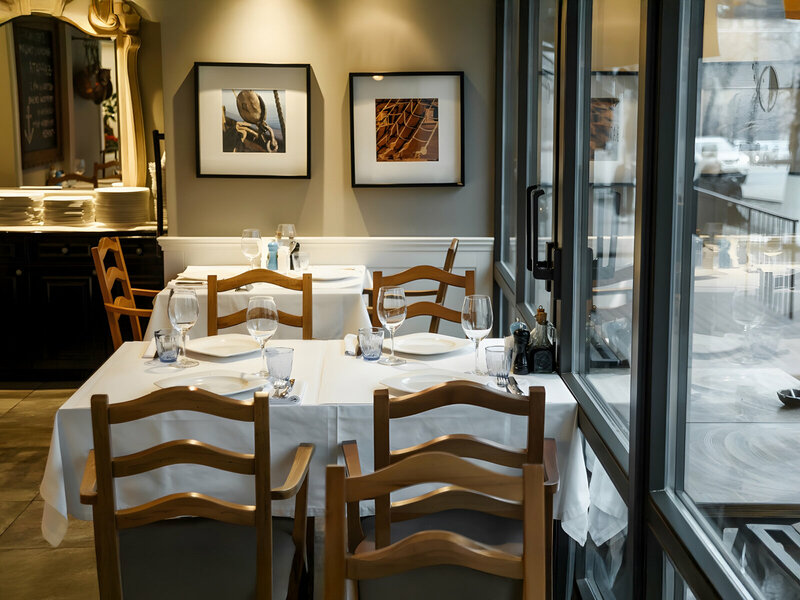
A few steps up from Abylai Khan — and, as reviews say, you’re in Valencia, Marseille, and further across the Mediterranean through Naples and Bari. The transfer feels truly authentic: an old-school interior (La Barca has been anchored here since 2014), white walls and table linens, shutters, and brassware. The aquariums hold oysters and scallops, the chillers — turbot and sole, the plates — grilled octopus and linguine with clams. The wine list also goes beyond trends: Champagne, Chablis, and Gavi from houses with impeccable reputations. There’s even a silver-haired maître d' — the charismatic Slobodan from Serbia, addressed by name not out of familiarity but as one would address a star like Mickey or Adele.
Sun Group restaurateurs are never modest — it’s always a show, selfies, and outfits. At Manana, with its Tbilisi-style macramé chandeliers, it feels cozy yet Instagram-ready: a backlit mirror, fur poufs, and a carpet-clad bar. Chef Nana Takalandze (who debuted at Moscow’s Tinatin) cooks both gebzhalia from her grandmother’s recipe and neo-classics: mini khinkali in truffle sauce or khachapuri with pear and Dorblu. The wine list, much like Niaz Diasamidze’s song Ampelography, almost poetically celebrates local varieties from Mtsvane to Kisi — but doesn’t stop there: guests also expect Pinot Grigio and premium bubbles.
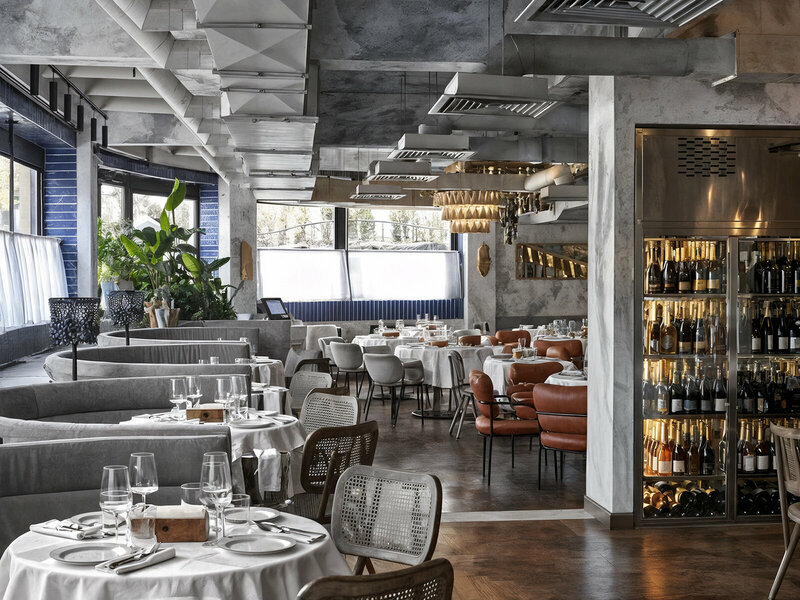
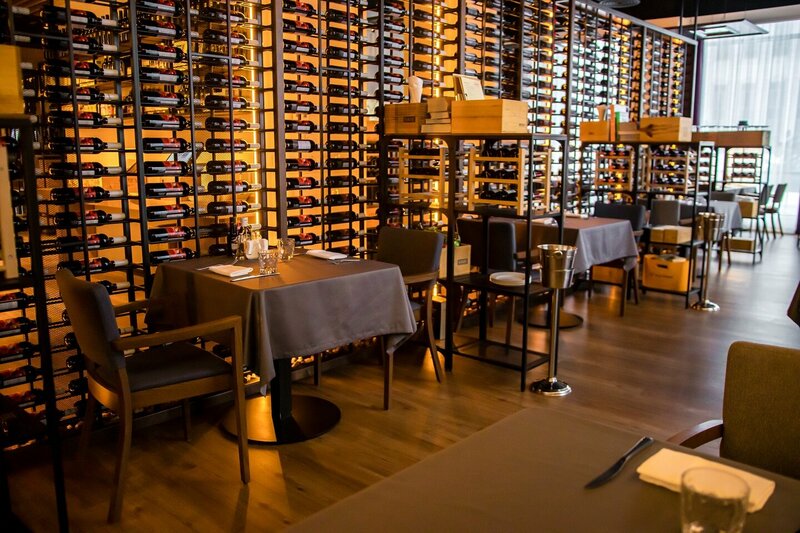
Solo Group’s aesthetic wine bistro opened in 2022 in the Central Post Office building, bringing plenty of good news. First comes fancy cosmopolitan cuisine: the «Water» section features scallops with truffle sauce, trumpet mushroom spaghetti, and octopus with parmesan; the «Earth» section — horse meat mortadella, guanciale carbonara, and wagyu ribeye. Another highlight — a wine room honored by the Wine Spectator: 800 labels, over 120 Champagnes, and friendly prices. The final accord — gigs, brunches, and chandelier beads soaring skyward like champaign bubbles.
«Percorso» means «path» in Italian, and here they’ve found a path of their own: take away the tables and you’d mistake it for an art gallery. Clean lines and colors, ceramic niches, and a series of pasta-patterned panels — like Hirst’s Pharmacy meeting Ai Weiwei’s porcelain seeds. The team poetically describes their design as «silence in the details», and the kitchen, too, too, is all about nuance: shrimp meets pancetta on pizza, and spaghetti comes with turkey and truffle sauce. They’ve mastered aesthetics without losing warmth: if this «festival» were held in Venice, it wouldn’t be a biennale but a carnival — with Vermentino, Negroni, and basil gelato that disappear in an instant.
In Japanese izakayas, sake is enjoyed after work. At Raw, it’s a prelude to a kabuki performance — if kabuki were modern and about food. The kitchen is like a stage: seating arranged along the perimeter and libretto surtitles running overhead. The chefs perform their best rolls — truffle salmon and caramel eel. The menu also features Pan-Asian highlights like duck gyoza and a katsu sandwich. Cocktails are mixed in the spirit of Zen: «Effortless Perfection» [shibumi] with green tea, and «Beauty of Subtlety» [yūgen] with basil sake. The wines come with the notes too, like in a playbill: here’s perfume in a bottle — there, coffee, rose and ink.
As you ascend to the Shymbulak ski resort and its «Mountain Refuge» (that’s what the venue name means in Italian), decide: which kind of alpine chic you choose for today. Craving Courchevel? Take a seat on the fur-draped terrace, order vintage Champagne and gold-dusted lobster thermidor. In the mood for Tyrol? The chalet awaits with fondue and Puligny-Montrachet. Either way, the wine list runs into six digits, the menu features plenty of foie gras (in burgers, with horse meat, even in borscht), and the mountain panorama looks straight out of a Bond movie — perfect for showing off Moncler Grenoble or an Audrey Hepburn-in-Charade look.
In 2023, the «nomads» from abr went on a culinary tour in Greece and brought back Spiros as souvenir, adding a touch of Modern Greek cuisine to Dostyk. Instead of the clichéd blue-and-white — sun-bleached shades of sand and oyster, with mermaid scales made of 1100 ceramic «petals» crafted by Almaty’s Fasci artisans. Meze and souvlaki get a refresh from Ruslan Zakirov, one of Kazakhstan’s top chefs: his mageiroi (ancient Greek cooks) make Cypriot pie with kid goat and feta, lamb gyros with pomegranate pesto, and octopus with salted lemons — not textbook, but with the taste of a Peloponnesian holiday. The holiday mood is lovingly extended by the fish market, Metaxa spritzes, and local wines from Assyrtiko to Xinomavro, the «Greek Barolo.»
A sushi bar no bigger than a two-room apartment: tucked inside a similar residential building, with cozy vintage decor, a small garden, and neighborhood cats. But this Karaganda project lacks no ambition: named after a villain of universal scale (that’s what «akunin» means in Japanese), it draws crowds the way its writer namesake sells books. Akunin’s ronin Masa would appreciate the ramen, General Tso’s chicken, and the rolls — especially the rice-free, taco-style ones. His boss Fandorin would praise the bold plots in the book-shaped cocktail menu: bartender Pavel Zorov (from St. Petersburg’s esteemed Imbibe) serves a wasabi Margarita and a Sichuan pepper sour.
Ogonyok restaurant, with its grill and oven in place of the former Ice Cube ice-cream café, is a postmodern concept. It makes sense: Almaty is a treasure trove of Soviet modernist architecture, and this circular pavilion is one of its examples. Heritage debates here rival George Martin’s A Song of Ice and Fire: abr’s gastro-urbanists «crowned» the building in the likeness of the Hotel Kazakhstan, which — in a twist of arch-suspense — suddenly sprouted an attic. Inside, they skillfully grill and bake everything from ashe steak to camembert with dried apricots and irimshik cottage cheese pancakes. But the 1960s urban hymn continues in the cocktails: the «Palace of the Republic» comes in flag colors, and the «Circus» — with popcorn under a miniature dome swirling with facets.
A secret eatery with global fame? Alcohol-free cocktails on the radar of the world’s top bar awards? Incredible but true: a «thank you» («xie xie» in Chinese) to co-owners Daria Bezhina and Georgy Kucherenko. They draw foodies and fashionistas for pho bo, noodles, and karaage chicken to a truly hidden semi-basement spot with no sign — tucked behind a car wash in one of the less glamorous neighborhoods below Green Bazaar. The zero-proof cocktail menu earned a «Most Inventive» nod from the World’s 50 Best Bars — a collection inspired by symbols of peace: Dove with grapefruit-honey cordial, White Poppy with poppy milk, and Pace combining kurt and pineapple.
Year, day, hour — any moment is good at this wine haven on Shevchenko Street. Just don’t rush: hedonism doesn’t allow it. Like the trader in Ridley Scott’s A Good Year, who swapped stocks for Provençal slow living, set work aside and visit Almaty’s leading sommelier, Alexander Glants. His nearly 300-bottle cellar features Bordeaux First Growths, Burgundy clos, Piedmont wines, and Super Tuscans. Chef Oleg Petrichenko also caters to the epicurean spirit: his duck confit comes with white chicory, crab cakes with lemongrass sauce, and turbot with vanilla. Everything here exudes the old money vibe — stylish yet unpretentious: hues of burgundy and Klein blue, atlases of appellations, and volumes of Pushkin and Yesenin on the shelves.
The wine restaurant by Good Project (Selfie, Na Kryshe) looks prim at first glance — its bottle-lined shelves resemble a library, surrounded by the Eden-like groves of the Presidential Park. But the menu simmers with biblical passions: the «daily bread» is braised veal tacos, while the «forbidden fruit» appears as apple pie with ice cream or roasted pear with black risotto. They don’t turn water into wine, but impressive wine list spans cava, sekt, and carricante, Dolce & Gabbana rosé, a rare Swiss Pinot Noir, and local gems like Assy Plateau Riesling and Bordeaux-style Merlot.
Like an underground musician, this Georgian restaurant thrives on word-of-mouth fame, keeping a low profile on social media. Its «singles» include pumpkin pkhali with dried cranberries and shrimp-and-chili kutabi. Chefs put on a show in the open kitchen that spans the entire first floor, while upstairs guests buzz over khvanchkara and chacha. Located a block from Nurzhol Boulevard, it’s perfect for a promenade — just a short walk from the Ak Orda residence to the 150-meter-tall Khan Shatyr Mall, a Guinness World Record holder.
In his youth, friends called Artem Marchenko — head of The Chef Group (Zina, Var-Var) — «Marcello.» It was only a matter of time before he turned that nickname into a restaurant serving bolognese and pepperoni. The result is elegant: floral murals, glasses ringing like church bells in Umbira, and terrace curtains flapping like sails on the Adriatic. Breakfast brings mortadella omelets and tomato flatbreads with stracciatella. Lunch offers arrabbiata pasta or shujuk-and-pine-nut pizza paired with Sauvignon or Chianti. For dinner, go for shrimp panzanella with Georgian Mtsvane — a dialogue between the Mediterranean and Black Sea.
In Finnish, mökki means «remote cabin» — a playful contrast to this marble-clad restaurant on the third floor of The Ritz-Carlton, with its five-star view of Astana’s main square. Open to all, Mökki runs like clockwork — literally. It starts early with breakfast buffets, followed by à la carte mornings and, from noon, a main menu ranging from pizza and sandwiches to wagyu. Evenings bring chef’s table dinners, tea ceremonies, and masterclasses — a program for every taste. And if you still expect a hint of Finland at Mökki, look up: the ceiling’s branching columns offer a graceful nod to modernist architect Alvar Aalto.
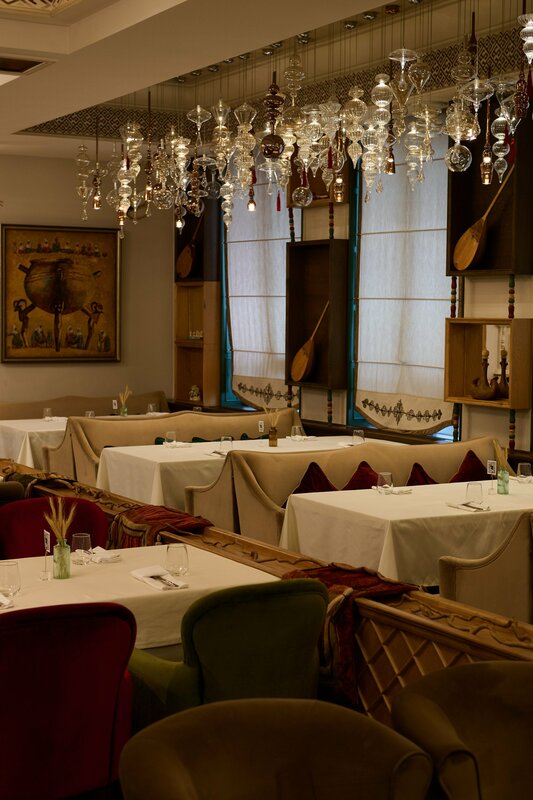
Located on Mangilik El Avenue — which means «Eternal Land» — this restaurant gives traditional Kazakh recipes a contemporary twist. Brand chef Artem Kantsev crafts Kazakh haute cuisine: aerobausak with mushroom mousse and black caviar, asyk with liver pâté in plum glaze, and camel manti in buckwheat-coffee dough — dishes served the way even Ducasse or Gagnaire would applaud. Shubat and kumys distillates, chandeliers inspired by the shanyrak, and stucco patterns echoing traditional carpets are a tribute to Kazakh heritage.
Tucked away behind the Opera and Ballet Theater, Roastbeef avoids the usual steakhouse clichés. No bulls or cleavers in sight — instead, paintings and wine racks divide the space like a private club, complete with dry-aging chambers for ribeyes and T-bones. The menu sprawls across pasta, pizza, burgers, noodles, rolls, and grilled fish — a colorful cast of flavors taking the stage for a final bow. The 200-label wine list ranges from the Old World to Chile, Argentina, South Africa, New Zealand, and the United States — led by California’s magnum opus, a Rothschild-partnered winery.
«The beshbarmak steamed, smelling of meat and onions — like home,» wrote Mukhtar Auezov in The Path of Abai. Saksaul honors that spirit, staying true to Kazakh culinary classics and their intoxicating aromas. Kazan-cooked plov and dimlama, tandyr-baked flatbreads and samsa filled with lamb, chicken, cottage cheese, or pumpkin. Uzbek mashhurda with chickpeas and green mung beans, and Uyghur lagman with hand-pulled noodles and rich waju sauce — homestyle Turkic dishes seamlessly woven into Kisho Kurokawa’s modernist skyline on Nurzhol Boulevard, without losing their timeless magic.
A collaboration between Good Project and Moscow’s White Rabbit Family, Selfie quite literally raises the bar — perched on the 18th floor of The Ritz-Carlton. Its constellation of awards, serious wine list, and interiors by designer Harry Nureyev all play second fiddle to the panoramic view of the capital in its youthful prime. The multicultural menu includes octopus, spaghetti, and borscht, but don’t miss the KZ-tagged dishes: corn bausak with guacamole, horse meat tartare with Poshekhonsky cheese espuma and flax chips. The new language of Kazakh cuisine is best learned with a glass of local XO brandy — and for broader horizons, explore whiskies from Speyside and Islay to Taiwan and Sweden.
«Django,» «Godzilla,» «McConaughey» — just a few of the rolls at Artem Kozodaev’s sushi bar, where the menu runs longer than the Star Wars end credits. It really is like Tatooine or Endor — with rules of its own. Smoked, truffled, caramelized, even hot-dog-style — if you can imagine it, it’s already here. And that’s not even the whole menu — there’s also pizza, pies, snacks, and desserts. The laws of physics don’t apply here: waves ripple across plates, a shark-shaped soy-sauce bowl surfaces, ramen floats through comic panels — and Sushiman himself rushes to the rescue in a spandex suit. This city needs a new hero — for now, there are only two Sushimen, but imagine if there were as many as Marvel crossovers.
«From farm to table. No layovers.» True to its slogan, Uno doesn’t rush like a shuttle — it moves at the pace of an odyssey. The journey begins at Uno’s own farm in the Akmola region: Holstein cows provide milk for the cheesery, while greenhouses nurture fresh herbs. Further along the orbit: sourdough bread, horse meat and smoked duck pastrami, marmalade made from onions and young pine cones, and herb-crusted salmon — all house-made. The restaurant serves burrata with tomatoes, quail with root porridge, and a lineup of baked delights — bagels, quiches, éclairs, and cherry-filled rugelach. Cap it off with house kvass or a fresh mango–passion fruit–pumpkin–orange juice, and take off toward enlightenment and detox.
Named after Artem Marchenko’s grandmother (his first culinary mentor), Zina, his 2019 debut, still feels like home. A dozen restaurants later, it remains the one guests keep coming back to. Everything here follows tradition: a patchwork interior with four cozy rooms, floral upholstery, tulle curtains, a fireplace, and a kids’ room with a nanny — and shelves lined with house preserves: lecho, sauces, and carrot or beet caviar. The kind of menu that leaves you too full to walk — you’ll be rolling out instead. Wood-fired pizza, zander koktal, chicken tabaka share the menu with grilled kazy, chicken thighs, and jellied meat served with a «sugar bone» — the kind of spread that naturally ends in a folk song.
Aptly named, this Good Project restaurant was Astana’s first panoramic spot when it opened in 2013 — with a view worth the title: the Zhetysu Park embankment. In summer, spritzes flow straight from the dispenser — a fitting touch for a place that’s stayed effortlessly relaxed since 2013, yet continues to set trends with flair. The menu adds clever twists with wasabi-spiked baba ghanoush, scallop ceviche with strawberry and seaweed sauce, tuna with jalapeño tartare, and duck with mandarin BBQ. The cocktails come with stories, and the wine list rewards a closer read: Mendoza brut, Australian sparkling Shiraz — bold choices indeed.
«That’s some dacha!» you’ll think, looking at this farmhouse-style restaurant neat Bayterek Tower — the 97-meter-tall «Tree of Life,» where the mythical Samruk bird is said to lay its golden sun eggs. In the heart of the metropolis, the vibe are idyllic: charming lampshades, homemade pickles, and hand-painted porcelain. No country getaway is complete without shashlik — here it’s grilled from horse meat and veal liver, along with turkey, salmon, and kebabs over open coals. Vegetable salads with seed oil or fire-roasted corn set the garden mood. Sangria or mulled wine fits the weather, while compote, walnuts cookies with condensed milk, and apricot rugelach take you straight back to childhood.