The list was then refined further. Restaurants open for fewer than three months were removed, as were traditional bars, coffee shops, food halls and chain concepts — formats that warrant their own benchmarks and judging criteria. The result was a shortlist of 183 restaurants, from which users and experts made the final selection.
This is the second edition of Ultima Guide, following last year’s inaugural selection, which we covered in detail here. As is tradition, the process unfolded in several stages. The first involved an AI-powered analysis of roughly 3,000 restaurants across Tashkent, assessed against more than 100 indicators — from popularity and guest ratings to the depth and quality of user reviews. Notably, restaurants were not required to work with Yandex services in order to be considered.
The final score was built around five pillars: food, atmosphere, service, interior design and the bar programme. Judges considered every aspect of the experience, from the strength of a restaurant’s culinary concept and the quality of its ingredients to flavour, presentation, hospitality, ambience, spatial design and the overall standard of its drinks offering.
Three additional restaurants were presented alongside the main ranking. Ora led the field, earning awards for Outstanding Service, Best Interior and Users’ Choice. Experts selected PRO.Khinkali on Shota Rustaveli Street as their winner, while Syrovarnya by Novikov claimed the Ultima Yandex Go Users’ Choice distinction.
Public voting was limited to guests who had engaged with a restaurant through any Yandex service during the previous 12 months. Alongside them, a panel of industry insiders — restaurateurs, chefs and some of Tashkent’s most influential food personalities — submitted their own assessments. The final rankings were then determined using a proprietary evaluation model developed specifically for Ultima Guide and independently audited by the international consulting firm Yakov & Partners.
The hot dishes open with Chekhov; from there, the menu reads like a literary table of contents. Gogol sets the tone for pies, vareniki and Odessa-style smelt, while Bulgakov lends his name to forshmak and black caviar with blini. Each dish comes with its own suggested pairing — vodka, wine or a house infusion. The food is nostalgia made edible: Olivier, borscht, caviar, chebureki, the full grammar of comfort. Matryoshka dolls, cabinet porcelain and jars of pickles deepen the feeling of a grandmother’s dining room. The soundtrack stays in the same key: Soviet-era favourites, with music-bingo nights loose enough to make room for both Kirkorov and Shakira.
A social restobar on the 12th floor of The Tower, where hotel guests returning to their rooms routinely share the lift with impeccably dressed Instagram regulars. At Twelve, the dress code is not a formality but part of the atmosphere. The dance floor and mirror-lined interiors have become fixtures of the city’s social feed, while the illuminated towers on the horizon provide the kind of skyline backdrop that was practically made for night photography. For the camera, order the eel with lime-coconut cream or the pasta with scallop and black truffle. Behind the menu is chef Islom Kurbonov, who refined his craft at Moscow’s White Rabbit and Beluga. And yes, there are exactly twelve cocktails. Think rum with cold brew and blackcurrant, Aperol with sparkling wine, strawberry and eucalyptus cordial — drinks designed with the same sense of occasion as the room itself.
A wine bar and shop on pedestrian Sayilgoh — Tashkent’s Broadway — Just Wine is named with deliberate understatement. Wine is the centre of gravity, of course: around a hundred bottles, from classic labels to orange styles. But the real intrigue is everything arranged around it. The menu is sharp and well edited: bruschetta, pâtés, beefsteak, pasta, antipasti sets. The programme gives the place its pulse — wine casinos, tastings from Burgundian crémants to Armenian native grapes, and weekly pairings such as Mosel Riesling with foie gras and apple chutney. The Uzbek wine section deserves particular attention. Local producers are moving quickly; ask for reds from southern Surkhandarya, or sparkling wine made from local Bayan Shirey.
The harder it is to get into this top-floor bar at the modernist Sapiens hotel, the stronger its pull becomes. Access is kept deliberately tight: hotel guests, private-club members and those who make it in through a carefully managed referral. Beneath the retractable roof, the city’s media, marketing and creative set moves between after-parties, working lunches, slow post-party mornings — and any excuse for the cult burgers: truffle, jalapeño and the house blue cheese. The cocktails have their own following, and the party line-up is monitored with equal interest: on the right night, Ivan Dorn might easily be the one behind the decks.
Uzbekistan may be doubly landlocked — with no access to the sea and none for its neighbours either — but Kaspiyka by Tanuki Family fills the gap remarkably well. So well, in fact, that both of its Tashkent locations, at Tashkent City Mall and on Taras Shevchenko Street, were included in the Ultima Guide 2026. The menu is unapologetically maritime: fish skewers, prawns on ice and mussels in a variety of sauces; shawarma filled with crab mix; calamari strips; trout folded into okroshka; tuna worked into spaghetti Bolognese. The day begins with build-your-own breakfasts and continues with prosecco on tap. At the Shevchenko outpost, large-format seafood platters are designed for sharing. At Tashkent City Mall, the seasonal terrace comes scattered with white sand beneath your feet — a small but effective illusion.
A Japanese restaurant with samurai composure: no rolls adjusted for gaijin comfort, no soft-focus version of Japan. The cooking is so uncompromisingly authentic that the ambassador of the Land of the Rising Sun is a regular, while Japan’s Ministry of Agriculture has certified Furusato as a Japanese Food and Ingredient Supporter. The kitchen is led by Atsuto Uchiyama, who spent ten years in Tokyo and Yokohama and now brings nori, spices and tea from Hamamatsu to Tashkent. He is behind the yam tempura, oyster kamameshi, udon with tuna and ume plum paste — and, above all, what many consider the city’s best ramen. Around those ingredients, he builds seasonal festivals: satsumaimo sweet-potato lattes, hojicha, genmaicha.
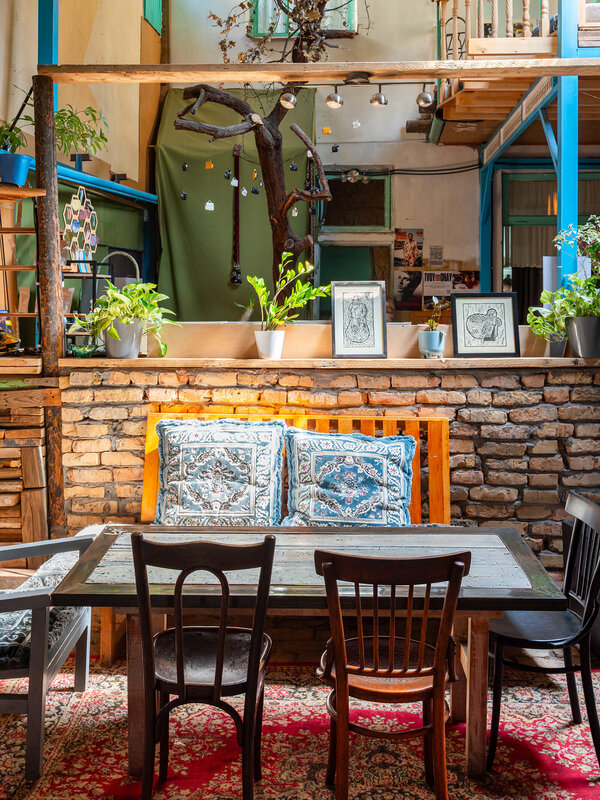
A quiet side street, an unmarked garage door — the sort of entrance that would have the right crowd lining up in New York, Tel Aviv or anywhere else that knows the value of looking slightly unfinished. An old house with a balcony and a courtyard topchan has been turned into a bar, club and café: rugs underfoot, vinyl in the air, a tea room, and a mezzanine chill zone for those staying longer than planned. Saturdays are for record-led networking; Wednesdays bring cocktail classics at one fixed price. The specials move just as freely — paella, brisket, vareniki — with the main menu keeping the same easy rhythm. Then comes Guest Guest, when bloggers, photographers and musicians take over the bar. The brief is simple: stay all day, vibe properly, hurry nowhere. Williamsburg and Florentin, after all, can be found at home.
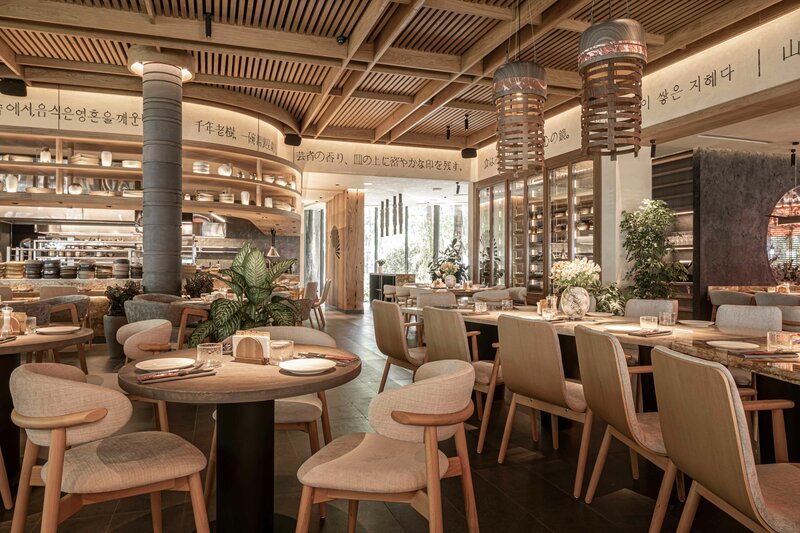
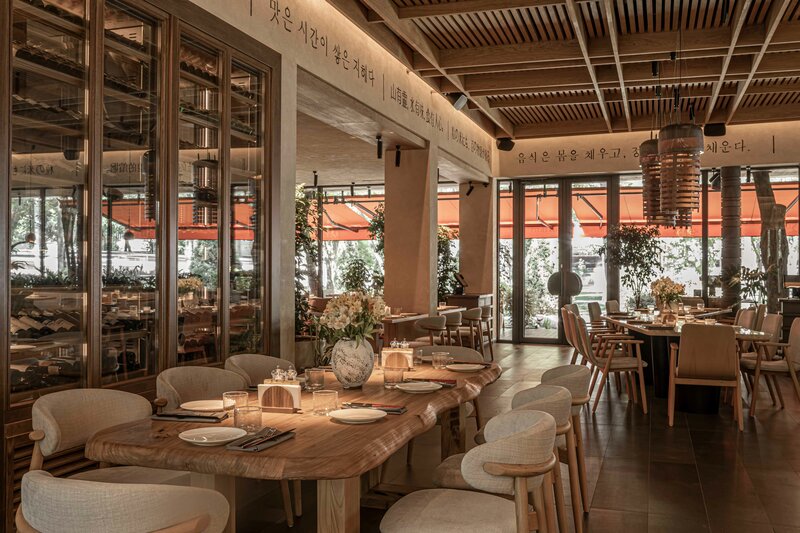
Since opening in spring 2025, this Asian gastro-luxe project has gathered a loyal following. The wager was bold: Far Eastern seafood in a city still ruled by shashlik. But Novikov Group, AB Group and Family Garden know how to play a high hand. The kitchen goes deep. Even edamame, usually a modest snack, appears in four versions. Sashimi, hand rolls, bowls, hamachi, scallops and wagyu all pass through the menu — some over the open robata grill. The same fire touches crab, kimchi lamb and yuzu prawns. Sake and soju are part of the draw, along with cocktails such as Goji Glow and Sakura Ash. Peking duck plays the joker. Japandi interiors, a ceiling that recalls makisu mats — everything lands in the same suit.
In 2023, beside the monument to Shota Rustaveli, author of The Knight in the Panther’s Skin, another suitably epic plot began. In one of the world’s most landlocked countries, a fish shop opened with the spirit of Biarritz or Saint-Malo. There is an oyster tank, and an ice counter piled high with turbot, dorado, scallops and prawns. Anything can be wrapped to go or cooked on the spot — with Chablis poured and Parmesan brought alongside. The formula has travelled fast: La Mer now has addresses on Shevchenko and Sayram, plus a shop on Aibek. The original Rustaveli location has since grown into something broader, with a Japanese turn — sashimi, maki, rolls and kushiyaki skewers.
For years, the partnership between Novikov Group, Family Garden and AB Group built its reputation in Tashkent on concepts imported from abroad. Then, in 2024, the direction of travel changed. Instead of bringing international brands to Uzbekistan, the group began exporting a distinctly Uzbek one. Lali is where heritage and modernity find an unusually natural balance. Traditional ornament is reinterpreted through the work of artist Nadezhda Riksieva; cocktails weave together sharbat syrup and fragrant rayhon basil; plov is served throughout the day rather than confined to the traditional rhythms of the oshkhana. Some dishes remain intentionally faithful to their origins. The Bukhara-style lamb vaguri, for example, arrives exactly as it would 444 kilometres from the capital. Others introduce guests to a culinary vocabulary that is rapidly travelling beyond Uzbekistan itself: shavlya, bazara, naryn, uch-panja. The expansion has been swift. By summer 2026, Lali had opened in Moscow, Voronezh and two locations in Sochi, with Almaty, Dushanbe and Riyadh already on the horizon.
The Moscow-born Belgian group has arrived on Shevchenko Street, in a dining cluster already fluent in European concepts. Its first brasserie outside Russia comes properly dressed: mirrors, armchairs, a fresco with a near-Vermeer maid, and rosy-cheeked burghers lit with Rijksmuseum drama. Mussels, potato waffles and grilled meat hold the centre of the menu. Around them, the still life grows richer: brisket and currywurst, borscht with smoked duck, shepherd’s pie with marrow bone. The beer list is equally composed — labels from around the world, with medieval abbey ales at its centre.
A panoramic gastrobar that lifts you out of routine in every sense: with its Balinese colour and, quite literally, from the eighth floor. To land you firmly in resort mode, guests are offered soft slippers; face control is in place too, as if to complete the illusion of a Canggu beach club — somewhere between Finns and La Brisa. The cocktails chase the same sense of spectacle: clouds of nitrogen, smouldering sparks, even an edible first-class boarding pass. The menu was developed by chef Nikita Bychkov: souvlaki leads the list of hits, with pizza and steaks also in play, while the Asian groove comes through in details such as pineapple kimchi, enoki mushrooms with beef, and sea bass with kiwi and green chilli.
At Obi Hayot, opulence is pushed almost into folklore — as if Ali Baba, Khoja Nasreddin and Sinbad had pooled their treasures and put Aladdin’s genie in charge of construction. From a seven-metre amphora fountain, «living water» spills into mosaic bowls. Silk hangs overhead, peacocks enter the scene, and gold appears everywhere — on plates, chandeliers and frames — in quantities even the Forty Thieves might have found excessive. The Uzbek-Azerbaijani menu stretches on like Scheherazade’s tales: a caravan of kebabs, kutabs and samsa, plov measured by the kilo. The effect is closer to a Netflix fantasy set in an Eastern fairytale than a conventional restaurant — especially fitting, given that the space was once a cinema.
Pavel Georganov’s Loft — from the world of Kuranty — is known to everyone as Pasha Pasha’s Cafe Cafe, a joke built on calling a place by its format and letting the absurdity do the work. The posters, prices and portions all require a little moral preparation. The cheese ramen is nearly a litre; the club and Cuban sandwiches weigh in at half a kilo each; the Borzy burger comes in at 700 grams — terrifying to imagine in calories, though a lettuce-wrap version exists for the virtuous. On Thursdays, the kitchen serves a luxury plov set, best approached with a serious appetite. Fortunately, the aquarium and Magic City — Uzbekistan’s answer to Disneyland — are close enough for a pre-dinner walk.
The Georgian concept from Novikov Group and Family Garden, created with AB Group, has clearly found its audience in Tashkent. PRO.Khinkali first answered the city’s hunger for khachapuri and chakhokhbili near the rising dining cluster around Alay Bazaar, then did the same on Rustaveli; by 2026, both addresses had earned their place in the Ultima Guide. The Georgian canon is all here, from satsivi to shashlik, but the classics come with a few well-judged turns: khinkali with cheese and tomatoes, chebureki with cherry. In the glass — Rkatsiteli, Khikhvi and Mukuzani; at breakfast, an omelette with sulguni; after dinner, a coriander Margarita or an Adjarian Fizz with feijoa syrup and cornelian cherry.
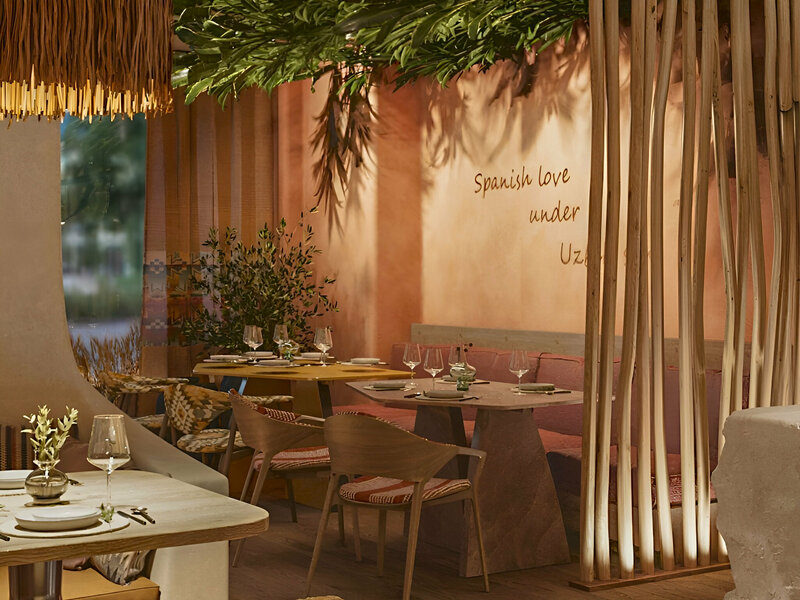
From Navruz Ethno Park to Plaza Mayor in a few minutes, no visa and no layover required? At Quadro, the leap feels easy. The restaurant plays in a Spanish key: churros and empanadas, several kinds of paella, Catalan coca flatbreads with toppings. The bar keeps the mood going with cocktails like La Mancha on brandy and Galicia with whisky, honey and bergamot. Breakfasts, lunches, sangria parties, unlimited-meat nights, live music on weekends — Quadro likes its formats generous. The same richness carries through the space, where Uzbek motifs meet Andalusian references, and through the menu, where flamenco-country flavours sit alongside steaks, pasta, borscht and a burger finished in gold.
Around Buz Bazaar, Breadly has been steadily refining the idea of neighbourhood comfort. Next door to one of its bakeries, on the corner of Sairam and Kalandar, the team has marked a new turning point — Punto, quite literally, in Italian. The neo-trattoria is all visual discipline: suprematist canvases, kinetic art overhead, Bukhara limestone set against steel. The menu keeps the same line: pizza with mortadella and stracciatella, grilled octopus, shaped ravioli with salmon, ricotta and red caviar. Truffled sweet potato fries read like the perfect pause before brut; a rose spritz and tarragon fizz bring the meal to its final flourish.
In 2025, the team behind Twelve moved into Infinity, the residential complex shaped in part by the award-winning architecture firms Benoy and Chapman Taylor — and answered with an interior polished to Pinterest-level precision: clean colour, exact lines, perfect light and panoramic windows. With the kitchen fully on display, brand chef Islom Kurbonov presents tasting menus himself, from salmon crowned with three kinds of caviar to rib paired with buckwheat popcorn. The main menu moves through tartares and ravioli; at breakfast, a toast with Parmesan espuma introduces a motif that passes from dish to dish like an arch through an arcade. The drinks list ranges from vitamin-rich detox shots to cocktails, with wine running through the centre.
A favourite among Instamoms and one of the city’s most coveted addresses for children’s parties, Ribambelle arrived from Moscow and took over Tashkent City Mall with very grown-up ambition. The scale is impressive: a large veranda, two play towns with animators, performances, quests, quizzes, and 45 culinary and art workshops. There are banquet rooms, catering, candy bars, party boxes, events from baby showers to graduations — 50 party scenarios and 20 costumed programmes in total. For children, milkshakes, nuggets and doughnuts. For adults, sparkling wine and cocktails. The main menu covers the rest: pizza, pasta, mezze, steaks and a bright, all-ages spread from bruschetta to burgers.
The café by Tashkent City Park has mastered the grammar of the modern bistro: instantly recognisable branding with a sweet little bird, a bakery counter lined with danishes and croissants, and a drinks list fully tuned to the moment — smoothies, rafs, milkshakes, iced teas. The menu moves with the same confidence: creative all-day breakfasts, seasonal specials, and comfort food made for now — smash burgers, tiramisu pancakes, hot dogs with cheese sauce and Bolognese, cutlets with lecho, honey cake in a jar to go. The SMM never sleeps, either. For The Devil Wears Prada 2 premiere, Miranda Priestly was matched with avocado toast and salmon; Emily, naturally, with a green salad of kiwi and courgette.
Kuranty stands at Tashkent’s centre of gravity: from Amir Temur Square, the city seems to run outward in every direction. In 1947, a trophy clock mechanism was installed in the tower, its Stalinist neoclassical form reworked through national decorative craft. In its latest chapter, the landmark has learned to keep time differently. Pavel Georganov’s Kuranty is firmly in the present tense: sharp marketing, a theatrical interior with a statement chandelier and cat-print chairs, parties, cocktails and comfort food — rolls, cutlets, pasta, burgers, tom yum and achichuk, with the Kyiv cutlet earning a special mention.
If the gold of the past is struck with enough precision, it becomes the currency of the future. In that spirit, worthy of Alisher Navoi, Roman Saifullin — behind The Choyxona Sea Breeze in Baku and The Bani in Tashkent — has reimagined the choyxona: the everyday banquet that needs no occasion. The Choyxona is an entire complex: around fifteen private rooms in a language of neo-Orientalism, chapan patterns translated into contemporary art, shashlik and kurtob served in the setting of luxury apartments, with plasma screens and leather sofas. For this old-new ritual, guests have learned to plan ahead: plov and kazan kabob are best ordered in advance — the menu itself notes, for instance, that dimlama takes three hours.
AB Group’s meat restaurants say exactly what they are — no metaphors required. At the twin addresses on Rustaveli and in Tashkent City, anyone with a weakness for T-bone, rack of lamb or a properly serious steak will find their answer quickly. The menu goes deep into meat-house territory: wagyu, local porterhouse, asado ribs for the table, tartare, carpaccio, brisket, burgers, chopped lamb with cheese — even the spaghetti al pomodoro comes with ribeye. The rest follows with the same energy: Old World wines, house infusions, cocktails, beef patties with courgette chips at lunch, nuggets on sticks for children. In the morning, the Ukchi location turns to breakfasts with a passport: Lebanese, Turkish, French, Alpine and Greek.
When life gives you lemons, the Italian franchise named after the resort near Naples — where the yellow citrus is practically a symbol — turns them into limoncello and serves it as an aperitif. In the morning, coffee arrives as a compliment to breakfasts of hash browns, shakshuka and millet porridge with mango. Lemons appear everywhere: in cocktails, desserts and the décor, including a pop-art-style triptych worth noticing. The mood carries through the menu with the same sunlit ease: burrata with raspberry balsamic, anchovy butter for the bread, sea bass, chicken, lamb, plenty of pizza and pasta — including farfalle with salmon and cherry tomatoes, finished in a wheel of cheese.
Across the Syrovarnya by Novikov universe — now close to fifty restaurants worldwide — the formula is instantly recognisable: Italian cooking, beloved comfort classics from Olivier salad to cutlets, and house-made cheeses woven through both the menu and the deli counter. Tashkent, however, is not just another address. Opened in 2021, it became one of the first premium restaurant franchises to raise the bar for Uzbekistan’s dining industry — and the place where Arkady Novikov, Family Garden and Alisher Akramov’s AB Group formed a partnership that would help shape the market. The setting only sharpens the point: beside the Hotel Uzbekistan, an icon of seismic modernism whose own codes — function, identity, endurance — feel unexpectedly close to the language of Novikov’s restaurants.