This is the second Ultima Guide dedicated to Astana and Almaty; we explored the inaugural edition in detail here. As before, the selection followed a rigorous, multi-stage process.
A neural network began by assessing some 2,000 venues against more than 100 criteria, from popularity to guest ratings and reviews. Whether or not a venue used Yandex services had no bearing on the results. Restaurants and bars open for fewer than three months were then excluded, as were coffee shops, food halls and chains—formats that require a distinct methodology and their own evaluation criteria. The process ultimately produced a shortlist of 675 venues.
At the second stage, around 15,000 Yandex Go users and more than 120 local experts—including hospitality professionals and opinion leaders—cast their votes. Each venue was assessed across five criteria: food, atmosphere, service, interior design and drinks programme.
The final rankings were calculated using a bespoke scoring model created for Ultima Guide and independently audited by international consultancy Yakov & Partners. The 2026 edition brings together 15 restaurants and three bars in Astana, and 30 restaurants and three bars in Almaty. This year’s special distinctions went to:
The name translates as «a little kiss», though the operation itself is decidedly substantial. Across three floors of Dara Residence, it encompasses a pet-friendly food shop, a bistro and a wine restaurant with a dress code and private dining room — plus what seems to be a fully fledged production house. The programme moves at speed: a rave with buns one day, a street grill the next, followed by guest residencies, markets and tastings. A vertical of Dom Pérignon? They have done that too. The shop supplies baguettes from the in-house bakery, sauces, preserves, pickles and horsemeat jamón to take away. The bistro deals in bowls, chicken strips and sausages; the restaurant changes register with a broader, more polished menu, running from artichoke carpaccio to duck magret. There are antipasti, too, and clever pairings built around small carafes: red with tartare and anchovies; white with gratin and rillettes.
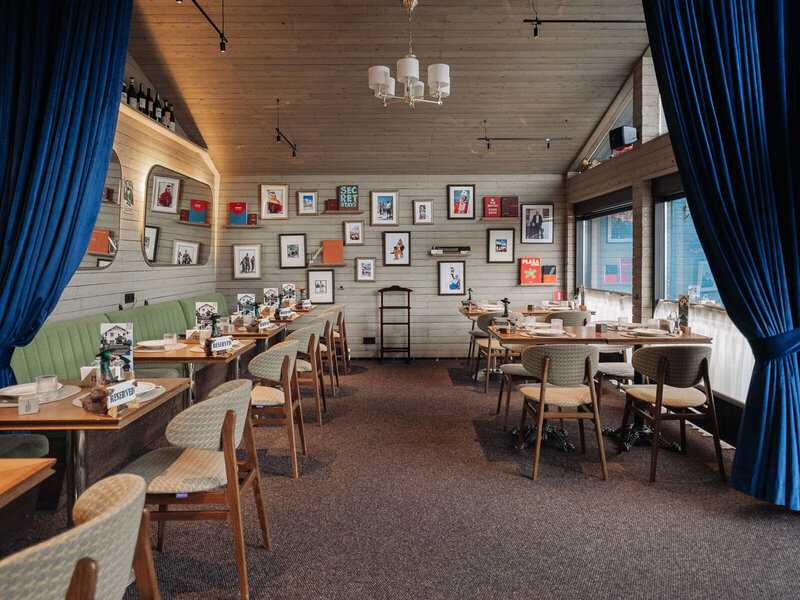
This wine restaurant from Gurgen Basentsyan’s Good Project — the group behind Selfie, Na Kryshe and others — sits by First President’s Park and has the air of a Scandinavian library: glass and timber, a slatted pergola and shelves rising to the ceiling. The bottles form a collected works of winemakers from across the globe. Arranged by grape variety, the list opens in Kazakhstan’s Assa Valley, travels through Slovenia and Lebanon, and arrives at the great houses of the Old World. The culinary section is no less rich in plot twists: chicken-heart stew, gnocchi with cured egg-yolk bottarga, air-dried beetroot in pomegranate sauce and, at breakfast, cottage-cheese doughnuts with irimshik sauce.
This international franchise of classic English pubs has expanded through Kazakhstan at a particularly brisk pace. The guide features its first Astana address, at the Grand Alatau residential complex on the embankment; the capital now has three more, while Almaty has five. The house formula is faithfully observed: a sweeping bar, live sport, a substantial whisky collection and 16 beers on tap, including the brand’s own ales, bitters and stout. The bottled selection travels further, taking in the Czech Republic, Germany, the United States and beyond. The menu is every bit as substantial, with sausages, steaks, ribs and fish and chips — accompanied by a generous measure of wit. Smoked duck appears as «fillet without liposuction», while the East India-style prawns are described as «incredibly good with beer — and probably rather good without it».
Pioneers of craft brewing in Kazakhstan, Line Brew has grown into one of the Line Group’s most enduring restaurant names. The first opened in 1997; by 2026, there were seven across the country, including an address in Karaganda. Two Astana outposts feature in this guide: Line Brew at EXPO and Line Brew Reserve — the group’s contemporary spin-off — inside The Veil hotel. The family resemblance is clear: dark, rugged interiors; steaks taking top billing; and a formidable supporting cast of ribs, burgers and shashlik, all made to be paired with beer. That beer is produced at the group’s own brewery in the mountainous Karasai district, with amber, fruit and unfiltered varieties among the range.
From its address on Astana’s Nurzhol Boulevard, Lou Lou channels the boulevards of Paris — Montmartre and Clichy in particular. Dior plates set the scene; desserts arrive as miniature handbags or high-heeled shoes; and cocktails are introduced through fragrance samples. Inhale first, then choose between the berry-led Rich Raspberry and Mystical Diptyque, finished with a sprig of lavender. The salon-like interior encourages unabashed sybaritism. There are oysters, caviar and lobster; scallops Burgundy-style; Chateaubriand with morels; and Élysée soup with quail, foie gras and truffle. Guest residencies and collaborations are presented with the same immaculate polish: when the summer menu calls for a fruit platter, it arrives with an Eiffel Tower sculpted from ice.
Good Project’s see-and-be-seen bar lavishes as much attention on its party line-up as it does on the balance of a drink. Resident DJs share the decks with invited names, while Thursdays belong to Stereo Café, a weekly gathering for those who take their electronic music seriously. The bar moves fluently through sours and fizzes, Boulevardiers, Bellinis and bone-dry Martinis. Its signature bestseller is a deftly reworked Spritz: prosecco, five-year-old brandy, wild-strawberry liqueur and elderflower syrup. The finger food is every bit as dressed up as the crowd. Tacos and arancini sit alongside miniature pies filled with beef cheek, mushrooms and truffle, and profiteroles with chicken pâté and beetroot marmalade.
A diplomatic mission for Korean street food beside Baiterek, courtesy of restaurateur Sanzhar Umarov, whose international café Koktem is just next door. K-pop fills the speakers; coloured neon recalls the streets of Seoul; and steam rises from bowls of ramen like metropolitan smog. Seven varieties are served, from a vegan tofu version to fiercely spicy creamy buldak with mandu dumplings. Kimbap, corn dogs, tteokbokki — the menu runs almost as long as a K-drama. The restaurant even publishes viewing lists with recommendations for what to order with each series. A collaboration with glass-skin cosmetics here, a bubble-tea-and-matcha special for the BTS comeback there: these local demon hunters remain impeccably abreast of every trend.
Qazaq Gourmet stands on «eternal land» — the meaning of Mangilik El, the avenue it calls home — with its gaze fixed firmly on the steppe. Since 2016, the restaurant has been recasting its recipes through the language of haute cuisine. Brand chef Artyom Kantsev pairs lamb with lavender, sorpa with sherry, and horsemeat with either eel or vine leaf. Beneath a modernist shanyrak, dinner should end with a yurt-shaped dessert of peach mousse and sarysu caramel, accompanied by kumys infused with apple or rayhon basil. Before leaving, take a box of delicacies with you: kazy from Saryarka, truffle kurt, camel meat and chocolate zhent.
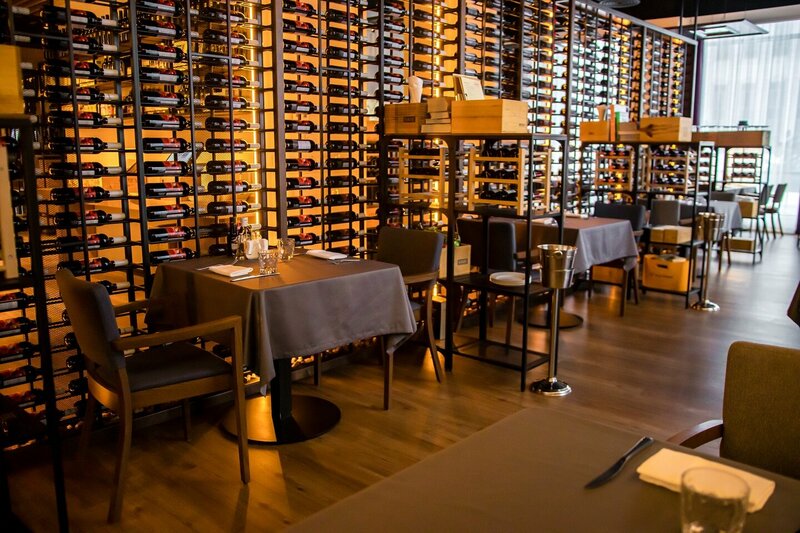
At this meat restaurant beside the Opera and Ballet Theatre, R is the defining letter of the alphabet. Roast beef with mushroom sauce and mixed leaves opens the many-paged menu; ribeyes occupy its centre. From there, it expands into an entire gastronomic A–Z: beshbarmak and burgers, udon and ukha, fettuccine and Philadelphia rolls, chebureki and morning shakshuka. Breakfast is served daily. The extended education continues in the wine list, where some 200 labels span both Old and New Worlds, with California taking the lead across the latter. Bottle-filled shelving divides the restrained interior into intimate zones; with its floor-to-ceiling windows, the atmosphere is closer to a private members’ club than a steakhouse beneath stone vaults.
A joint production by Good Project and Moscow’s White Rabbit Family, this restaurant operates at considerable altitude — both literal and otherwise. The interior bears the hand of designer Harry Nuriev; the windows frame Astana from the 18th floor of The Ritz-Carlton; and its own Astana Global Gastro festival draws chefs from Michelin-starred restaurants in Rome and Seoul, as well as Spain and Belgium. The kitchen approaches Kazakhstan’s culinary heritage with intelligence and precision. In the Heritage of Taste set, camel tushpara is paired with horse heart, Balkhash pike-perch with winter wheat, and kurt is transformed into ice cream. The main menu ranges more widely — octopus, pasta and borscht among it — while dishes rooted closer to home are discreetly marked KZ. The cellar keeps pace: Kazakh brandy, a considered whisky collection and a wine list of serious intent.
A speakeasy of international repute, concealed on the second floor of the Highvill residential complex opposite First President’s Park — admission strictly by reservation. Its name translates as «Temple», and the faith here is mixology. To remain mindful of their origins, the founders suspended a literal reminder above the bar: the root of a 150-year-old tree from their native Petropavlovsk. Beneath it, the bartenders serve as custodians of the craft. There is no menu; each drink is composed around the guest, whether an impeccably executed classic or something more elaborate involving kumys or wild garlic. Tartares and pâtés accompany proceedings. Yet candlelight and mysticism do not preclude mischief. When the occasion demands it, the temple loosens its collar — with a Bridgerton-inspired costume party, for instance.
The Uno team moves regularly between the restaurant and its farm in the Akmola region — and not merely to collect produce. Brunches have been held there, while social media offers a steady pastoral dispatch from the fields: sunflowers, beehives and chickens wandering through the frame. The cows supply milk for the on-site fromagerie; ask for the caciotta, burrata and ricotta, preferably with bread from the bakery — hearth-baked, Borodinsky or buckwheat. The restaurant menu moves from duck confit and beetroot risotto to horsemeat doner, while pelmeni, vareniki and syrniki are available to take home and cook. There are breakfasts and cakes, freshly pressed juices, locally made kvass and cider, house infusions and limoncello — plus gardening workshops for good measure.
Artyom Marchenko, founder of The Chef Group, learnt the fundamentals of cooking from his grandmother Zinaida and named his first restaurant after her in 2019. The family has since grown by another half-dozen addresses, yet guests continue to return to Zina with the easy affection of coming home. There are four dining rooms, a fireplace, a veranda and a children’s room with its own nanny, while the kitchen makes its own preserves, including lecho and sauces. Under the watch of the charismatic apashka-chef Aiman, the oven turns out pizza, skoblyanka, pike-perch koktal and chicken tabaka; kazy and steaks are entrusted to the grill. Begin with kholodets, or come for breakfast, when draniki arrive with duck crackling and a complimentary glass of sparkling wine.
Good Project’s high-rise restaurant states its location with disarming literalness — and the name is amply justified. Beyond the floor-to-ceiling windows, Maral Bridge, the embankment and the towers beyond unfold in full panorama. At dusk, the sky turns Aperol orange; in summer, the drink itself flows freely across the terrace. The menu is painted in equally vivid strokes. Roasted aubergine meets wasabi dressing; duck is paired with charred mandarins; halibut arrives with rye wort, beetroot purée, broccoli and crayfish mousse. The atmosphere has remained upbeat since 2013, helped by a wine list rich in Champagne, crémant, prosecco and cava — with even a sparkling Shiraz from Australia.
For the mall edition of their family restaurant by Baiterek, the team distilled the original down to its most appealing elements. On the ground floor of Mega Silk Way, they have made themselves thoroughly at home: soft toys, woven lampshades and breakfasts served in generous dacha proportions. The continental comes with turkey pastrami; the signature Dachny with a beef patty, mushrooms and tomatoes. Pizzas emerge bronzed from the oven; the grill takes care of lula kebab, doner, sea bass and beef chops. Drinks follow the weather — mulled wine when it turns cold, sangria when it does not. Berry season, however, is permanent: the house cheesecake takes the form of an oversized blueberry, complete with a matching centre. Dessert readily extends into a full tea ceremony, with Kazakh-style tea brewed with tary, a Tashkent blend, or sea buckthorn with rayhon basil.
This seafood restaurant from Alexander Orlov’s Sun Group is entirely in its element on the restaurant-lined stretch of Turan Avenue, drawing guests in with a theatrical, marine-inspired entrance. Wild fish is displayed on ice and offered as a Thursday special; Wednesdays are reserved for oysters, Tuesdays for nomadic cuisine. Fridays call for cocktails, among them the menthol-infused Nura River and Submissive Jellyfish, served in a jellyfish-shaped vessel. The main menu was renewed in 2026, introducing a tuna smash burger, an octopus hot dog and wontons filled with pike. Long-standing favourites remain: golden crucian carp and seafood shawarma, alongside fishbarmak and koktal made for sharing.
The Turkic peoples embraced nose-to-tail cooking some 1,500 years before the 21st century found a fashionable name for it. At Saksaul, framed by carpets and the wooden skeletons of yurts, that inheritance is treated with reverence. A ram’s head is served as bas tartu with onion tuzdyk; liver is wrapped in caul fat for kebab; lamb tongues are folded through a charcoal-grilled salad; and offal is slowly braised for mi palau. Beshbarmak and baursak, horsemeat and sturgeon continue the story. Samsa emerge from the tandoor filled with chicken, lamb, potato or zhal; the cauldron of plov is opened with ceremony at precisely 12.30pm and 7pm. A lyrical tribute to an age-old cuisine and a life shaped by the desert, the meal reaches its finale with fragrant Kazakh milk tea and the suitably epic Gold of the Saka dessert.
Since opening near the embankment in 2017, this bistro-café has gathered a loyal, close-knit community. Breakfast regulars order the shakshuka with mozzarella; from the main menu — sandwiches, pasta, burger, bowl and solyanka — it is the hummus with chicken that earns the most praise. Weekends are for specials and tiramisu. When neither filter coffee nor a raf quite appeals, there is kofechai, a coffee-and-tea blend with sesame and condensed milk; rosehip masala, meanwhile, comes with an obligatory shot of rum. Evenings belong to wine, with new arrivals displayed on the shelves. There is invariably something worth staying for, whether an art brunch or a photography day.
Bar, boutique, enoteca — the label matters less than the gathering. Much like the ancient Greek agora, this is a place built around the pleasures of good company and serious wine. The cellar holds more than 1,000 bottles and has consistently received Wine Spectator’s two-glass distinction. Champagne is a particular strength, with some 100 cuvées ranging from the grandes maisons to boundary-pushing grower-producers. The delicatessen is just as exacting. Agora’s ties to importer AZ Syndicate give it access to an enviable selection of European cheese and charcuterie: foie gras from Rougié, the French house founded in 1875, and salumi from Lombardy’s Vismara, established in 1898. A concise menu of pasta, bruschetta and tartare puts these ingredients to good use. The events calendar, however, is anything but modest: dinners amid lavender fields, an annual wine salon, visiting chefs and regular tastings.
Akami has the address — Almaty’s Golden Square — and a menu to match. O-toro, the lushest cut of tuna belly, is sliced for sashimi; chu-toro is topped with black caviar; crab runs through the noodles, gyoza and rolls; wagyu comes laced with truffle. Opulence is the house language, spoken just as fluently by the sake list, the cellar of collectable wines priced well into six figures, and cocktails lifted by aloe, yuzu and calamansi. Chef Vyacheslav Kim honed his craft in Tokyo. Bluefin has been flown in from Toyosu Market and butchered on site; omakase is served by the set; fresh wasabi is grated, as tradition demands, on sharkskin. Akami gets the grand gestures right — but it is these quieter details that reveal its pedigree.
Aurora, the two-storey café by Assel Tatisheva — whose Aurora Space sits nearby — bills itself as Almaty’s favourite neighbourhood haunt. It occupies a 1961 building once home to a public telephone exchange. Following its latest renovation in 2026 — one of several since opening in 2014 — the café is connecting the city once again. Local historians, writers and record collectors host walking tours, readings and vinyl evenings, while an installation made from guests’ letters gives the interior its most personal touch. The menu is broad but comforting: pies, miniature chebureki and breakfasts ranging from sweet plates to hummus and Asian-inspired options, alongside pasta, pizza and sandwiches. Specialty coffee leads the drinks list, joined by wine, cider and smoothies.
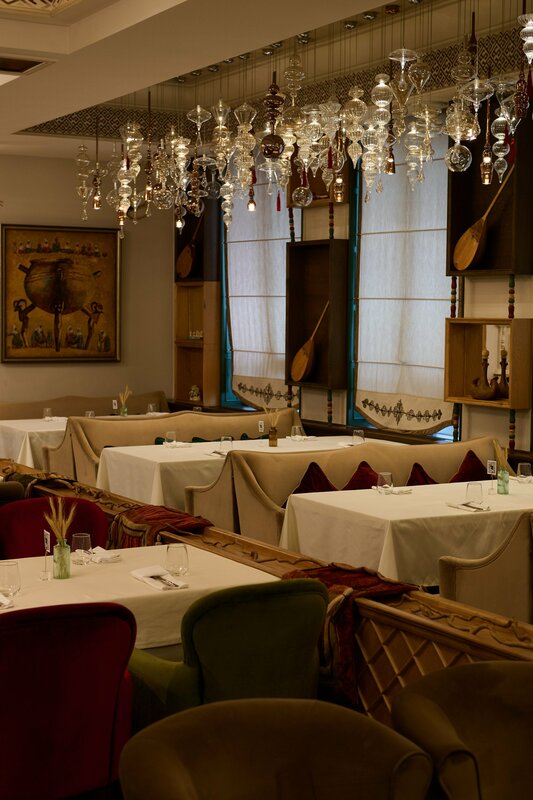
Auyl, from the ABR hospitality group — also behind Palomar and Spiros — has become one of Kazakhstan’s most internationally admired restaurants, recognised by UNESCO among the world’s most beautiful dining rooms. It inhabits a modernist landmark high above Almaty, near the Medeu skating rink. The mountain setting provides the drama; the architecture holds its own. Façades of honey-toned Mangystau shell limestone frame a monumental mosaic of Kenesary Khan on the hunt. Inside, Kazakh craft, sculptural forms and contemporary art create an atmosphere at once ceremonial and deeply connected to place. Award-winning brand chef Ruslan Zakirov describes the cuisine as neo-nomadic: ancestral flavours rendered with modern precision. Horse-meat tartare comes with pepper sauce; Dungan noodles with shiitake; beshbarmak with its full sense of ritual. Even the whole ram’s head arrives as a statement of memory, hospitality and tradition. The drinks follow the same cultural thread. Ayran is perfumed with mint oil; smoked kurt lends its saline depth to a sparkling punch. At Auyl, the nomadic table becomes something elemental and exhilarating — a portrait of Kazakhstan told through fire, stone, meat and mountain air.
The name and theatrical interior of this Italian bistro on the ground floor of Esentai Mall pay tribute to a celebrated feat by circus acrobat Luigi Banollo. Curtains frame the room like a stage, trapezes hang overhead and monkeys tumble across the wallpaper. Fresh pasta takes the starring role. Eight shapes can be paired with close to twenty sauces and toppings, from arrabbiata and Genovese pesto to ragù, tuna, Brie and ham. At dinner, one version with stracciatella is tossed tableside inside a wheel of Parmesan. Breakfast runs until evening, while the breads, chocolates and cocktails display the same playful sleight of hand. House-made gelato is spun into spaghetti; winter brings stollen dusted in gold, summer a toast served on watermelon, and the signature sour arrives with pine cones throughout the year. A spirited little performance, right down to the final course.
Long before dry-aged steak became an Almaty staple, Solo Group — the hospitality name behind Nuala, Ketch Up and Cubanos — was already serving it at Beefeater on Dostyk. Opened in 2017 and named after the ceremonial guards of the Tower of London, the original brings candelabras, a darkly handsome interior and a wide-ranging menu. Its younger Samal sibling, launched in 2022, offers a looser, more approachable mood. Both were recognised by the 2026 Ultima Guide. On the plate, the outlook is proudly local: KazBeef cuts, Almaty-style rib-eye, horse-meat chateaubriand and tartare finished with a light mousse of kurt. In the glass, the restaurant goes global, from ripe Australian Shiraz to stately French grands crus. Yerlan Aitbayev’s restaurants have a particular instinct for wine — ambitious lists, thoughtful choices and prices that invite you to order another bottle.
Part of the Good Restaurants group — also behind Percorso and Khoroshiy God — Benedict opened in 2021, a few steps from Almaty’s Arbat, and swiftly became one of the city’s most sought-after breakfast addresses. Served throughout the day, the menu moves generously from shakshuka and crisp potato pancakes to porridge and bagels. Its success led to Benedict Mix, a larger, more ambitious sibling inside the Nurly Tau skyscraper. Here, brand chef Oleg Petrichenko gives comfort food a playful edge: boscaiola pizza with meatballs, pastrami with honey mushrooms and miniature crab tacos. The wine list is concise and assured, leaning towards dependable European labels; breakfast, naturally, begins at 9am. Both Benedict restaurants earned a place in the 2026 Ultima Guide.
The biggest hit at Coco — now with three locations in Almaty and one in Astana — is not a dish at all. It is the honey-butter sauce: sweet, glossy and lavishly rich, with salt, heat and acidity pulling every flavour into focus. The effect is almost hypnotic. Burgers and chicken strips coated in it barely pause between kitchen and table. The rest of the menu is built around the same addictive logic. «Freaky Fries», burritos, pitas and katsu come charged with curry, caramel, gochujang, barbecue and chipotle — bold flavours calibrated to keep you reaching for another bite. ABR’s gourmet street-food direction is led by Abdulla Amin, a chef raised in London, one of the world’s great street-food cities. The Kunaev bistro wears that influence openly, with Banksy-style art and a London Underground map worked into the interior. For a taste of the city outside, order a local cider from Issyk or Apple City Cider — a crisp nod to Almaty, the city of apples.
Sun Group’s izakaya — from the team behind Queen Mountain Resort and Astana’s Ryba Pila — has swept into Colibri Mall in full plumage. The ground floor glimmers with fish-scale reflections; one level above, colossal dragonflies hover overhead. Subtle, it is not. Seductive, certainly. The kitchen matches the room’s polished extravagance. Sea bass comes off the robata beneath a lacquer of yuzu caramel; Peking duck is folded into dim sum or presented whole — half portions are available for the less ceremonious. The raw bar pairs tuna with truffle dressing, while rolls arrive loaded with crab, eel and foie gras. Cocktails draw on wasabi, pu-erh, lemongrass and dragon fruit, finished with silken matcha foam. By night, the restaurant slips effortlessly into party mode: music climbs, tables loosen, after-parties gather pace. Come for dinner, stay for the dancing — and expect to appear in one of the many, many photographs.
Ask anyone in the queue for Fika’s build-your-own breakfast what makes the place special and you may leave with enough material for a podcast series. The episodes practically title themselves: the Copenhagen-clean interiors; the sensitive restoration of the early-1950s House of TurkSib Workers; the salmon with a six-minute egg; Danish pastries scattered with blueberries; and the much-photographed «dopamine buns». Then come the Sunday specials and summer barbecues. The burgers and katsu sandwiches inspired such devotion that guests launched a petition to keep them on the menu. Bread and kombucha are made in-house; sausage rolls are paired, quite correctly, with sparkling wine. Pasta, bowls and a smart wine list carry the café from breakfast into evening. Fika calls itself a social club, and the description fits.
The name nods to Casablanca, the 1942 classic, and the spirit of Rick’s Café lives on in more than cinema nostalgia. Chandeliers and sweeping drapery set the scene; the crowd dresses for the occasion, and introductions seem to happen of their own accord. The team behind the bar has the pedigree to match, with serious names and formidable résumés on the roster. Gin provides both the subject and the raw material. The collection spans 100 bottles from five continents: Canadian distillations, British gin touched with sea salt, and expressions built around Indian botanicals. The French 75 — the film’s defining cocktail — is recast with a house twist, while the Almatini brings the story closer to home with Almaty’s native Aport apples. Bruschetta and antipasti keep the drinks company.
Twenty minutes from central Almaty, Haragun stretches across 20,000 square metres of apple orchards. More than a country retreat, it is a fully fledged equestrian estate, complete with a professional riding club and guesthouse. The restaurant occupies a design-led barnhouse overlooking the riding arena and lawns, which host open-air cinema and live music in summer and become a skating rink in winter. Inside, the mood is one of refined country living. The menu sets off at a gallop with ten preparations of lamb from Haragun’s own farm, from the whole head to slow-cooked shank, before ranging across the globe: oysters, crab, wagyu and black cod; hummus, burgers and beef stroganoff; pizza and pasta. The wine list is equally wide-ranging, spanning Kazakhstan, Europe and the New World.
Restaurateur Natalia Tuktarova and Brand Chef Dmitry Krasnov are hardly newcomers to Esentai: their Italian bistro Banollo already has a place in the neighbourhood. Honey-Honey casts the net rather wider. At breakfast, ricotta syrniki are the runaway favourite; elsewhere, there is an extensive line-up of sushi and rolls — Philadelphia has a particularly loyal following among the city’s fashionable set — and 15 pizzas straight from the oven, with toppings ranging from truffle to the rather less conventional pairing of sausages and crisps. Those keeping things lighter can turn to poke, bowls and low-carb Japanese shirataki noodles. The drinks list is equally broad, led by cocktails, while statement lighting provides a suitably photogenic backdrop for social media.
A few steps up from Abylai Khan Avenue and the mood shifts somewhere between Marseille and Naples, before wandering off around the Mediterranean. La Barca’s blue-and-white interiors are old-school in the best sense — the restaurant has, after all, been moored here since 2014. Think shutters, linen-covered tables and gleaming brassware. The menu stays close to the sea: oysters and scallops, turbot and sole, grilled octopus and linguine alle vongole. The wine list has little interest in passing fashions either, with Chablis and Gavi from houses whose reputations have been built over decades. The same could be said of Slobodan, La Barca’s imposing maître d’. He’ll expertly carve a salt-baked fish, guide you through the day’s catch on ice, dress tartare tableside and point you towards the house provisions worth taking home — oils, olives and pâtés.
A Tomsk-born pizzeria has found its Almaty home alongside speciality coffee shop Coffee Roots. Overhead, the ridges of the Alatau emerge across the ceiling when viewed from just the right angle; a couple of the tabletops, meanwhile, are made from plastic collected locally. Coffee classics and filter brews share the billing with pizzas named like a particularly eclectic festival line-up: Meat Jagger with horse-meat roast beef, RHCP with chorizo and Aquarium with salmon. It is almost Woodstock 2.0 — and, fittingly, there is a Woodstock pizza too, topped with ham. The menu also covers pasta, sandwiches and breakfast, with a concise selection of craft beer and wine. The logo sets the tone: a pizza cut into a peace sign. The same good-natured spirit runs through the place, from organised runs and film screenings to the occasional climbing-wall voucher, given away simply for the love of the mountains.
Solo Group’s wine restaurant, set inside the Central Post Office, is the bearer of good news in every sense. It is a place that invites a little dressing up, whether for a table beneath the beaded chandeliers or out on the summer terrace — all the more so when Champagne is flowing freely or seafood is on the barbecue at sunset. The food is dressed for the occasion too. The menu is divided between Water — bouillabaisse, spaghetti with whelk, anchovies with stracciatella — and Land, where lamb comes with artichoke and roasted beetroot with chicory. The wine room saves the best news for last: one Wine Spectator glass, 800 labels, more than 120 bottles of Champagne and prices that remain remarkably reasonable.
Bird-filled frescoes, stately columns and sweeping arches give this Spanish restaurant by abr the feel of a Seville palace; step onto the lush terrace and the mood shifts to Marbella. Brand Chef Ruslan Zakirov keeps the menu firmly in Spain, with oxtail braised in sherry, Madrid-style stew and grand paellas, while the tapas run to croquettes, toasts and jamón. The wine list is just as committed, with no fewer than 40 wines by the glass, from Albariño and Bobal to Garnacha. And the Spanish spirit extends well beyond the table. In 2026, the restaurant screened the World Cup final; its outdoor décor came courtesy of Roche Bobois and its collaboration with Almodóvar; even the buckets for Sunday churros featured Penélope Cruz on the poster for Volver. Here, it seems, everything speaks Spanish.
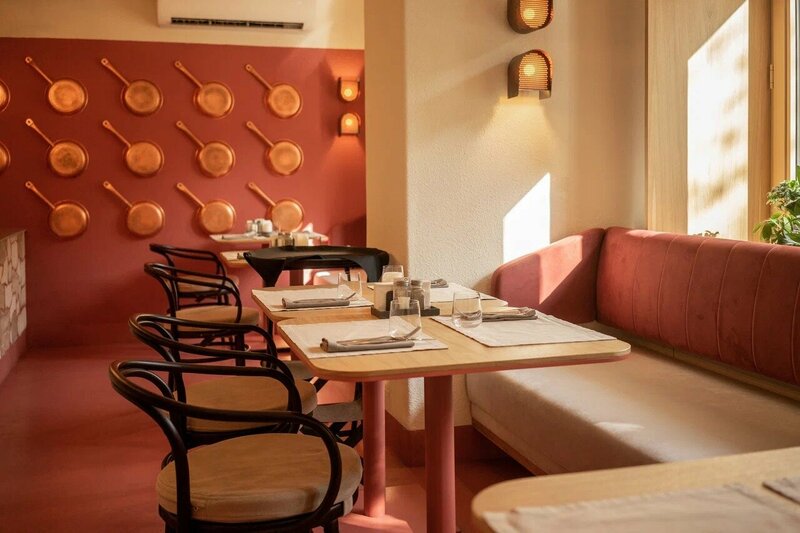
Pop art made from frying pans, a tongue-in-cheek pasta installation and totemic motifs give Percorso the feel of something dreamed up by Memphis, Milan’s famously rebellious 1980s design collective. In the kitchen, the Italian restaurant from Good Restaurants takes a similarly playful approach: cacio e pepe comes with tuna and chanterelles — a combination that may divide opinion — while the pizza is widely considered among the best in the city. The toppings are anything but predictable: rabbit with tarragon, lamb with peperonata, chicken with ricotta sauce. Order Tuscan or Piedmontese wine with the bruschetta and burrata; with a spritz, try the house-made gelato in lemon, strawberry or salted caramel.
The 2025 revival of Almaty’s legendary ice-cream parlour by Simple Pleasures — the group behind Rifugio del Monte, Pier and others — is a rare case of a comeback done right. The original 1967 building, designed by Malbagar Mendikulov, then chief architect of Alma-Ata, is remembered in a wall panel, while a mosaic of swallows comes courtesy of Art Oskolok, the studio whose work has also appeared in Ultima delivery boxes. Every Almaty resident, it seems, has their own Karlygashka. It was the place for after-school treats and dates, for syrga salu and tusau kesu celebrations — and, above all, for the much-loved plombir, now once again served in its traditional glass bowls. The kitchen is as welcoming in its range as the drinks list: caviar and pirozhki, borscht, sea bass and beshbarmak, pizza and breakfast all find a place on the menu.
Sun Group Asia heads for the hills with this restaurant complex on the Malaya Almatinka, en route to Medeu. The scale matches the setting: some 500 guests can spread across two floors and a series of terraces, all with commanding mountain views. The programme is equally ambitious, moving from headline concerts and Courchevel Air Fest in winter to an okroshka bar and Pilates come summer.
Its own dairy produces around 20 cheeses, and not only the familiar sort: there is caciotta with nettle, for instance, and feta made from camel’s milk. The rest of the menu is just as wide-ranging — pizza from the oven, samsa from the tandoor, shashlik from an Argentine grill, plus dimlama and a whole kid-goat shoulder to share. Between the food and the drinks, there is something for virtually every appetite and occasion.
At Shymbulak, Rifugio del Monte may call itself a mountain hut, though the name is delightfully understated: this is Alpine glamour through and through. For a more spirited après-ski, settle into the furs on the terrace over oysters and Champagne, lobster and borscht with foie gras. For something quieter, retreat to the chalet, where duck figurines and photographs of 1970s skiers set the scene. A bottle of Puligny-Montrachet might accompany sardines, goulash and venison pelmeni; by morning, there is the Tourist’s Breakfast with pastrami. Either way, the view looks out over a quieter sweep of the Trans-Ili Alatau, far from the tourist crowds — the sort of panorama on which everyone can agree.
ABR’s modern Greek restaurant on Dostyk makes a natural stop en route to the mountains — or on the way back — though staying put and imagining yourself on Mount Parnassus works just as well. The familiar blue-and-white shorthand is nowhere to be seen. Instead, the room is washed in shades of sand and oyster, with 1,100 ceramic petals forming a wall of delicate fish scales. The menu speaks fluent Greek: moussaka, gyros, prawn saganaki, dolma and trout with garlicky skordalia. Every Thursday brings the fish market, when the catch is served raw, fired in the Josper or cooked in acqua pazza. Among the wines, seek out George Skouras’s Assyrtiko, alongside bottles the sommeliers have brought back from Macedonia, Santorini and the Peloponnese. Such bottles have been known to call for a whole lamb roasted over grapevines.
Almaty’s oldest Japanese restaurant — and, by some accounts, the oldest in Central Asia — has held its ground since 1997. With the staying power of a seasoned sumo champion, Sumo-San has outlasted rivals and weathered decades of changing tastes in nigiri and maki. Yet the city’s affection for its sushi and rolls remains remarkably intact, particularly for the Philadelphia Round, pressed sushi with smoked eel and the salmon-crowned Yokozuna. The sets still arrive aboard traditional wooden boats, though the menu ventures well beyond sushi: dim sum, gyoza, ramen and tom yum all make an appearance. With its terrace, dedicated tea room and samurai watching over the dining room walls, Sumo-San has become something of an Almaty institution — one whose guests have included the Ambassador of Japan.
In 2026, the neo-bistro on Abay ave. was indeed handed over to them — the name says as much. The sommeliers behind wine bar ÀGORÀ took the reins and promptly redrew the map: 70 wines are now poured by the glass, while a 400-label cellar is kept in lively rotation. The address unfolds over two dining rooms, complete with bar and wine cabinets; a loggia framed by a panoramic window; and, one floor below, a discreetly concealed speakeasy — though you did not hear that from us. Guest residencies, seasonal specials and breakfast lend the programme its pace. The cocktail list, conceived as an ode to DJ culture, arrives in the form of an LP, with the menu supplying the headline tracks. Lasagne and the cheeseburger are the undisputed hits; panzanella, mussels and ‘drunken’ chicken with morels are holding their own at the top of the charts.
«Fifteen kilts out of ten» runs one regular’s verdict — a rating as extravagant as it is unexpectedly sharp. Then again, this is a bar that hosts quiz nights; wit, like whisky, appears to be served by the measure. Denis Starodubtsev, one of the pioneers of Kazakhstan’s bartending scene, opened the place in 2015. The drinking happens upstairs, while summer brings a terrace to the entrance below. The WL stands for William Lawson’s, though the whisky cabinet ventures considerably further, with a particular fondness for Scotch single malts and intriguing bottles from Korea, Sweden and South Africa. The beer makes its own European tour, taking in England, the Czech Republic and Belgium. The food gathers momentum as it goes. Miniature chebureki, crisp cheese parcels and tiny liver-filled samsa lead to shepherd’s pie, before the menu settles into its most persuasive pairings: doner with stout, burger with lager, and shawarma with local craft beer. A thoroughly democratic approach to drinking — with rather exacting taste.
This sushi bar is scarcely larger than a two-room flat in a Soviet panel block: vintage finds and glass bricks at every turn, while the little front garden is watered with a hose stretched straight across the threshold. The Karaganda-born project may have named itself after a villain — akunin translates from Japanese as «evildoer» — but its appeal requires no dark arts. A fried prawn roll comes with creamy teriyaki; the California with a citrus-chilli sauce. Beyond ramen and noodles, there are reassuringly comforting potato dippers with assorted fillings. The cocktail list, meanwhile, tips its hat to the writer of the same name: it has been published as an illustrated book, complete with three-line verses. The Asian-style Margarita receives the following introduction: «Green fire / Bursts upon the tongue / Wasabi reigns.»
Abr’s Georgian restaurant clan has been in business for more than a decade; the outpost on the corner of Dostyk and Kurmangazy is the second of three in Almaty. In 2025, an ambitious new team brought it smartly up to date. The interior now evokes the book-lined apartment of a Tbilisi professor, while the uniforms take their cues from the well-dressed residents of Vake. Full houses swiftly followed. Tables are fiercely contested over khachapuri, khinkali, shashlik and chakhokhbili. The wine list moves from orange and house wines to fruit varieties and Kisi Special Reserve. To finish, there is chacha and tarragon ice cream from local artisan producer Umami; to take home, bread fresh from the oven and authentic Georgian spices, including kondari and kharcho suneli.
Restaurants built around the elemental pleasures of oven and grill have become a defining international tendency of the 2020s, and abr’s gastro-urbanists on Panfilov are entirely in step with the times. Steaks, chicken and lamb meet the flames; lasagne goes into the oven — locally reimagined with horsemeat — alongside sweet potato and shakshuka. The setting, however, is entirely singular. Ogonyok — Russian for «little flame» — has been kindled inside the former Ldinka ice-cream café, whose name means «little ice»: a pleasing elemental reversal. The pavilion is a monument to Soviet modernism, a movement of which Almaty remains a veritable treasure trove. The city’s rituals find their way into the cocktail list. An Evening on the Terrenkur comes with birch soda; The Long Road to Big Almaty Lake with pine-bud-infused gin; and The Bustle of the Green Bazaar with cardamom cordial.
Even an hour at this wine restaurant on Shevchenko is an hour well spent, though modest measures rather miss the point. This is a place for slowing down and giving oneself over to Epicurean pleasures. The sommeliers have assembled close to 300 labels, travelling from Bordeaux’s great First Growths and the clos of Burgundy to Piedmont, Rioja and Mendoza. Château Margaux vintages reach back to 2004; Château Lafite Rothschild to 1999. With something timeless in the glass, how could one resist taking a volume from the bookshelf? More tangible pleasures arrive in the form of oysters from the aquarium, Camembert with raspberries and poussin. Crab runs through the menu like a refrain: with chilli, in a cutlet and a salad, before receiving an entire section of its own — crab legs in milk, gunkan, spring rolls and delicate roulades.
Sprat and herring open sandwiches, cherry vareniki, pelmeni, «hedgehog» meatballs and stuffed cabbage rolls: if that roll call leaves you misty-eyed, Shchuka knows exactly how to handle nostalgia. Find it at the 4YOU residential complex, or at its second address on Abylai Khan avenue. The details are beautifully judged. Ceramic mugs are painted with the suggestion of a chip, recalling enamelware seasoned by years of use. Olivier comes with or without apple, depending on where one’s loyalties lie. The branding steers clear of folkloric pastiche, borrowing its visual language instead from architectural history. The house infusions run to coffee, currant and blackberry, while weekends bring «foam» parties, fuelled by Shchuka’s own lager. Old fairy tales are retold here with a knowing twist — and, at the pike’s behest, resistance is entirely futile.
A signless semi-basement beside a car wash, hidden in the courtyards downhill from the Green Bazaar: locations come little more discreet than this. Yet «Syosyoshechka», as its creators affectionately call it, enjoys a reputation far beyond Almaty. The World’s 50 Best Bars once named its cocktail menu among the world’s most inventive — and with good reason. Take its ode to cinema therapy: 11 films, each interpreted through mixology, gathered into a book with a mirrored dust jacket. It is a tactile, interactive marvel. Perform a good deed and the bar will reward you with a complimentary cocktail; the running tally is recorded on the wall. The food occupies a single page, but every line earns its place: noodles, curry, pho ga, tteokbokki, chicken karaage and ramen with pork belly.
Chef has been at it since 2015; a second address followed in Medeu in 2026. The line beneath its name reads «soulful cooking», expressed here through hummus and gravlax, roasted marrow bones, naryn and smoked ribs. The menu cheerfully credits the pita starter to a goat named Nyusha. Bread and pasta are made in-house, as are the infusions: limoncello, pomegranate and rum steeped with passion fruit. The bar, meanwhile, makes no secret of its magnificent obsession with the Negroni. Thirty riffs on the classic have been devised, together with a set of cards for constructing one of your own. There is little danger of a dull evening — not least when the menu proposes an adult Happy Meal of truffle burger and sparkling wine.