A terrace with a view over the city
The highest vantage point in this selection. From the seventh-floor rooftop, the city reveals itself in full — a shifting, restless panorama laid out almost within reach. The space carries a distinctly Mediterranean inflection: sand-toned marble, crisp white plaster, cypress trees set in oversized planters. There are also quiet references to local architecture — most notably the panjara, its carved patterns casting a delicate, almost mosaic-like filter over the urban view.
The menu follows suit. A generous wine list, rare cheeses, house-made pasta, baked Camembert with figs, a signature margherita finished with smoked mozzarella, gnocchi Parmigiano — the list unfolds at length. The restaurant opens at 6pm, just ahead of sunset, so it is worth clearing your lens: this is the kind of dinner that tends to linger, both on camera and in memory.
A terrace by the sea
The terrace at Kaspiyka, in Tashkent City Mall, is easy to spot: a scatter of white pebbles that reads almost like a shoreline. The impression is unmistakable — a pier, a boat newly moored, the day’s catch just brought in — an idea quietly reinforced by the display of fresh seafood laid out on ice inside.
The space is shaped by a gentle, marine-inflected sensibility. Pale timber and soft ivory tones create a calm, luminous base, lifted by flashes of blue. Details — nets, coral, shells — are handled with restraint, adding texture without excess. Seafood takes precedence, as it should: salmon, sturgeon, and an extensive selection of shellfish. One can order in the usual way, or choose directly from the display. The oysters alone — fourteen varieties — are reason enough to linger.
A terrace with a rare sense of space
What sets this place apart is its generosity of space. The semi-circular terrace allows for a rare sense of distance between tables — a quiet luxury in a city where most dining rooms are inclined to press a little too close.
Across Breadly’s other addresses, terraces are handled with the same sensitivity. Felicita offers the archetype of a European café — light, ease, familiarity — while the Novomoskovskaya outpost leans towards something more secluded, framed by greenery.
The food remains one of the group’s constants: tartines, layered pastries, a classic pain au chocolat. Alongside these, a more considered line-up — wholesome porridges, modern superfoods, eggs prepared to order — brings a welcome sense of balance.
A terrace by the water’s edge
The terrace looks out over the Burjar Canal and the Seoul Mun promenade — one of the city’s most animated routes. Set on the second tier of the complex and slightly removed from the main walkway, it offers a sense of distance without ever fully withdrawing from the scene. Silence, however, is not the point: the mood is shaped by the sound of fast-moving water, singing fountains, and the low, constant hum of the city.
In keeping with its mountain-house spirit, the restaurant is deliberately straightforward. The menu reads plainly — borscht with pampushky, generously filled dumplings, naval-style pasta — yet avoids banality. Familiar dishes are given just enough attention to feel quietly refreshed.
A terrace as an expression of luxury
A recent arrival on Tashkent’s dining circuit, Novikov Cafe — the sort of place one gravitates to when the brief calls for something considered, well-run, and faintly indulgent. The terrace is a defining gesture: composed, assured, and calibrated down to the smallest detail. There is a particular confidence to the setting — the kind that quietly recalibrates your sense of expectation. It is there in the pacing of the room, in the unspoken promise that things will unfold exactly as they should — including the lobster in your salad.
The kitchen follows suit. The menu moves between the Mediterranean and Southeast Asia, yet it all feels impeccably coherent. Still, certain dishes have already taken on the status of house signatures: a finely sliced red snapper carpaccio, and the generously cut Napoleon that has, since the early days, become something of a calling card.
A terrace with a sense of history
Basilic is one of the enduring fixtures of Tashkent’s dining scene. Since opening in 2009, it has held its place among the city’s more established and exacting addresses — a position it continues to maintain with quiet consistency.
The terrace sits slightly apart, shaded by a dense canopy of trees that keeps it notably cool even in the height of June. In winter, it is enclosed in glass and reconfigured as a fully fledged dining room, retaining its sense of intimacy.
The menu is grounded in Italian classics. The pasta remains among the most accomplished in the city — particularly the capellini with truffle and the Bolognese. In summer, the seasonal grape sorbet is not to be missed.
A terrace where voices lower
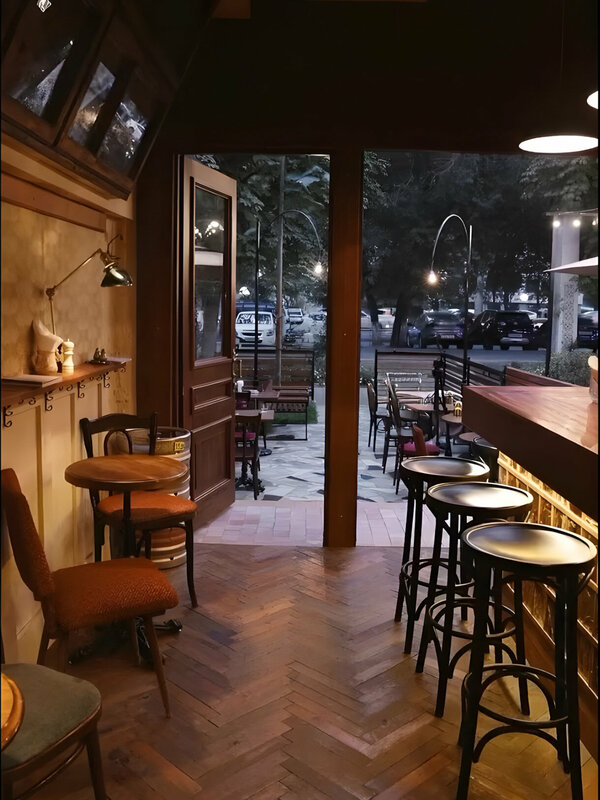
The new-wave shot bar — a format having its moment — has made its way to Tashkent. Zimmer draws those attuned to restraint and a certain cultivated nostalgia; any trace of ostentation is firmly kept at bay. No signage that clamours for attention, no music that competes with conversation.
The summer terrace, which doubles as the entrance, follows the same quiet logic: compact, composed, and almost deliberately understated. It functions as a threshold — a place to settle into the room’s particular cadence. Voices drop instinctively to a near-whisper; what carries are softened, unhurried exchanges and the light, precise chime of glasses filled with house infusions. The range is quietly expansive — from a classic limoncello to more unexpected notes such as honeysuckle — and just varied enough to give pause. The food, at first glance, appears disarmingly simple, but the effect is anything but. A potato pancake with herring, pâté paired with fresh strawberries, profiteroles filled with Belgian chocolate — each lands with a clarity of flavour that lingers longer than anticipated.
A terrace with a wellness sensibility
A café shaped around a wellness ethos, where balance and a certain attentiveness to the self take precedence. In warmer months, that sensibility extends to the terrace — compact, composed, and notably serene. It is a space that invites a slower tempo, where comfort feels intentional and the pleasure lies as much in the atmosphere as in what is served.
The menu reflects that same clarity of purpose: protein syrniki, gluten-free pizza, and a range of composed bowls. For those inclined towards something sweet, there are handmade confections and sugar-free desserts. The drinks list leans into the theme, with a considered selection of smoothies and detox blends.
A terrace with a fireplace in the garden
The courtyard of one of Tashkent’s longest-established wine addresses remains an essential stop on any serious list of the city’s summer terraces. Thick greenery and an almost improbable quiet — broken only by birdsong — give the place the atmosphere of a country garden rather than a table in the middle of town. In the rain, it becomes more atmospheric still.
You can settle into the sofas along the walls or take a table by the fireplace — a real one, and often lit on cooler evenings. The menu is particularly strong on small plates, with the salmon mousse éclairs especially worth your attention; there is also an excellent selection of fish, while the meat is cooked over wood. And then, of course, the wine: a cellar of some 150 bottles, drawn from around the world.
Images: restaurant websites and social media; Yandex Maps