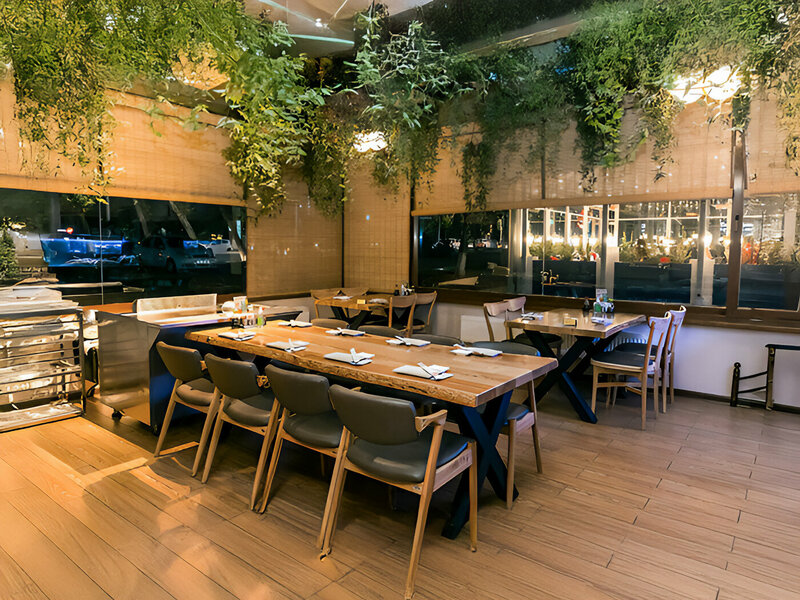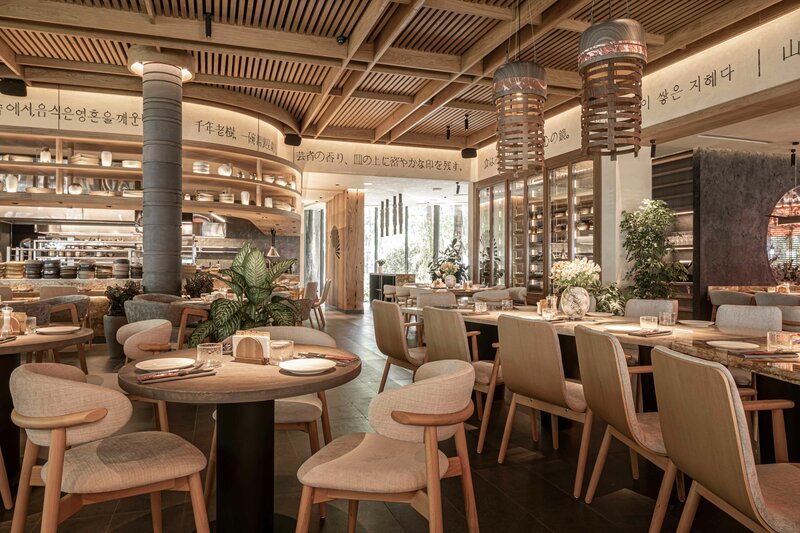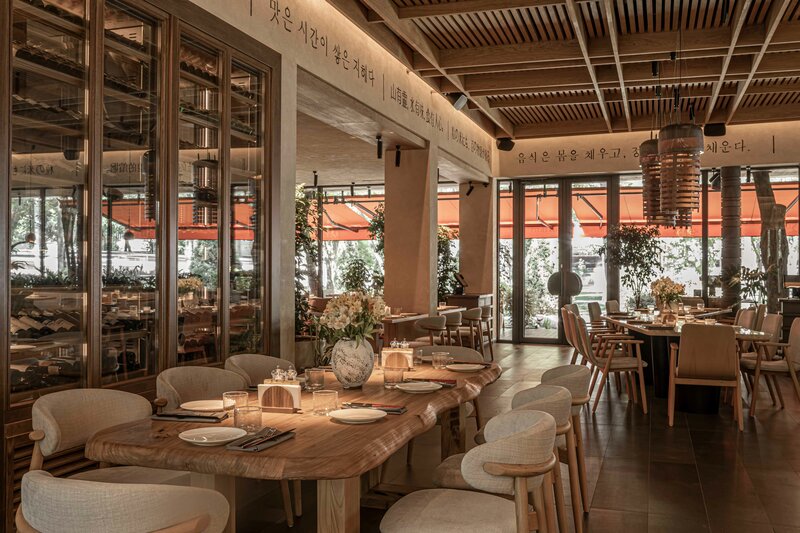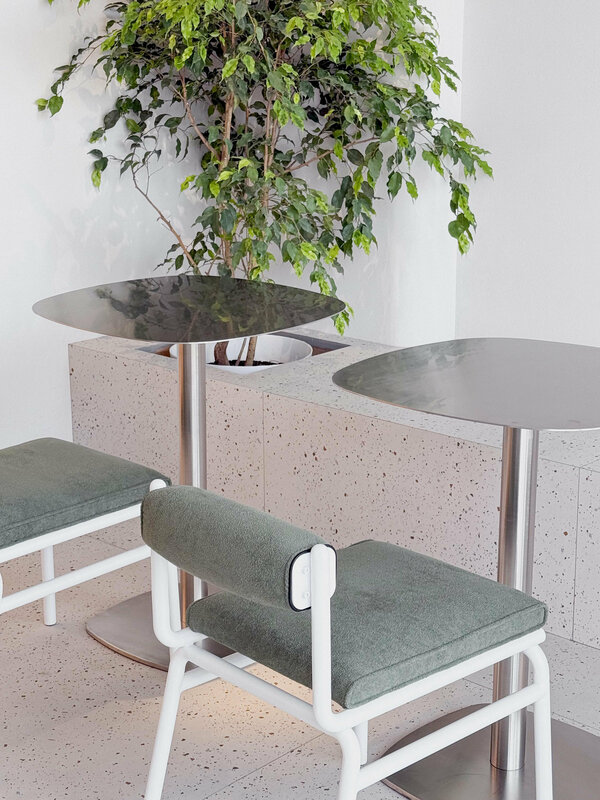
We begin with one of the restaurants that first introduced Japanese cuisine to Tashkent — and remains a reference point to this day. If a sudden craving for Tokyo’s sushi counters at the former Tsukiji fish market ever strikes, Teppanyaki is where to follow it. The sashimi — Japanese yellowtail and tuna — is as precise as it is satisfying, offered in several cuts, from clean and lean to richly marbled, the kind that melts almost instantly on the palate. Chef and founder Akrom Mirsaidov takes a disciplined approach to sourcing. A4–A5 grade wagyu arrives from Japan; crab and lobster are selected with the same attention to quality. The result is a kitchen that feels assured rather than showy. The teppan — a wide, flat steel griddle — is well worth exploring. Salmon, black cod, teriyaki chicken and premium beef are handled with clarity and balance, letting the ingredients speak in a distinctly Japanese register.
At Kitana, part of the Novikov Group, Asian ingredients and Japanese technique are handled with a kind of easy authority. The robata grill does most of the talking. High heat, charcoal, and timing come together to produce that precise contrast: caramelised on the outside, succulent within. Beef with black pepper, teriyaki salmon paired with kimchi tartare, prawns lifted with yuzu kosho — the kind of line-up that makes restraint unlikely. To start, a few dishes feel almost obligatory. Wasabi cucumbers, pineapple kimchi with ume plum, tomatoes glossed in ponzu with a touch of kimchi — all sharp, clean, and quietly addictive. The gyoza follow the same logic: wagyu, shrimp, crab with kimchi butter — but done with an unexpected lightness. No heaviness, no lingering garlic — just balance, and a certain finesse. Even the drinks list is considered. Sake, in particular, is treated with due seriousness — seven (!) distinct expressions, each worth a moment of attention.
Here, Japanese cooking is presented in its truest form — without ceremonial sets or staged rituals. Guests are welcomed with the familiar irasshaimase, the phrase you hear across Japan, meaning «welcome.» Chef Atsuto Uchiyama personally selects the ingredients each day, shaping a kitchen that serves food with substance and quiet confidence. You take a bite, and it brings back a very particular memory: a small izakaya in Osaka, where the owner speaks no English, you point at indecipherable characters — and what arrives turns out to be the best meal of your trip. Furusato leaves much the same impression. It’s the kind of place where you trust the kitchen — and are rewarded for it. Ramen, tempura, sushi, udon, along with other classics and less obvious dishes, are all worth ordering. Along the way, you’re offered a succession of small, thoughtful plates — a gesture that feels both generous and effortless. By the end, leaving is the only part that doesn’t quite appeal.
La Mer’s Japanese menu — a natural extension of its reputation as one of the city’s seafood destinations — deserves a closer look. The flavours are clean and exacting, built around a precise balance of fish and vegetables, with a quiet emphasis on quality and restraint — the kind that defines La Mer at its best. Begin with wagyu tataki lifted by sesame ponzu, cherry tomato kimchi, a light eel and avocado salad, or scallops served in their shells with shiso. The sushi is equally considered — a gentle reminder of how something once conceived as simple street fare has, over time, come to define a more refined register of dining. For the main course, the tone shifts slightly. Salmon with spicy miso, black cod glazed in miso, wagyu steak, and a selection of kushiyaki — delicate skewers cooked over flame. With a glass of chilled white, the atmosphere settles into something quietly transportive — as if the Pacific were not quite so far away.
Ku arrived in early 2026, following the Moscow KU projects of restaurateur Denis Ivanov and his wife, Chizuko. It is, first and foremost, a place to come for ramen — and to take it seriously. There are ten variations in all. Shio, light and saline, built on a clear chicken broth. Shoyu, deeper, edged with soy. And then tsukemen — the most compelling of the three. Here, the noodles are served apart from a densely concentrated broth, meant for dipping — a format that slows everything down, sharpening both flavour and attention. To begin, small plates set the tone: edamame with peperoncino, kimchi, Hong Kong–style smashed cucumbers. Gyoza follow — one filled with delicately seasoned duck, another with shrimp. Among the ramen, tori shio keeps things restrained and clean; tori paitan moves in the opposite direction, rich and opaque, with a distinctly creamy depth. Each bowl is composed with intent, rather than variation for its own sake. The room completes the picture. Maneki-neko lift and lower their paws in quiet repetition; screens drift between Tokyo and Mount Fuji; from the counter, the kitchen unfolds in plain view. There is something in that rhythm — unforced, precise — that feels very close to a small, well-run place somewhere in Tokyo.
No guide to Japanese cuisine would feel quite complete without dessert. Matcha sits at the centre of it — not just as an ingredient, but as something more symbolic: a quiet expression of Japanese aesthetics, restraint, and ritual. At Matcha coffeehouse, the approach is both classic and gently inventive. There’s the expected matcha latte, alongside hojicha, and then more nuanced variations — genmaicha with roasted rice, or matcha paired with lavender and butterfly pea tea. The matcharista will happily make your drink — or, if curiosity takes over, invite you behind the counter and walk you through the details that matter: how to hold the bamboo whisk, the rhythm of the movement, the way the tea is brought together in a wide bowl. For dessert, there’s a strawberry mille crêpe cake, madeleines with a dense matcha chocolate, and glazed cookies. And then, itadakimasu — a simple phrase, meaning «enjoy your meal, „.
Photos: restaurant websites and social media; Yandex Maps