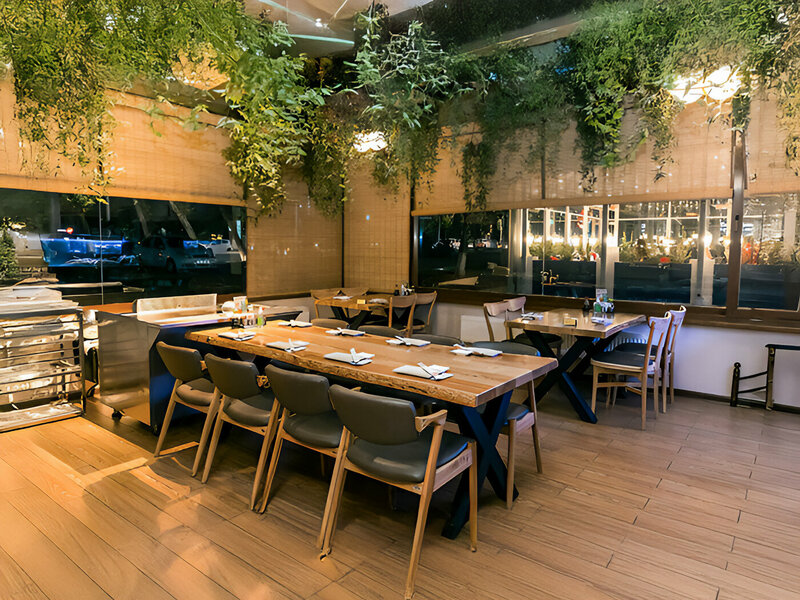
Pavel Georganov’s Loft café is rarely called by its full name — around town, it’s simply known as «Cafe.» The interior features neon LED signs, subdued lighting, and tongue-in-cheek posters that reflect the owner’s distinctive sense of humor. The head chef (aka Pasha) brings his culinary fantasies to life, blending European, American, and Asian influences into a single menu. It’s the ramen here that has become the stuff of local legend.
Ramen for UZS 150,000
The first impression is all about the broth: spicy, warming, merciless, with a vivid sesame oil aroma. The noodles are moderately firm, but you can tell they’re from a packet. The beef is cut into large pieces, tender and easily to pull apart into fibers, while the slightly sweet daikon adds a pleasant crunch. A large dumpling filled with a chicken filling turns up in the bowl — an unexpected yet oddly logical touch. There’s a lot going on in this bowl, and it’s precisely the abundance that makes this ramen so easy to fall for. But if you’re not on good terms with spicy food, you’ll want to proceed with caution.
Lapsha is a new-style pan-Asian restaurant and bar that marries Japanese izakaya vibes, street food, and elevated plating. The atmosphere sets the tone right away: red lanterns hang from the ceiling, and a mural on the wall shows a child happily slurping noodles. Here you can order poke, rolls, sashimi, and, of course, all kinds of Asian noodle dishes.
Ramen with beef for UZS 99,000
The broth is clear and mild, with no attempt to impress — it tastes mostly like a vegetable broth, with just a hint of meaty richness. There’s plenty of hand-made noodles in the bowl; they’re soft and delicate, though we’d have liked a bit more bite. The meat is sliced into neat, round pieces; bok choy and sprouted mung beans add freshness, and the whole thing is topped with an egg with a runny yolk. The ramen is neutral, almost home-style in feel. For us, it was missing some umami and overall depth.
Furusato serves traditional Japanese cuisine. The interior celebrates minimalism, with watercolor miniatures on the walls and paper lanterns casting a soft glow. The flavors are overseen by head chef Atsuto Uchiyama, who spent over 10 years working and training in restaurants in Tokyo and Yokohama. As a result, the Japanese food here stays very true to its roots, without any adaptation for the local market.
Oyakata ramen with chicken for UZS 120,000
The strength of this ramen lies in its balance. The broth is rich and full-bodied, with a pronounced soy sauce character and plenty of umami. The house-made noodles are firm, with exactly the dense texture you’d expect. The chicken is tender and well-cooked, yet still juicy. Wood ear mushrooms add a smoky, woody note, while sprouted beans bring freshness. Narutomaki and a sheet of nori serve not just as decoration, but also as flavor accents. This is that true taste of Japan people come here for.
When it comes to Japanese cuisine, Teppanyaki is one of the first places that comes to mind for Tashkent locals. The restaurant has long been known as a spot where high-quality seafood is handled with real skill. Here, it’s not just the food that matters, but also the process: some dishes are prepared right in front of guests on the teppan, and elements of show cooking become part of the evening. The focused menu is built with close attention to product quality and beautiful presentation.
Ramen with beef for UZS 95,000
The portion is noticeably smaller than at the other places. The broth was served already cooled, which dulls the first impression. Ginger and mushroom notes come through in the flavor. The noodles are thin and firm, with a distinct wheat taste. The shiitake mushrooms are bold in flavor and pleasantly chewy. The beef is very tender, excellent in quality, with a pinkish center. Expectations were high, given the restaurant’s status, but in this review we found stronger contenders.
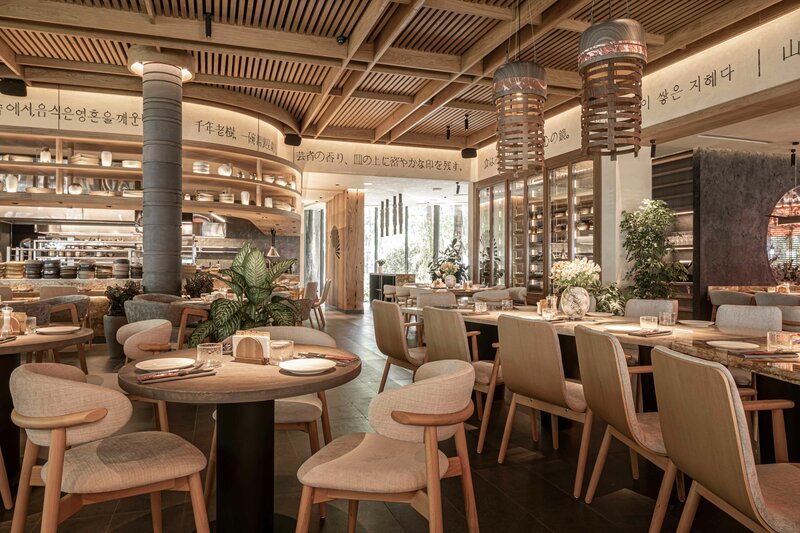
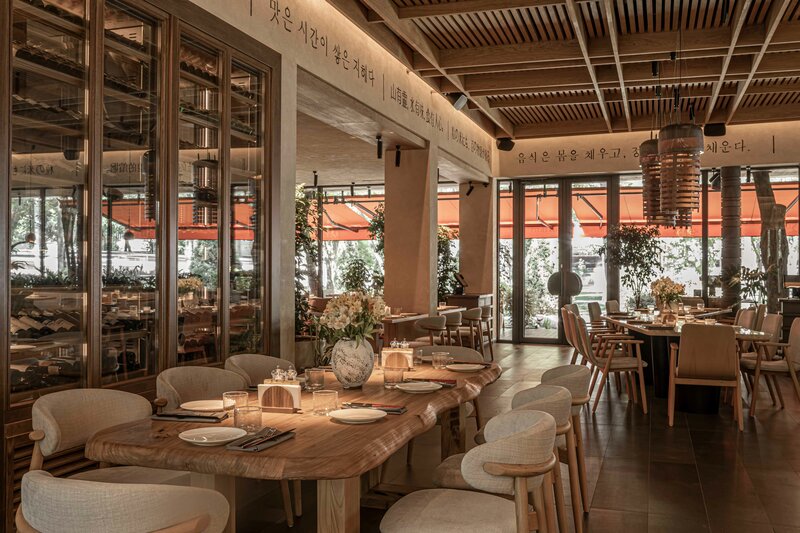
Kitana is a pan-Asian restaurant by Novikov Group, stylishly decorated in natural tones and materials. The centerpiece of the kitchen is the traditional Japanese robata grill, used to prepare most of the main dishes. The chefs’ work in the open kitchen becomes part of a gastronomic performance. The menu features modern Asian classics, fresh seafood dishes, signature drinks, and desserts for every taste, from mochi with kiwi and aloe to classic cheesecakes.
Ramen for UZS 138,000
The broth has a layered flavor, and you can tell a lot of ingredients went into it. Even with ready-made what noodles, which are pleasantly firm, the dish keeps the right texture. The beef is cooked using the shabu technique: thin slices of meat are quickly warmed in hot broth, staying juicy and tender, with a reddish center. The egg is marinated in soy sauce — delicious, but there isn’t much of it, since only half an egg goes into a serving. Spinach and two types of mushrooms — shiitake and shimeji — also contribute to the overall flavor. A very hearty, satisfying, and self-assured bowl of ramen.
Oko is a gastrobar on the 8th floor, where it’s easy to forget you’re in the city center. The space is designed to make you feel like you’re on a tropical island: panoramic windows, plenty of air and greenery, dance music, and the vibe of a holiday, even if it’s a short one. The food matches the atmosphere: a fusion of Balinese, Thai, and Japanese cuisines that delivers bold flavors and fresh combinations.
Shoyu ramen with chicken for UZS 95,000
The ramen is served in a deep bowl with a wooden spoon. The broth is rich, with a slight spicy note that feels very well-placed. The homemade noodles are firm and well infused with flavor. The chicken has a light smoky touch. Shiitake adds a subtle tang, and the soy-marinated egg is intensely flavorful. The ramen is cohesive, rich, and definitely memorable.
So, here’s our ranking of the best ramen spots in Tashkent
1st place — Furusato. This is where everything in the bowl finally clicks into place and shows what classic ramen is meant to be.
2nd place — Oko. Smoky chicken, firm noodles, and a broth you’ll want to finish even when you’re already full.
3rd place — Kitana. A deep, rich broth, shabu-style beef, and a well-balanced flavor profile.
4th place — Loft. A bold, full-flavored bowl of ramen with a generous array of ingredients.
5th place — Teppanyaki. Quality meat and great mushrooms, but we’d have liked a larger portion and a hotter broth.