Tashkent’s Top 20 Restaurants: Yandex Uzbekistan launches the Ultima Guide
The Ultima Guide was built in stages. A neural network first reviewed more than 3,000 venues across Tashkent against over 100 criteria. Projects open for less than three months were set aside, along with traditional bars, coffee shops, food halls and chain restaurants — formats that call for a different lens and a separate set of standards.
Artificial intelligence narrowed the field to 140 restaurants, from which experts and users then selected the guide’s final list. The vote brought together 39 local restaurateurs, chefs and food influencers, as well as 4,500 Yandex Go users who had engaged with the venues through Yandex services. Each participant could vote once, via an individual link.
The results were calculated using Yandex’s own scoring model and reviewed by the international consultancy Yakov and Partners. The selection methodology was developed with the support of Ekaterina Pugacheva, chair of The World’s 50 Best Restaurants jury for Russia, Eastern Europe and Central Asia.
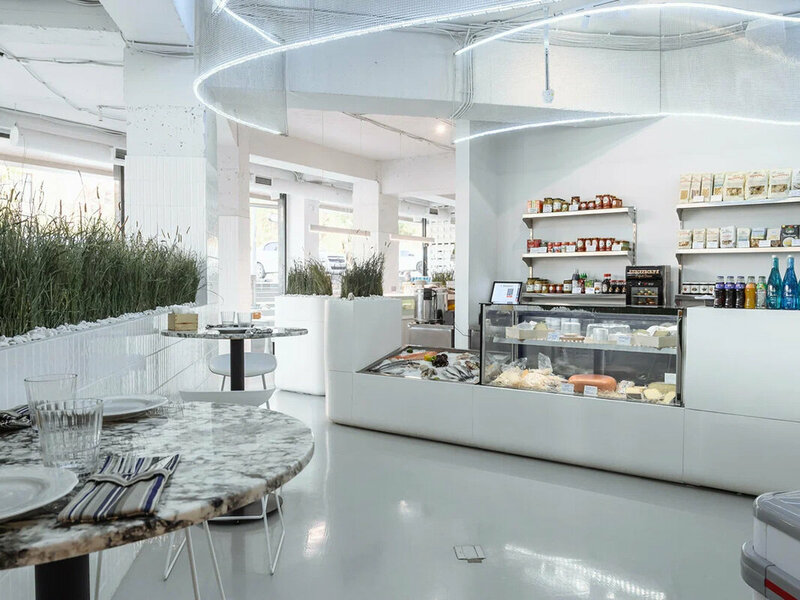
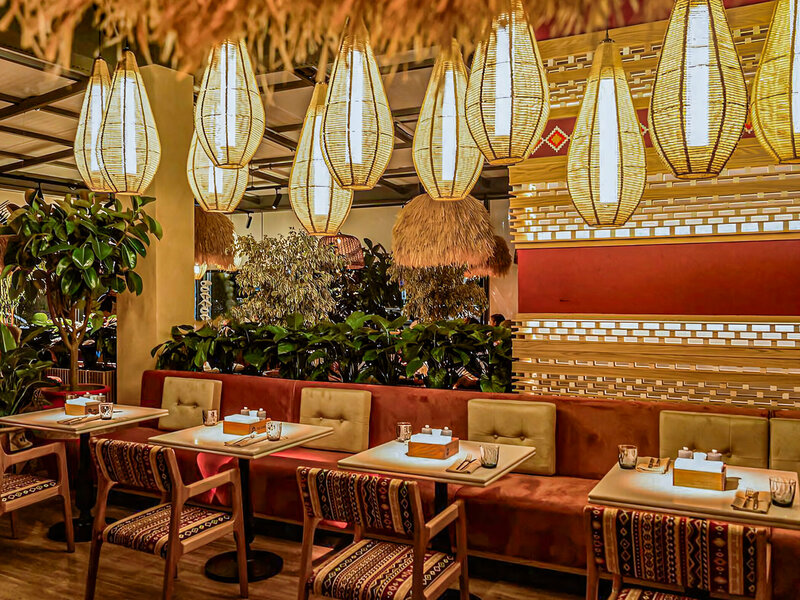
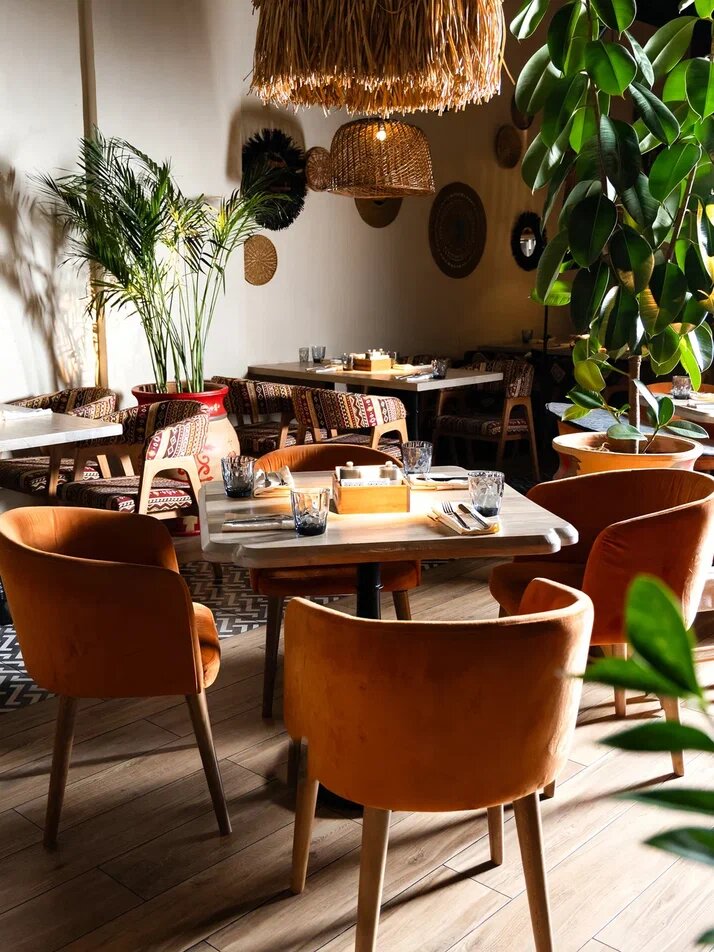
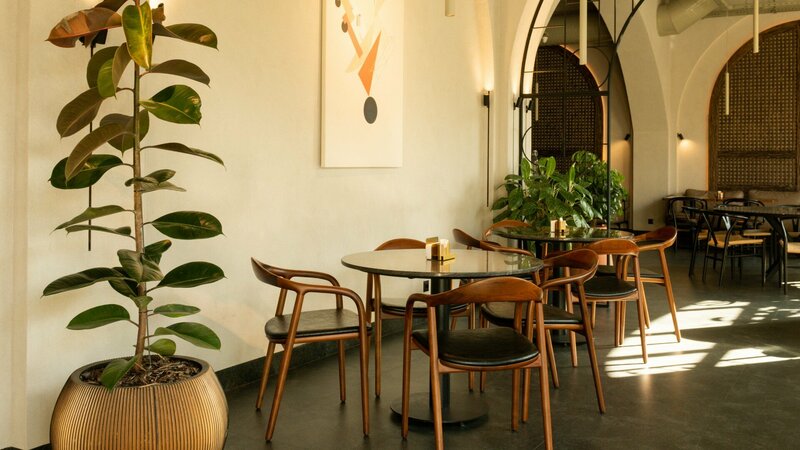
Tashkent’s top twenty were honoured with sculptural brass spheres — conceived as a signature mark of distinction, each one positioning its recipient among the city’s own gastronomic pearls. Three further awards added a sharper focus: Myasnoy secured both the Users’ Choice and Outstanding Service distinctions, Syrovarnya was named the experts’ pick, and Lali took the prize for Best Interior.
12
A Rooftop with Serious Presence
Tashkent’s most polished address of 2025 sits twelve floors up at The Tower — a restobar where the lift alone tells the story: tourists in shorts brushing past women dressed for the night. Dvenadtsat keeps a dress code, though the mood remains fluid. Think of it as a ready-made frame. After dark, the skyline flickers in the distance; by day, the mahalla below reveals a slower, more traditional rhythm. On the table: scallop with truffle, eel with lime and coconut cream — dishes by Islom Kurbonov, whose hand was refined in Moscow at White Rabbit Family and Beluga. The rest unfolds easily. A tight list of twelve cocktails. A cloud-like mirror. The dance floor. Even the smoking terrace, which has become, almost by accident, a place for introductions. The geotag does the rest — a steady stream of images, quietly multiplying.
Basilic
A Relic, Reimagined
Opposite the State Museum of Arts, Basilic reads less like a restaurant than a fixture — not a fleeting garden herb (rayhon, as it’s known locally), but something enduring. Since 2009, it has come to embody a quieter, more assured register of luxury in Tashkent. Inside, the mood is composed with near-ceremonial precision: candlelight against time-softened surfaces, carved wood, linen laid crisp and white, and a green courtyard that carries a hint of Tuscan stillness. The menu follows suit — Mediterranean, generous without excess: oysters, foie gras terrine, halibut with scallops and saffron, duck magret lifted by Chianti. The wine list leans confidently Italian, its pages marked by familiar houses and long-standing names. And for a clientele disinclined to choose between worlds, a separate, expansive offering of sashimi, gunkan and rolls completes the picture — not as a concession, but as part of the rhythm.
Gravity
No pull stronger than another byte
The first question at Gravity — set high on the top floor of the Sapiens hotel — is not what to order, but whether you’ll make it inside. Entry is deliberately controlled: a short list of hotel guests, private members, and those who arrive by way of a well-placed introduction. Beyond that threshold, the room settles into its own orbit. Media, marketers, the wider creative set — a crowd that moves easily between work and after-hours. By day, laptops open beneath a retractable roof; by evening, the pace shifts — afterparties, late starts, mornings that slip quietly into afternoon. Through it all, the burgers remain a constant: truffle, jalapeño, cherry, or the house blue cheese. Regulars don’t overstate it — they simply return. The cocktails carry the same sense of ease and invention. A Nebula sharpened with sorrel cordial; a Love Is lifted by lemongrass.
Just Wine
A Broadway Fixture
On Sayilgoh — Tashkent’s pedestrian axis, often likened to its own Broadway — Just Wine is named with a certain restraint. Wine may be the anchor, but it is hardly the whole narrative. Around a hundred bottles line the list, spanning familiar classics and more adventurous orange styles, yet the real draw lies in the rhythm built around them. The menu reads with clarity and intent: bruschetta, cheeses, charcuterie, pasta, steak. The programme keeps the room in motion — varietal tastings, thoughtful pairings, masterclasses, the occasional wine casino that leans into theatre without losing its footing. There is, too, a deliberate emphasis on Uzbek producers, whose momentum feels tangible. Rooted in Central Asia’s native grapes — Soaki, Bayan Shirey, Kuljinsky — the selection invites a closer look. Ask for the reds from southern Surkhandarya, or the local pét-nats; once your curiosity has been properly awakened, follow it half an hour out of Tashkent to Uzumfermer, a winery with an unexpectedly lush exotic garden.
Kaspiyka
A Beach Beneath the Pavement
Uzbekistan has no sea, but Kaspiyka — part of the Tanuki Family — makes that feel beside the point. The menu seems to pull from every coast at once: Chilean sea bass, smelt from Murmansk and Argentina, skate, garfish, carp, langoustines, lobster. At the counter, the choice is simple: pick your fish, choose how you want it cooked. The rest keeps the mood easy: crab dogs, shrimp popcorn, Olivier with crayfish tails. House signatures include prosecco on tap, seafood served in buckets or on generous platters, and a steady run of themed ideas. Discounts, specials, oyster promotions, build-your-own breakfasts — at the opening in Tashkent City Mall, they went as far as bringing in enough sand to suggest a beach club where there is none.
La Mer
Tashkent–Aquitaine Cruise
In 2023, beside the monument to Shota Rustaveli — author of The Knight in the Panther’s Skin — a story of similar scale began to unfold. In one of the world’s only doubly landlocked countries, a fish shop appeared with the ease and confidence of a seaside town — something you might expect in Biarritz or Saint-Malo, not here. An oyster tank at the entrance. Ice laid thick with turbot, dorado, scallops, prawns. Everything can be wrapped to go or cooked on the spot; Chablis opened without ceremony, Parmesan set alongside. The experience feels less like retail and more like a quiet suspension of geography. The formula is disarmingly clear — seafood, delicacies, fair pricing, serious wine — and it travels well. By 2025, La Mer has extended into a restaurant on Shevchenko and a shop on Aybek Street; on Rustaveli, the original counter has grown into a full restaurant, with an Asian counterpart, Japan, opening just next door.
Lali
A Thousand and One Daughters
The trio behind Novikov Group, Family Garden and AB Group built its reputation in Tashkent by importing successful concepts. With Lali, the current turns the other way: an Uzbek franchise built around samsa and naryn, intended to travel beyond its own borders. Lali is where heritage meets the present tense. Traditional ornament is reworked by artist Nadezhda Rakieva; cocktails are scented with rayhon basil and sharbat syrup; plov is served all day, freed from the usual rhythm of the oshkhana. Bukhara-style vaguri, however, stays exactly where it belongs — 444 kilometres from the capital in spirit, if not in distance. Order the lamb, lifted from boiling oil, with obi-non, chakka and chuponcha salad. In 2025, a second Lali opened in Sochi. Its sisters, one suspects, will not stop there.
Lambic
A Flemish Tableau
A Moscow-born Belgian brasserie has landed on Shevchenko Street, Tashkent’s growing dining cluster, where European concepts tend to gather. Its first address outside Russia arrives fully dressed: mirrors, upholstered chairs, painted walls — a near-Vermeer maid, a nod to van Honthorst’s Merry Violinist, and rosy-cheeked burghers that echo the Dutch Golden Age.nOn the plate, the centre holds: waffles, mussels, and beef in carbonnade flamande. Around that still life, the menu widens — from borscht to quesadillas. The beer list follows suit, expansive and carefully built: around a hundred labels from across the world, anchored by abbey ales, dubbels and tripels with roots in medieval monasteries.
Obi Hayot
A Golden Age, Reimagined
Time at Obi Hayot comes with its own elevation: for a few hours, everyone is cast as khan, pasha, sultan. The room leans unapologetically into opulence — as if assembled by figures out of legend and executed without restraint. A seven-metre amphora fountain pours «living water» into mosaic bowls; silk gathers across the ceiling; peacocks and gold appear everywhere — on plates, in chandeliers, along carved frames. The menu, rooted in Uzbek and Azerbaijani traditions, unfolds at a similar scale. Samsa, kutabs and kebabs arrive in abundance; plov is measured in kilos. The effect is almost theatrical — a fully staged Eastern tale, all surface and spectacle, in a space that once screened films.
PRO. Khinkali
A New Georgia by Alay Bazaar
The Georgian concept by Novikov Group and Family Garden, developed in partnership with AB Group, has found its footing in Uzbekistan with remarkable ease. Demand for khachapuri and chakhokhbili has long outpaced supply — here, that gap is met with confidence. The khinkali come with a twist: fried, or filled with cheese and tomatoes; even the cheburek takes an unexpected turn, appearing with cherry. And yet the canon holds — from satsivi to Saperavi, nothing essential is missing. In Tashkent, Pro.Khinkali forms part of a quietly emerging dining quarter around Alay Bazaar. Less theatrical than Chorsu, the city’s most famous market, it offers something more composed — orderly, spacious, almost unhurried. After kharcho and dolma, it makes sense to linger — a slower walk, a few souvenirs, the kind of ending that suits the mood.
Punto
An «and» Point
Around Buz Bazaar, the Breadly team has been steadily shaping a more civilised kind of neighbourhood comfort. Now, door to door with one of its bakeries at the corner of Sairam and Kalandar, the team has placed a new point on the map — Punto, quite literally, in Italian. Their neo-trattoria is an aesthetic statement in its own right: suprematist canvases, kinetic art overhead, a refined geometry of lines, polished steel, Bukhara limestone. Pizza comes with pear and gorgonzola; the pastas include raviolone and fregola sarda with ragù. Halibut with grechotto, truffled sweet potato fries — best taken with brut — and a house spritz with raspberry sparkling wine and rose all make the same case: here, the familiar language of the osteria is lifted into something more sensuous.
Quadro
Madrid, No Visa Required
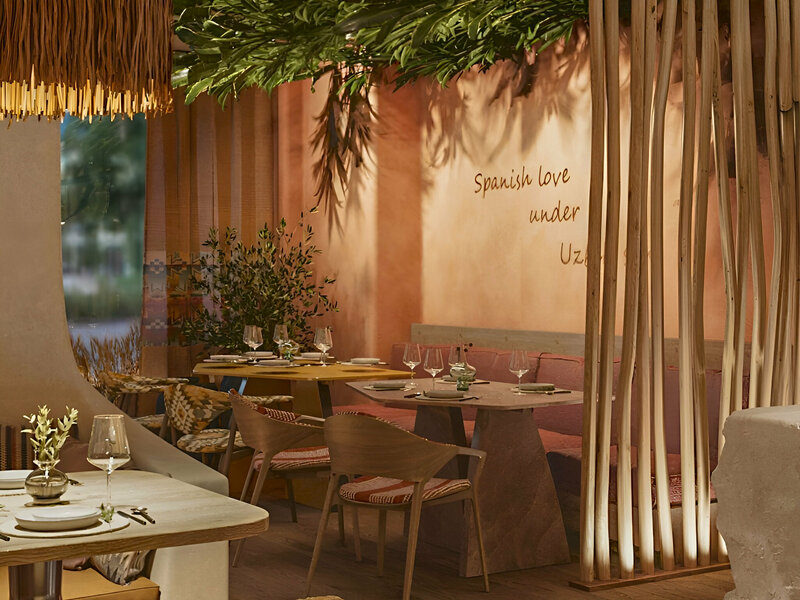
From Navruz Ethno Park, with its miniature Uzbek landmarks, to Plaza Mayor in a matter of minutes? At Quadro, it somehow works. The restaurant takes on a format still rare in Tashkent: Spanish cooking, done with confidence and a sense of play. Paella, churros, pintxos and empanadas sit alongside pasta, steaks and flatbreads. The bar follows the same route with cocktails like Night Madrid and Fire of Málaga, while the wine list moves through cava, albariño and garnacha, arranged by profile — from light and mineral to fruit-forward and jammy. Still, the connection to home remains. Jamón is made from lamb, pesto with suzma, and local wines have their place on the list. In the interior, Andalusian motifs are woven together with national ornament.
The Choyxona
Today Calls for Choyxona
Handled with the right hand, the gold of the past becomes the currency of the future. In that spirit, not far from the world of Alisher Navoi, Roman Saifullin has recast the choyxona — the everyday banquet, the gathering that needs no occasion — for the present tense. The Choyxona is a complex of 13 private rooms, but there is none of the expected bazaar excess. Instead, it speaks in monochrome neo-Orientalism — closer to I. M. Pei in Doha than to decorative nostalgia. Adras chapan patterns are translated into contemporary art; the private rooms could embarrass a business-jet cabin: screens, leather, comfort, design. For this new-old ritual, guests have learned to order plov and kazan kabob in advance — pasta and ribeye require no such planning — and to surrender to the festive décor: giant flowers, vast balloons, scenes so improbable they look AI-generated, except everything is entirely real.
The Choyxona
Zira
Like, Share, Hot dog
Irina Salikhova, the mind behind the café near Tashkent City Park, is not only a pastry chef but a media manager — and Zira feels built with that instinct for narrative. Strong branding, a bakery stocked with danishes and tarts, drinks that know the moment: smoothies, rafs, lambics. The menu moves in the same key: creative breakfasts, seasonal dishes, clever comfort food — meatballs and croquettes, a hot dog with zucchini caviar, a chicken sausage baked in dough with mozzarella and cornichon. Cover material, frankly. The first-year numbers speak fluently enough: 53,265 guests, 15,982 macarons, 4,199 croissants, 2,409 shakshukas. Statistics worth making public.
Kuranty
Looping Through Time
Kuranty is an architectural landmark at the heart of the capital: from Amir Temur Square, Tashkent seems to run outwards in every direction. In 1947, a trophy clock mechanism was set into the tower, its Stalinist neoclassicism recast through national decorative craft. In the twenty-first century, the place has found a new rhythm. The restaurant is now produced by the extravagant Pavel Georganov, and this version of Kuranty keeps pace with the present without missing a beat: provocative marketing, a bold interior with a statement chandelier and cat-print chairs, parties, cocktails and comfort food — rolls and cutlets, with the Kyiv cutlet especially worth noting, plus pasta, burgers, tom yum and achichuk.
Loft
Osh, My God
No one really calls Pavel Georganov’s Loft by its official name. To everyone else, it is Pasha Pasha’s Cafe Cafe — the joke being, briefly, the habit of naming a place after its own format. The humour here is deliberately sharp, and not exactly family-friendly: it runs from the posters to the latte art. The prices may require a little emotional preparation; so may the portions. Half a litre of cheese ramen, a half-kilo club sandwich, the 2,500-calorie Borzy burger. On Thursdays, the plov is just as ambitious: the luxury set, with shakarob and bahor salads, pickles and flatbread, is best booked in advance. Appetite can be built nearby — the aquarium and Magic City, Uzbekistan’s answer to Disneyland, are just around the corner.
Myasnoy
Fire Theatre with Tomahawks
AB Group’s meat restaurants make no attempt at subtlety — and why would they? At the twin addresses on Rustaveli and in Tashkent City, anyone in search of a T-bone, a rack or something more primal will find a direct answer: ribs, tails, shanks, bone marrow, lamb neck, and steaks from dry-ageing chambers. The current Turkish butcher playbook is here in full force: kebabs, beef lokum and high-drama tableside service, pushed almost to performance art. Tenderloin is dressed in gold leaf, cocktails are torched, and on weekends the room gathers for a brisket show: a three- to four-kilo cut, sixteen spices, sixteen hours in the oven, carved in the dining room with full theatrical effect and shared with guests. The wine list, lunches and children’s menu — everything here comes with a sense of hot show.
RybaLove
Waters of the Naryn
Smart Group, led by Sanjar Maksudov, offers a love letter to local fish. In a firmly continental country, the catch comes from rivers — including the Amu Darya, Central Asia’s fullest — as well as lakes, canals and reservoirs. The local omega-3 stars are carp, catfish, pike-perch and trout; at RybaLove on Seoul Embankment, they appear from the Josper and the fryer, as steaks and crudo, in fish soup and cutlets. Zander tartare, trout hwe and tilapia in cream sauce are backed by litre jugs of sangria, white wines from Chile to Georgia, and an interior full of nets, a boat, shoals of small fish overhead and a steampunk anglerfish.
Syrovarnya
Big Cheese by «Uzbekistan»
Across Novikov’s Syrovarnya restaurants — 45 of them worldwide — the formula is consistent: Italian cooking, familiar comfort dishes from Olivier salad to cutlets, and house-made cheeses that appear throughout the menu and at the shop counter. The Tashkent branch, however, has its own weight. Opened in 2021, it was among the first premium restaurant franchises to set a new benchmark in Uzbekistan, built on the partnership between Arkady Novikov, Family Garden and Alisher Akramov’s AB Group. And then there is the location: Amir Temur Square — simply «the square» to locals — beside Hotel Uzbekistan, an icon of seismic modernism. Its defining codes of function, identity and resilience feel, in their own way, perfectly aligned with the Novikov restaurant language.
Yuzhanin
Dance, Without the Melancholy
A sibling to the Krasnodar original, this project by Novikov Group, Family Garden and AB brings a contemporary take on Caucasian cooking. The grill, oven and tandoor run without pause; alongside the classics come chebureki with shrimp and crab, khachapuri with trout, chkmeruli with broccoli and truffle oil. At Yuzhanin, by Tashkent metro — a standout of local modernism — everyone ends up dancing. Evenings draw an adult crowd for concerts and parties, with wine, cocktails and shisha; children have their own rhythm, from seasonal celebrations to mastering the Wednesday dance with animators. The setup reflects that range: a dedicated menu, workshops, and a large playroom with a dry pool and slides.