The main focus of this project is clear from its name. People gather at Kuzu every day, without any special occasion, and order plenty of meat. The tandoor oven is used to cook beef and chicken, peppers are densely stuffed, dolma is wrapped, and lamb is cooked in the oven. Pide and lahmacun are prepared nearby. The feast is complemented by meze and marinades: cabbage, cucumbers, and peppers.
The Papakha team is ready to welcome guests at any time of the day. From 10:00, they serve eggs, cheesecakes, croissants, and other classic breakfast items — the kind that should start every day, especially with coffee nearby. The menu expands during the day and in the evening: pasta, burgers, schnitzel, tom yum, poke — with no strict adherence to a single cuisine. There’s also a dedicated section for Dagestani dishes: chudu with various fillings, khinkal, and kurze, all prepared with respect for tradition.
A friendly restaurant suitable for everyday meetings and special occasions. Of course, people come here not just for pilaf — the extensive menu at Plov Lounge includes global hits: ramen, steaks, pasta, and grilled kebabs, all following recipes by chef Igor Larionov. However, the focus is on the colour of the East: they prepare teahouse and festive pilaf, lagman, nokhat shurak, karam dolma, classic and signature manti — including black manti with salmon.
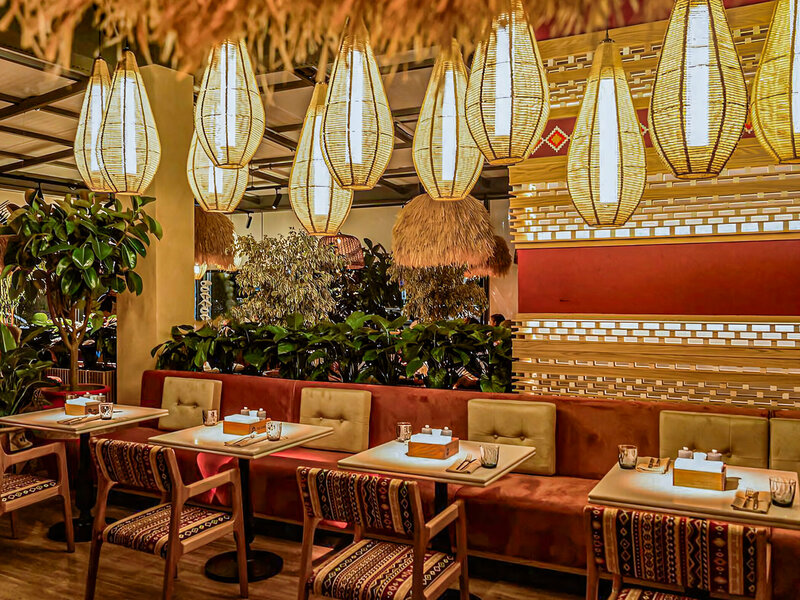
The second Georgian restaurant from Novikov Group and Family Garden, opened in collaboration with the Tashkent holding AB Group. The interior of Pro.Khinkali features ethnic motifs, vibrant red accents, plenty of greenery, and charming details like jars of fruits and nuts. Khinkali are made not only with meat — there are also versions with cheese and tomatoes, potatoes, and mushrooms, which are boiled or fried. Khachapuri and lamadjo are baked in the oven, while kebabs and lula kebabs are grilled.
The Turkish brand Ramiz was founded in 1928 and has since grown to 160 branches, each preserving the traditions of making köfte — the flagship dish of the project. Turkish meatballs are served here on bread, with vegetables, potatoes, or rice, and various spices. Other local dishes are also available: kebabs, sucuk, and spreads.
This space is more about culture than just food. The project combines a restaurant, a teahouse, and a cinema. The restaurant offers dozens of types of pilaf, from Bukhara to Samarkand. The recipes are authentic, the portions are generous, and the prices are friendly — the entire Eastern menu follows the same principles. In the teahouse, tea is served with respect for tradition, and the cinema shows films about pilaf and the people who cook it. The Eastern interior enhances the atmosphere, and the scale of the project can be imagined by this detail: a real river flows through the territory of the «Pilaf Museum».
Photos: restaurant websites and social media; Yandex Maps