For the sort of borscht that restores one’s peace with the world, go to Bitanga. This small, independent Ukrainian restaurant has, mercifully, resisted the compulsion to reinvent itself after moving address. Its essential dishes have travelled with it — thank heavens: a rich borscht with pampushky and astonishing garlic butter; the stalwart herring under a fur coat; and, since restraint has plainly left the room, kholodets. It is food that has already made everything feel better by the time you recall that you had intended to eat lightly.
One small recommendation: order a house-made nalivka alongside. Not because lunch needs enlivening — it is more than capable of that on its own — but for the sake of a complete gastronomic picture.
For years, the restaurant world made a virtue of surprise. Tasting menus turned dinner into a run of small revelations; familiar ingredients took unfamiliar forms; foams, gels and every conceivable texture appeared on the plate. Food became an experience, and dining out a kind of cultural appointment. To keep up, one needed an appetite for novelty, a familiarity with chefs and technique, and—ideally—a view on whether the latest gastronomic proposition had made its case.
It was exhilarating. Until, inevitably, it became a little tiring.
In February 2024, Condé Nast Traveller examined the return of retro food to London’s restaurant scene. Chefs were revisiting the classics — apple crumble, and the desserts once inseparable from a celebratory table — in search of the flavours of childhood. After a spell in which novelty had so often been pursued for its own sake, familiar recipes and inherited traditions were finding their way back into the kitchen.
There is a curious paradox in this. We do not necessarily wish to return to the past, yet we increasingly want to recover the way we once felt within it. The scent of freshly baked bread, butter or tomato sauce can carry us back to a particular table, kitchen, journey or person more swiftly than anything in the camera roll. Memory, after all, has an eccentric sense of direction: a single mouthful can achieve more than an hour spent revisiting old photographs.
Nor does nostalgia have to arrive as grandmother’s pie or a mother’s cutlets. At times, it takes a far less sentimental form.
English edition by Yevgeniya Yussupova
The return to straightforward ingredients does not make restaurant cooking any less ambitious. In 2026 restaurant-trend round-ups, attention is increasingly turning to the familiar — potatoes, cabbage, baked goods — given new life through the quality of the produce and the chef’s command of it. What comes to the fore is not the ingredient’s exoticism, but what it can become.
This is good news for restaurants and their guests alike. There is no need to choose between ambitious cooking and a plate that offers familiar pleasure. One evening, a complex tasting menu may be exactly right; the next, all one can think about is a plate of lasagne. One can take an interest in fermentation, then take enormous pleasure in a simple piece of toast with good butter. Perhaps gastronomy has simply grown a little more mature in its understanding of pleasure. We no longer have to demonstrate our openness to the new with every order, or choose the menu’s most unusual dish to prove that we know our food. We certainly do not need to turn every dinner into an occasion that must later be recounted.
Sometimes we want an experience. At other times, we want the familiar, soul-soothing food that warms us from within. There is no contradiction in that. We have not stopped loving culinary discovery; we have simply remembered that food is not only there to surprise us. Sometimes, it is there to make us feel at home.
Modern life bears an unsettling resemblance to an endless menu. By morning, we have already decided what to wear, what to eat, which messages merit a reply and which task comes first. Then come the choices at work: options to weigh, proposals to compare, information to verify, something to order in, an evening to arrange. By the time we finally sit down at the table, we are already a little tired. And there is another menu waiting. Perhaps a seasonal menu, too. A wellness menu. The chef’s special.
Is another revelation really what we want at that point? Sometimes, absolutely. But there are evenings when one simply wants dinner to be exempt from strategic planning: to order something one knows will please, and reserve what remains of one’s energy for the person across the table. Or, at the very least, to look out of the window in peace rather than checking the protein count of one’s dinner.
Popular psychology has made cortisol the stock villain of contemporary life: the stress hormone held responsible for every minor malaise. Yet the issue is not that each of us is necessarily living with raised cortisol levels. It is the familiar state of overload, when even a welcome choice begins to feel like work. Psychologists call this decision fatigue — and, in the wrong moment, a restaurant menu can become one more claim on already depleted attention.
Familiar food is, in its way, a small luxury. It requires no homework, does not wrong-foot you, and makes no demand for a verdict after the last bite. You remember how much you like borscht; you realise you have not had it for too long; you eat it, and are happy. Reflection may be dispensed with, if possible.
Nostalgia is not always a matter of childhood. It may be the plate of pasta first tasted in a little trattoria while travelling; the perfect sandwich from a café visited every day in another city; the first oysters, ordered with a certain bravado on holiday. What we miss is not simply the food, but the life that gathered around it: long, unhurried lunches; conversations we were reluctant to end; the sense that an evening did not have to be made into another achievement. Food offers a brief return to a place where we were happy.
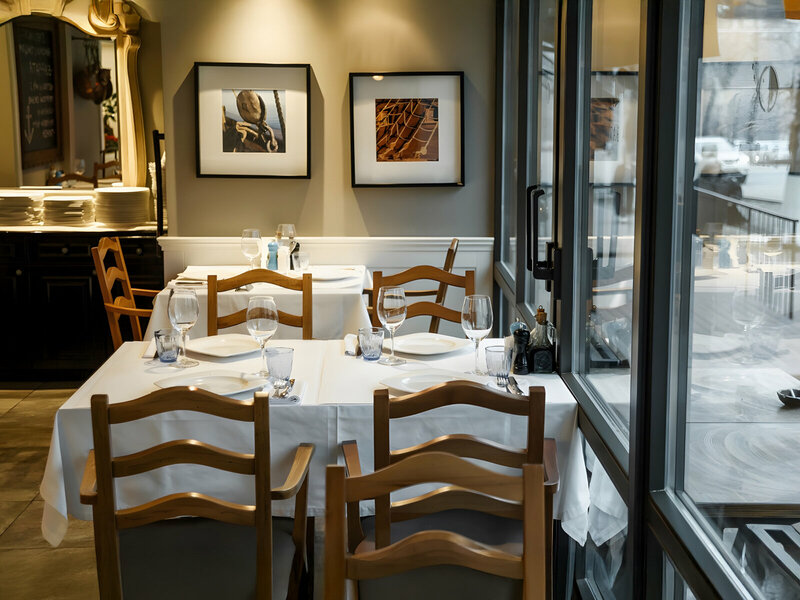
There are places in Almaty one goes not so much to eat as to change one’s geography for a little while. La Barca is one of them. After all these years, it is still exactly itself: blue tile, stacks of plates at the bar, oysters on ice in a metal bath, white tablecloths, only a few tables. Nothing here is self-consciously resort-like. Rather, it suggests a small fish restaurant somewhere along the Adriatic: the sort of place one wanders into with salt still in one’s hair after the sea, then stays for lunch rather longer than planned. Such places possess a rare gift. They can make a holiday feel close at hand, even when the sea is several thousand kilometres away and, regrettably, work awaits in the morning. Order oysters, something with olive oil and lemon, pour the wine, and allow lunch to become dinner without quite noticing. Some small journeys require neither tickets nor luggage. A white tablecloth, good fish and a place where no one hurries you back to reality are enough.
Simple food’s renewed appeal also reflects a growing appreciation of predictability — in the best sense of the word. A restaurant may have a fashionable interior, a striking wine list and a menu worth photographing in full. But there is another kind of address that we cherish for the very opposite reason: not because it promises surprise, but because we already know it. We know which table to request, what to order, what to drink with dinner and which dessert to leave room for. The waiter knows our habits; a favourite dish arrives exactly as it lives in the memory. These are the neighbourhood places that become a third place. No occasion is required. An ordinary Tuesday is reason enough.
Good places offer another luxury that has become rare: the freedom not to begin the relationship from scratch each time. There is no need to read the menu cover to cover, explain what you like, or worry that a dish which was perfect last time may have developed ideas of its own. You come for a familiar pleasure, and it is there.
That is why, close to midnight, Almaty’s Svetloye Budushchee shot bar is often filled with chefs eating sandwiches and plates of fried potatoes. Its Soviet patina has an unexpected charm. While restaurants elsewhere labour over their concepts, this ryumochnaya seems to have stepped aside from the gastronomic race altogether. There are no proclamations about reimagining tradition — only snacks, strong drinks and an atmosphere with no need to explain itself.
Perhaps that is exactly why it is such a good place to end a long day. Those whose profession is to surprise other people with food sometimes want nothing more than to be fed well. And if anyone has earned the right to a sandwich without a chef’s flourish, it is a chef at the end of a twelve-hour shift.
Photography: restaurant websites and social media; Yandex Maps
At Akku, it was the most unassuming things that proved unexpectedly moving: a doktorskaia sausage sandwich, and oreshki filled with condensed milk. The sort of food contemporary gastronomy might be expected to have abandoned in favour of avocado, fermentation and alternative milks. Yet that was precisely the point. No one attempted to recast either as an authorial take on the Soviet buffet, furnish the recipe with a backstory or devise a gastronomic pairing. They simply appeared on the table. It was enough.
Doktorskaia sausage, it seems, has lost none of its emotional force. Truffle oil need not enter the equation.
The renewed appetite for familiar flavours does not signal a sudden rejection of intricate technique, nor an end to culinary experiment. What is shifting, rather, is the value placed on complexity itself. As Vogue observed, Los Angeles restaurant culture had already given rise, by 2015, to Comfort Food Moderne: a contemporary vision of food made to console. Familiar dishes sat comfortably beside lighter, more current interpretations; the assurance of the cooking and the restaurant’s own character mattered as much as the visual flourish of the plate. The idea has proved unexpectedly enduring. Comfort food can be modern, considered and compelling.
Few things in cooking are as deceptive as simplicity. Pasta with butter and Parmesan cannot conceal a shortcoming beneath a complicated sauce. The evidence is immediate: the quality of the pasta, its temperature, the calibration of the salt, the quantity of cheese, the accuracy of the cooking. In flawless mashed potatoes, there is nowhere for a mistake to hide. A good tomato sauce, meanwhile, requires not so much spectacular ingredients as time, patience and a proper understanding of the ingredient.
That may explain the appeal of the finest versions of familiar dishes. They do not perform for the diner; they simply exceed expectation. There is a particular form of restaurant mastery in that: cooking that leaves technique invisible, yet makes its result unmistakable.
When the business of choosing has become tiring and nothing on the menu feels quite right, go to Unapasta for the house aglio e olio. Pasta is the team’s métier, and its apparent ease is underpinned by serious work: well-made dough, the right texture, and a measured balance of olive oil and garlic. In a three-ingredient dish, these are the things no handsome plating or florid menu copy can disguise.
Pasta is a singularly charming food. It needs no finer embellishment than an appetite and the pleasure of winding one more forkful around the fork. No ceremony, no gastronomic theorising — simply the pleasure of something delicious. Simply the best: pasta, olive oil and garlic.