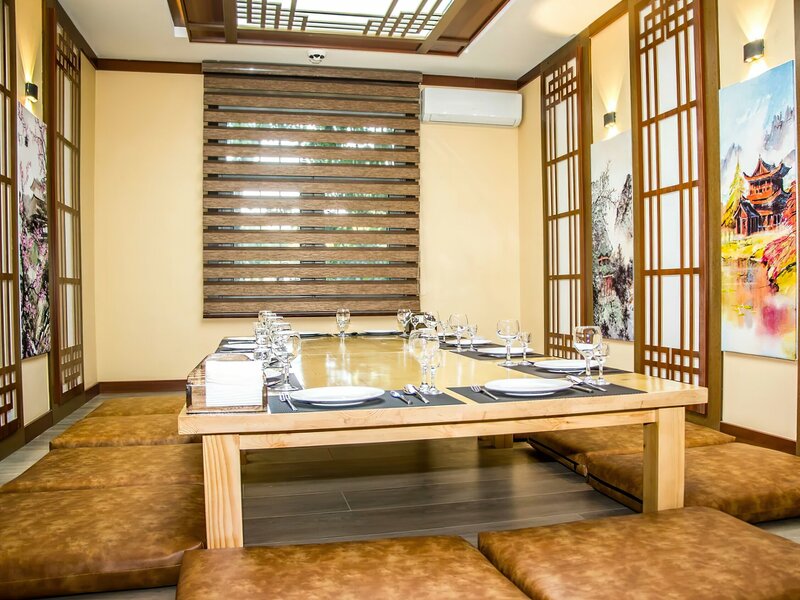
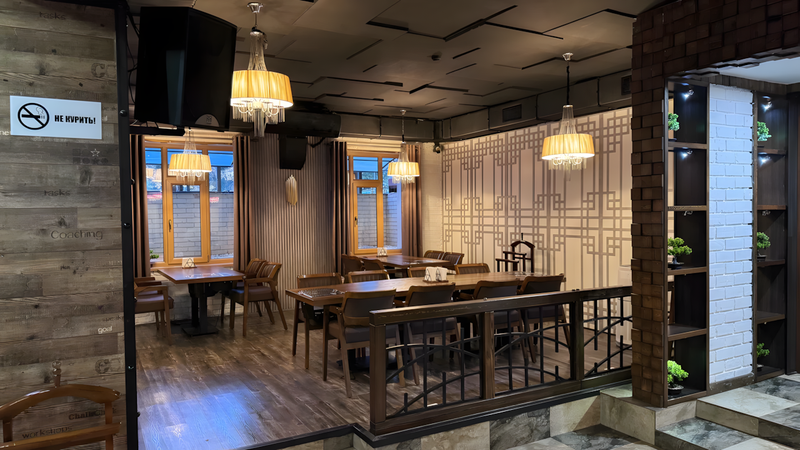
Another institution of Tashkent’s old-school Korean dining scene, Mannam has long been a fixture for family gatherings and celebrations. Its branch in the Poliotdel settlement, just outside the city, comes with a personality entirely its own. More than a restaurant, it unfolds as a sprawling all-in-one destination, where banquet halls, karaoke rooms, private dining cabins, billiards and even a swimming pool coexist beneath the same roof. The cooking stays true to the home-style traditions of the Koryo-saram community. The hwe is essential: meat or fish marinated in vinegar with onion, garlic and herbs, delivering the bright acidity and gentle heat that define the dish. Equally unmissable is the house’s ssam, an abundant spread of boiled cabbage leaves, grilled meat, rice and a deeply savoury sauce, assembled into wraps at the table. Round things off with panchani — a boldly flavoured combination of fermented fish and radish that remains one of the defining tastes of traditional Koryo-saram cuisine.
Headri is the sort of place that rarely appears on glossy restaurant lists yet inspires unwavering loyalty among those who know it. People come here with one thing in mind: deeply comforting South Korean home cooking, served without embellishment or compromise. The menu leans heavily towards soups, from the rich, slow-simmered galbitang with beef short ribs and the fiery yukgaejang with sliced beef and bracken fern to kimchi jjigae, built around fermented cabbage, and the ever-reliable cheese ramyeon. Among the mains, the godeungeo-gui deserves particular attention. The mackerel is grilled until the skin turns deeply crisp, then served with a generous spread of banchan, soy sauce and a bowl of steaming rice — everything needed for a meal that feels as comforting as it is satisfying.
Sonamu brings a more polished side of Korean dining to Tashkent, pairing an elegant dining room with an extensive menu of time-honoured classics. At its heart is executive chef Choi Jun Yoon (Mark Choi), who joined the kitchen from South Korea. Just as often as he’s cooking, he’s making his way through the dining room, sharing stories about K-food culture or preparing a hot pot feast at the table himself. Soups are a particular strength. The selection moves from deeply nourishing tang to lighter guk, with kkoritang — a slow-simmered oxtail soup — and miyeok-guk, Korea’s traditional seaweed soup, among the standouts. The yangnyeom bulgogi arrives glazed in a beautifully balanced sweet-and-spicy sauce, coating slices of tender beef, while the kkonchi jorim showcases Pacific saury slowly braised until richly flavoured throughout. Leave room for the bibimbap, served exactly as tradition intended in a fiercely hot ttukbaegi, where the rice continues to crisp long after the bowl reaches the table.
As close to Seoul as Tashkent gets, 9292 is Korean barbecue in its purest form. Even the name is an insider’s reference: pronounced gu-i gu-i, «9292» echoes gui (구이), the Korean word for food cooked over the grill. Everything begins with the meat. Beautifully marbled beef, succulent tenderloin and paper-thin slices of pork belly take centre stage. They can be brought to the table fully cooked, but grilling them yourself is the whole point. Every table comes fitted with its own barbecue and powerful extraction system, turning the meal into the unmistakably social ritual that defines Korean BBQ. An unlimited spread of banchan accompanies every order, from kimchi, pickled daikon and marinated onions to garlic, peanuts, sesame oil and ssamjang. Add steamed rice and crisp lettuce leaves, wrap everything together and enjoy it in a single bite — the classic Korean way.
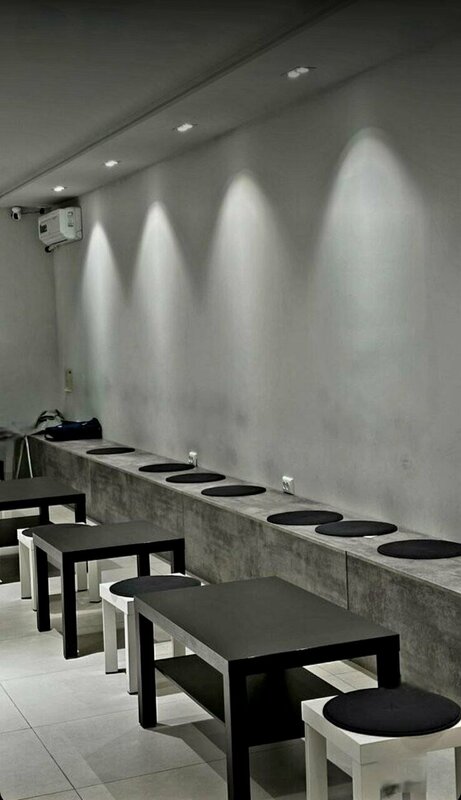
Another standout on Tashkent’s K-BBQ scene, Yoree pairs a sleek, minimalist dining room with an exceptional selection of meats and seafood for the grill. As tradition dictates, every table is equipped with its own built-in barbecue, making the cooking as much a part of the experience as the meal itself. Alongside beautifully marbled wagyu and chadolbagi — paper-thin slices of beef brisket — the menu ranges across premium seafood and alternative cuts, including salmon steaks, Kamchatka crab, tiger prawns, duck and tender racks of lamb. Among the soups, the haemultang deserves particular attention. Rich, deeply savoury and pleasantly fiery, it brings together halibut, assorted seafood and daikon in one of Korea’s most comforting broths.
One of Uzbekistan’s most enthusiastic champions of K-pop culture, Mogbang brings the energy of South Korea’s street-food scene to the table. The menu keeps things simple, familiar and boldly flavoured, centred on the classics that have become synonymous with Korean street food. Corn dogs, steaming bowls of ramyeon and crisp Korean fried chicken all make an appearance, but the undisputed star is tteokbokki. Here, the chewy rice cakes are served in the classic fiery sauce as well as in some of Korea’s best-loved combinations: sotteok-sotteok with sausages, chicken-tteok with fried chicken and rabokki with noodles. The drinks deserve just as much attention. Pair the heat with refreshing jasmine and grape or aloe lemonades, or order one of the house bubble teas — Oreo or dalgona, inspired by the caramelised sugar candy made famous by Squid Game.
Manna (not to be confused with Mannam, mentioned above) has been serving classic South Korean cooking in Tashkent since 2002. Long regarded as one of the city’s enduring favourites, it remains a reliable destination for traditional Korean comfort food. The restaurant is particularly known for its soups and jeongol hot pots. Start with suyuk jeongol, built around tender bone-in beef, or mandu jeongol filled with Korean dumplings. Then there’s seolleongtang — the iconic milky-white broth slowly simmered from ox bones and served with slices of beef and glass noodles. When temperatures climb, many regulars turn to mul naengmyeon, icy buckwheat noodles in a lightly sweet-and-sour broth. For something heartier, opt for dakdoritang, a spicy braised chicken and potato stew, or the juicy grilled deungsim entrecôte. A couple of glasses of traditional soju make the natural finishing touch.
Few restaurants in Tashkent are as highly regarded by South Korea’s expat community as Seoul Menga, whose reputation rests on an unwavering commitment to the traditions of Seoul’s cooking and hospitality. The dubu kimchi is a house signature, combining tender beef, deeply savoury fried kimchi and silky tofu. Equally popular is ojingeo bokkeum, where squid is stir-fried in a boldly spicy sauce. The dolsot bibimbap is another essential order, arriving in a fiercely hot stone bowl that slowly transforms the rice along the base and sides into nurungji — the prized golden crust every Korean hopes for. The banchan comes closer than almost anywhere else in the city to the standards of Seoul. Every main dish is accompanied by a generous spread of seasonal side dishes, where fermented root vegetables sit alongside less familiar varieties of kimchi, including broccoli, spring onion and radish.
No exploration of Korea’s contemporary food scene would be complete without bagels. Seoul is in the midst of a full-blown bagel craze, and The Stella Bagel Cafe brings that very chapter of modern Korean food culture to Tashkent. For something savoury, choose the bagel with lightly cured salmon and silky cream cheese, or the more unexpected combination of nori and sesame. If you’re in the mood for something sweet, the rice-flour hotteok bagels filled with nuts — a tribute to Korea’s beloved street pancakes — are hard to resist, as are the pretzel bagels topped with flakes of sea salt. The sandwiches are equally tempting, from sweet-and-spicy bulgogi beef to jalapeño corn bread. Pair your order with Korea’s quintessential iced Americano or a delicate strawberry latte. Sounds like the perfect brunch, doesn’t it?
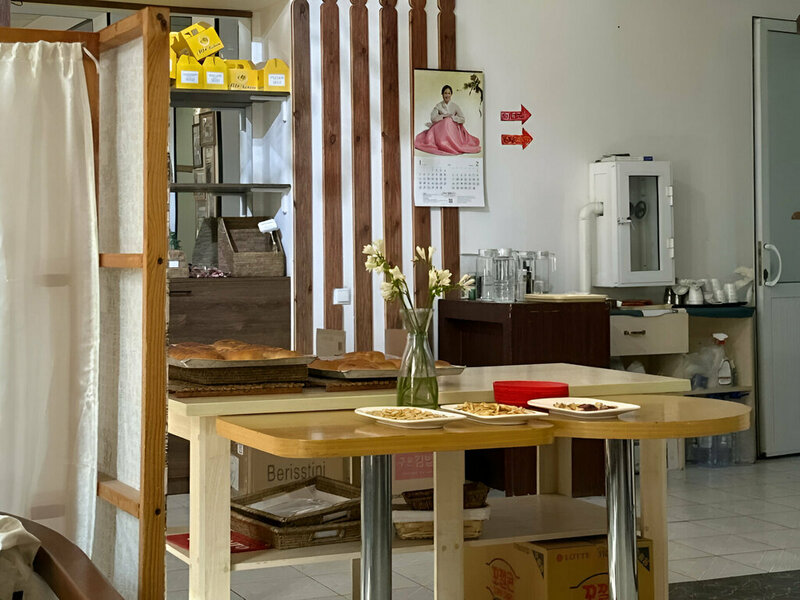
Alfa brings together a traditional Korean home-style restaurant and a Korean bakery under one roof. For this guide, however, it’s the baking that deserves your attention. Don’t leave without trying kkwabaegi — Korea’s iconic twisted doughnuts dusted with sugar and cinnamon — or patppang, feather-light yeast buns filled with sweet red bean paste. Available by advance order are beautifully delicate gyeongdan, soft rice-flour dumplings coated in crushed nuts or sesame, alongside manju, neat little cakes filled with smooth chestnut paste. Another house signature is patbingsu, Korea’s legendary summer dessert. Here, it begins with impossibly fine milk snow, generously topped with ripe fruit, sweetened condensed milk and sweet adzuki bean paste.
A cosy café-pâtisserie with a clean, minimalist aesthetic, Roun’D is the place to come for beautifully crafted desserts and drinks infused with Korea’s unmistakable sense of gwiyeoun — irresistible charm and cuteness. Don’t leave without trying the house strawberry cake, the feather-light dacquoise — the French classic that has become a sensation in Seoul — and the celebrated fatcaron, Korea’s generously filled take on the macaron. The drinks are every bit as distinctive. Look out for traditional Korean teas, from the gently spiced herbal ssanghwa-cha to warming daechu-cha made with jujube. When the temperature rises, cool off with the ever-popular taro bubble tea or the café’s summer favourite, the refreshing Sunrise Shot lemonade made with Blue Curaçao syrup.
A concept café that perfectly captures the mood of Seoul’s hip café districts, Dosan is the place to come for impeccably brewed specialty coffee and one of the city’s finest introductions to Korea’s alternative brewing culture. Alongside the classics, the drinks menu features some of the beverages most closely associated with Seoul’s contemporary café scene. The Korean sweet potato latte is a must, followed by black tea infused with grapefruit and honey. Everything is baked in-house, including the café’s celebrated croffles — the crisp meeting point between a French croissant and a Belgian waffle. The custard and matcha versions are particularly good. Another signature is the crookie, the now-iconic hybrid of a croissant and an American chocolate chip cookie that has become one of Korea’s defining instagram-trends.
Instagramable cafe Cocochou channels the unmistakable aesthetic of Seoul’s boutique cafés, where beautifully considered interiors are matched by an equally thoughtful approach to coffee. Expect lightly roasted beans and inventive cold brews prepared in true Korean style. The pastry menu’s signature is its individual cakes served in cups, offered in flavours such as ripe mango, melon and delicate lotus cream. Equally deserving of attention are the choux injeolmi, delicate choux pastries filled with roasted rice flour cream. Don’t leave without trying the ddujeongkku — the viral pairing of chewy mochi and crisp Dubai chocolate. On the savoury side, there’s gimpan, a clever reimagining of gimbap made with crisp flaky pastry in place of rice, and salad-ppang, Korea’s answer to the hot dog, served in an airy doughnut-style bun.
If there is one name synonymous with Koryo-saram cooking in Tashkent, it is Chenson. For generations, local families have gathered here for weddings, celebrations and generous shared meals. The first restaurant opened in 1999; today, the group spans four locations across the city. This is the place to experience the classics. Pillowy pigodi — steamed buns filled with meat and cabbage — remain a signature, alongside an extensive selection of gimbap and the restaurant’s celebrated puktyai, a rich, hearty soup built around a deeply savoury paste of fermented soybeans. In summer, though, the spotlight belongs to kuksi. Few places prepare it with such consistency: the kuksi-muri is beautifully balanced, striking the right sweet-and-sour note, while the generous assortment of chumi — finely sliced vegetable and meat salads — completes what many consider one of the city’s finest bowls.
Makkoli Light effortlessly brings together the home cooking traditions of the Koryo-saram community and the flavours of contemporary South Korea. Come for the cloud-like gyeran-jjim — a steamed egg soufflé with vegetables — and pajeon, delicate rice-flour pancakes filled with garlic chives, kimchi or seafood. Equally essential are the Koryo-saram salads that have become part of everyday life in Tashkent: kadi-cha with aubergine, kosari-cha with fernbrake, crisp kamdi-cha made from finely shredded potatoes, chirgumi-cha with soybean sprouts and, of course, the morkov-cha almost every local grew up with. The restaurant takes its name from Korea’s traditional rice wine, makgeolli. This cloudy, lightly alcoholic drink remains true to its roots and appears on the menu too, making it almost impossible to leave Makkoli without ordering a glass.
Photos: Restaurant websites and social media; Yandex Maps