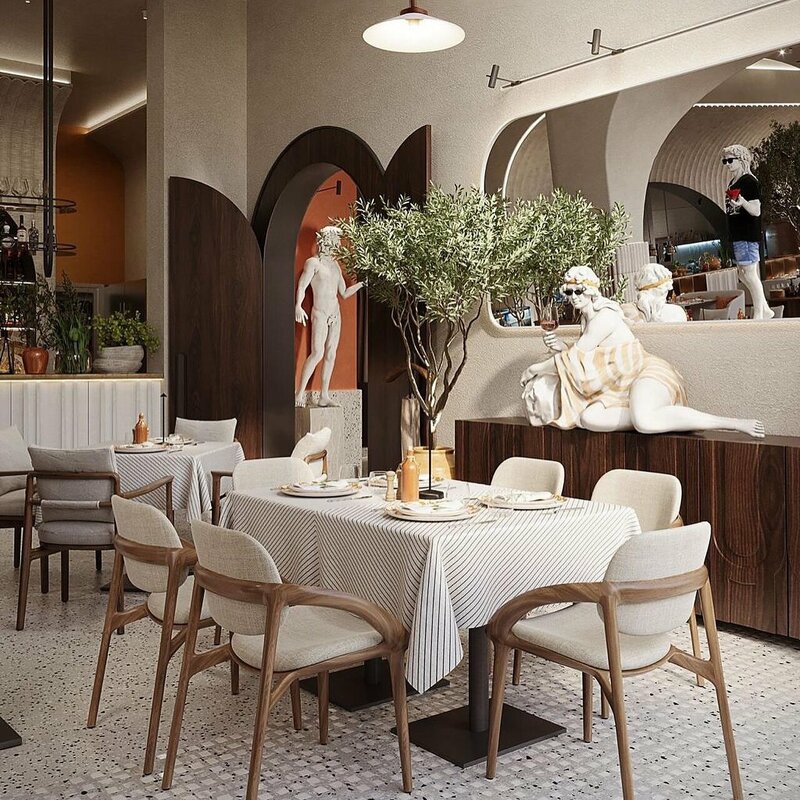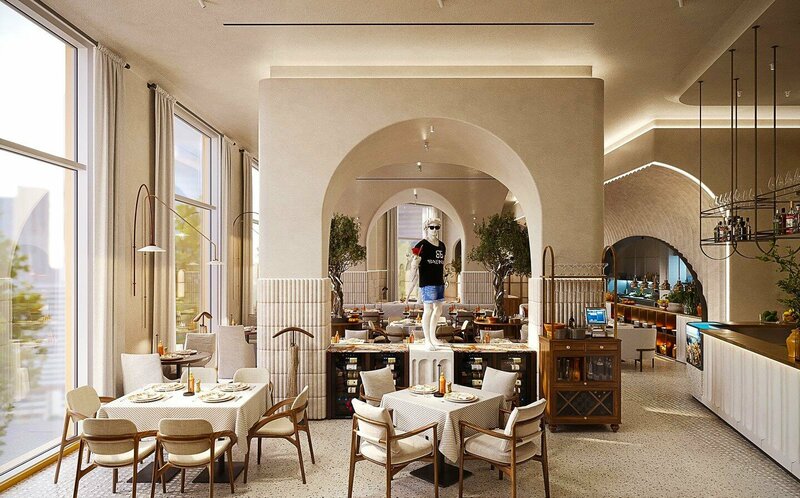
After a walk through Zhetysu Park, Dio Grand Cafe offers an easy shift into a Greek-inflected lunch. The menu is made for a full day at the table — breakfast, lunch and dinner moving naturally into one another. Mornings bring syrniki with halva, farm kaymak and berries. Later, the kitchen turns to dishes with more weight: a slow-braised rib on an edible bone, served with white cabbage steak. The dough is one of the signatures here — fermented for 72 hours and used, among other things, for panuzzo with mushrooms, truffle sauce and stracciatella. The interior is another reason to come. Dio Grand Cafe has received an Asia Pacific Property Award, part of the International Property Awards, one of the world’s leading prizes in architecture and design.
Just steps from the Presidential Park, Mandarin unfolds in soft shadow and restrained Asian-inspired elegance. The interior deserves its own moment: low lighting, intimate proportions and a sense of privacy that turns dinner into something more atmospheric. The menu is deliberately compact — a single page — but confidently assembled. Start with the shrimp popcorn and mango sauce, move to the karaage chicken ramen, then the beef with bulgogi mushrooms, and the table begins to feel like a journey moving quietly from Tokyo to Seoul by way of Beijing.
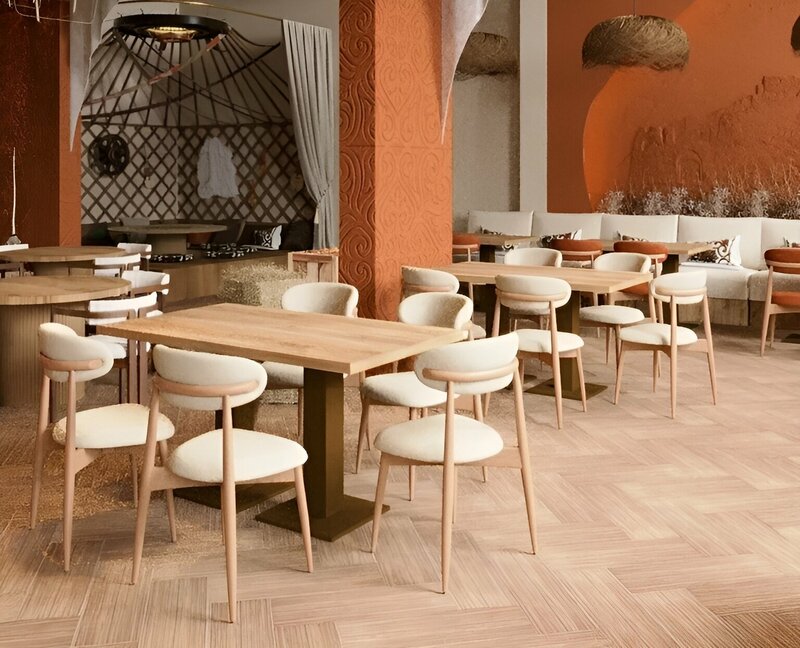
Part of the Aula restaurant group — also behind Kazbek and Laliko — this project presents Kazakh culture on a grand scale, but through forms that feel familiar and welcoming: generous portions, clear flavours and a strong sense of hospitality. The kitchen is led by Evgeny Pleshankov, known for the more daring worlds of Ryba Pila and Lou Lou, which makes his work with national cuisine especially compelling. The menu is built like a gradual introduction to the Kazakh table: first, tandoor bread and samsa with lamb or pumpkin; then fuller, richer dishes such as bai fish soup with salmon and zander, beshbarmak and grilled kazy.
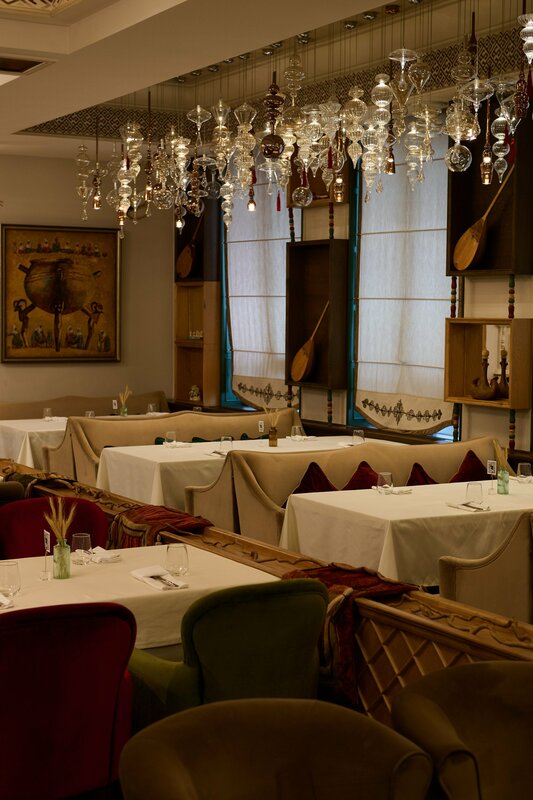
Qazaq Gourmet has long been one of the capital’s most compelling addresses for high Kazakh cuisine. The interior draws on cultural memory with restraint: a dombra on the wall, antique chests, embroidered korpe, and a private room that quietly recalls the form and intimacy of a yurt. Brand chef Artyom Kantsev builds the menu as a journey through Kazakhstan’s regions, moving between recognisable classics and more daring readings of tradition. This season turns to meat: saiga pâté with smoked pumpkin and barberry marmalade, camel mortadella with pine nuts and honeyed tomato, young-camel kazy with a trace of barbecue smoke. Dessert carries the idea further: tuzdyk ice cream with baursak and black caviar.
At Uno, farm-to-table is not a borrowed phrase but the working logic of the restaurant. The project has its own farm in the Akmola region, where vegetables, berries and herbs are grown, poultry is raised, and Holstein cows supply the dairy. The same approach continues in-house: mozzarella, halloumi, truffle caciotta and other cheeses come from the restaurant’s own creamery, while tartines and baguettes are baked through the night. The ideal scenario is to settle onto the terrace and let the table fill itself slowly with summer: burrata with sun-ripe tomatoes and pumpkin-seed pesto, duck leg with a dark wild-berry sauce, river trout with young spinach, and strawberry tiramisu with ice cream. The bar follows the same line — kvass, detox blends and seasonal cocktails that keep the focus firmly on natural ingredients.
Images: restaurant websites and social media; Yandex Maps