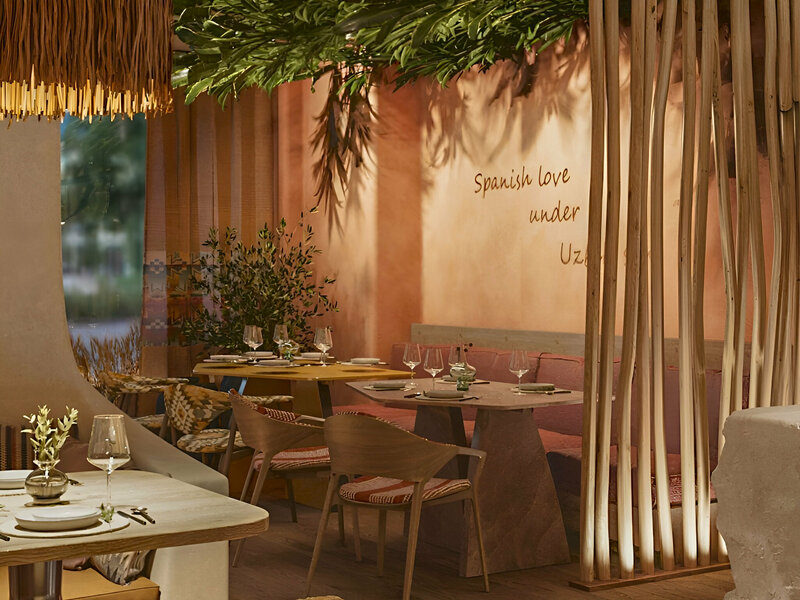
Tashkent’s leading address for contemporary Spanish cooking, Quadro is less about the familiar comforts of traditional taverns and chiquiterías than a distinctly modern interpretation of the country’s culinary traditions. Expect dishes such as a miniature paella served with tagliata of locally raised beef, alongside a Basque cheesecake finished with buckwheat popcorn. At the heart of the kitchen is dry-aged meat, cooked over charcoal using the traditional asado method of slow-fire grilling. Behind the bar, cocktails take their inspiration from Spain’s different regions, while sangria is served the way it should be — by the litre.
What if Tashkent had a sea? Kaspiyka is built around precisely that idea. Fishing nets suspended overhead, Breton stripes, seashells, wooden boats and even white sand underfoot create the atmosphere of a seaside harbour — only interpreted through a more refined, almost Jacquemus-like lens.
Restaurants with panoramic views have a habit of relying on the panorama. The food is often secondary, the drinks list predictable, and half the room is busy filming the sunset. Oko is one of the rare exceptions. Under Chef Nikita Bychkov, who also leads the kitchen at Zira Cafe, the food more than holds its own. The menu draws freely from both the Mediterranean and Asia, bringing together beef carpaccio with bone marrow, beef short rib with pineapple kimchi, souvlaki, bao, pasta and ramen with remarkable ease.
The space takes its cues from tropical islands, where sandy hues meet lush greenery, and rattan sits naturally alongside macramé. Beyond the floor-to-ceiling windows, Tashkent’s evening light becomes part of the experience. By Friday and Saturday nights, the restaurant slips almost imperceptibly into a cocktail bar, with DJs and dancing taking over. And should high heels become one indulgence too many, a pair of slippers quietly appears — a small detail, perhaps, but one that tells you everything about Oko’s hospitality.
The cooking is every bit as rooted in tradition. Naryn, samsa — the Alat version comes especially recommended — khanum and kazan kabob are all prepared with complete respect for the originals, yet presented with a quiet sense of refinement. It’s Uzbek cooking dressed for the occasion. This may well be the place to discover just how naturally plov and Champagne belong together.
Cheesemaking has always been at the heart of Syrovarnya. Today there are more than sixty restaurants bearing the name, all known for their own production, from burrata worthy of Puglia to five other house-made cheeses. Enjoy them on their own or woven throughout the menu, whether in crisp seasonal salads, warm focaccia or freshly made pasta. Whatever you choose, leave room for dessert: the banana brownie and berry tarts have earned their reputation for good reason.
If you’re in the mood for Uzbek cooking but not the familiar folk aesthetic that so often comes with it, Lali strikes a beautifully judged balance. Along the open kitchen runs a hand-painted frieze by artist Nadezhda Rakiyeva; displays of fruit, vegetables and sweets recall the bustle of an Eastern bazaar, while glazed turquoise ceramics suspended overhead echo the domes and intricate mosaics of Registan.
Lesnoy leaves an impression for more than one reason: the cooking, the atmosphere and, perhaps above all, the greenery. More than 2,000 living plants fill the space, without a single artificial leaf in sight. Dinner here feels less like an evening in the city than a brief escape into a forest — an unexpectedly transporting experience in the middle of Tashkent. The name may evoke the woods, but the cooking is unmistakably contemporary. Gnocchi are made with sweet potato, broccoli steak is paired with Gorgonzola cream, and the house pizzetta brings together slow-cooked beef cheeks and kimchi. Dishes marked with an acorn symbol contribute to a tree-planting initiative, meaning that ordering dinner can also help put another tree in the ground. That’s one life list item you can quietly tick off.
Photos: the restaurant’s website and social media; Yandex Maps.
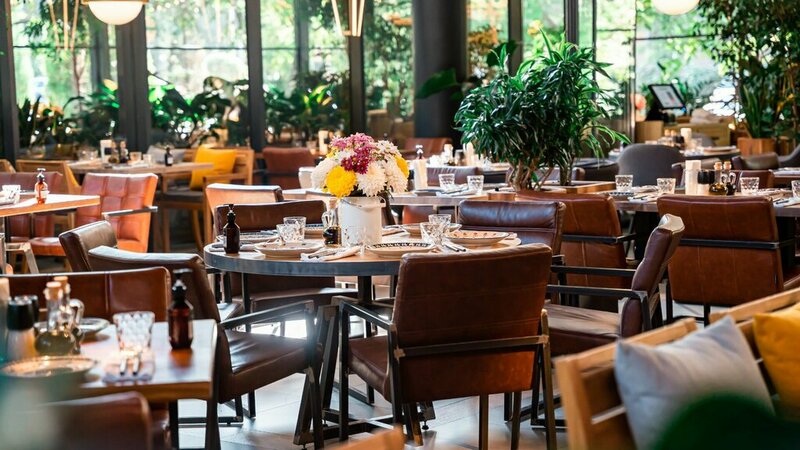
Syrovarnya was Arkady Novikov’s first restaurant in Tashkent and the city’s first international restaurant franchise to introduce global service standards — a milestone that has lost none of its significance. Years on, it remains as dependable as ever: beautiful, consistently accomplished and, if you’ll excuse the word, still undeniably prestigious. It’s as well suited to an unhurried dinner for two as it is to family celebrations or the guests you most want to impress. The restaurant describes itself as a village restaurant, though there is little that feels rustic about it. Beyond the playful name lies a soaring, light-filled dining room with an open kitchen, monumental steel-framed windows and its own conservatory. Hardly the sort of village anyone has in mind.
The restaurant takes its name from the Spanish word cuadro («painting»), and the interiors reflect the reference with quiet confidence. Andalusian ceramics and trencadís mosaics — reminiscent of Gaudí’s Barcelona — sit comfortably alongside natural materials and subtle Eastern influences.
Seafood naturally takes centre stage. The essentials include shrimp-filled cabbage rolls, mussels with tomato and basil, crispy fried anchovies and trout pasta. Or let the fish counter decide: choose whatever catches your eye from the ice display and have it prepared to your liking — grilled over charcoal, baked in foil, baked in salt, steamed or gently braised. To complete the illusion, every Kaspiyka serves sparkling wine straight from the tap.
For a family dinner, it’s difficult to think of a better choice than Ribambelle. Few places manage the balance quite so well: children disappear happily into play areas, workshops and the care of animators, while parents are left to enjoy what feels increasingly rare — an uninterrupted conversation and a hot meal served exactly as it should be. The setting is every bit as thoughtfully considered, with elegant interiors, a generous terrace overlooking Tashkent City and a menu centred on wood-fired pizzas, fresh pasta, grilled meats and Italian-inspired salads. Perhaps most importantly, Ribambelle never mistakes being family-friendly for becoming a theme park. There are no visual theatrics or sensory overload here. Children are wonderfully looked after, but adults are never treated as an afterthought.
Discover even more restaurants for every occasion and budget with online booking in the Skhodit section of the Yandex Go app.