Price: UZS 102,000
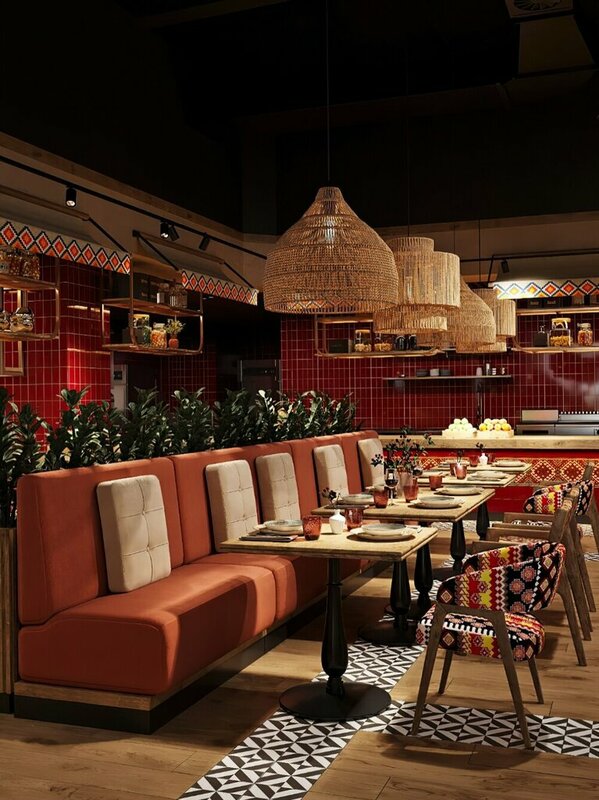
Arkady Novikov’s PRO.Khinkali is a lively city restaurant, equally suited to a large gathering or a quick lunch. At the centre of the dining room sits an open khinkali kitchen, framed by a series of confident interior gestures: pared-back graphics of Tbilisi’s lanes, woven lampshades suspended overhead, armchairs upholstered in traditional carpet motifs, and painted clay qvevri filled with greenery. The menu is built around Caucasian favourites: several varieties of khinkali, aubergine rolls, spiced satsivi and hot meat dishes.
The khachapuri arrives in a precisely formed, medium-sized boat. At the table, the waiter stirs the egg and butter through the exceptionally elastic cheese until the filling comes together as one. The crust has a crisp snap; within, the cheese is uniformly smooth, free from lumps or any hint of separation. The texture is assured, the balance exact: there is scarcely a flaw to find.
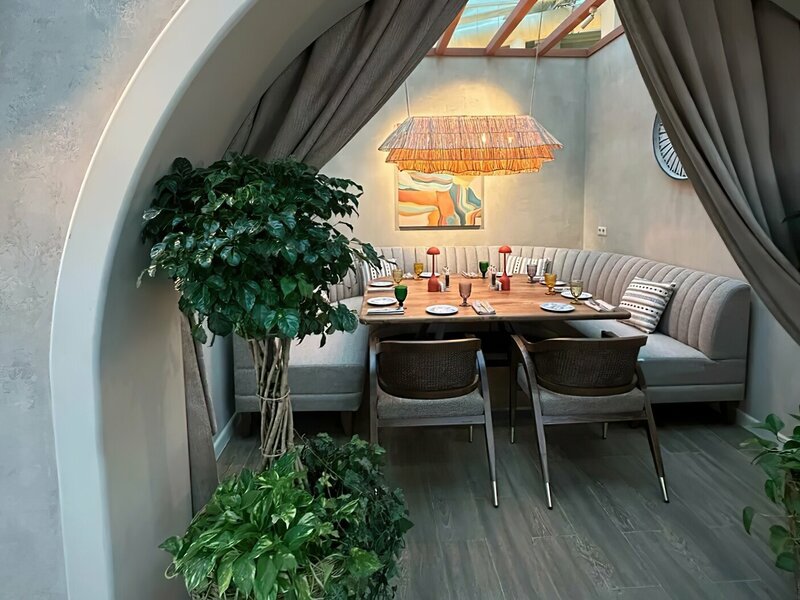
Shavi is a relatively new restaurant with a distinct character, a quietly cosy atmosphere and a pared-back interior. Its restraint is enlivened by graphic touches: stylised paintings of a figure in national dress, khinkali-silhouette patterns and wall graphics inspired by sketches of khachapuri. In warmer weather, there are tables by the entrance and a summer terrace in the courtyard. The menu pairs Georgian essentials — khinkali, kharcho, chkmeruli and chakhokhbili — with familiar city-breakfast staples such as syrniki, omelettes and croissants.
Price: UZS 75,000
The Adjarian khachapuri arrives more like a homemade pie that has lost its shape. The dough is exceptionally soft and flatbread-like, with no crispness at the edges. The cheese filling disappoints: bland and uneven in texture, it fails to combine properly with the yolk and butter. Service was also noticeably lacking on the day of our visit; there were no waiters on the floor, which did little to improve the overall impression.
Shvili occupies the landmark Novye Kuranty building in Tashkent. Its expansive dining room is flooded with light from a soaring glass atrium. Lush greenery catches the eye, as does a murmuring fountain with ornamental birds; pomegranate-shaped pendant lights lend the room further character. An open kitchen offers a view of the cooks at work — rolling khachapuri dough and sending it to the oven, or shaping khinkali before lowering them into large, steam-filled pots. The menu covers the traditional Caucasian repertoire, from spiced soups and mangal-grilled hot dishes to homestyle starters and freshly baked breads.
Price: UZS 102,000
The Adjarian khachapuri is served piping hot. The cheese is bold and distinctly salty, with a suluguni-like character: it pulls into seemingly endless strands and refuses to break. As the filling is mixed, the edges are brushed with extra butter, though it does little to give the crust the hoped-for crunch. The crumb, however, is tender and thoroughly baked. A solid showing overall, and a deserving place in the rankings.
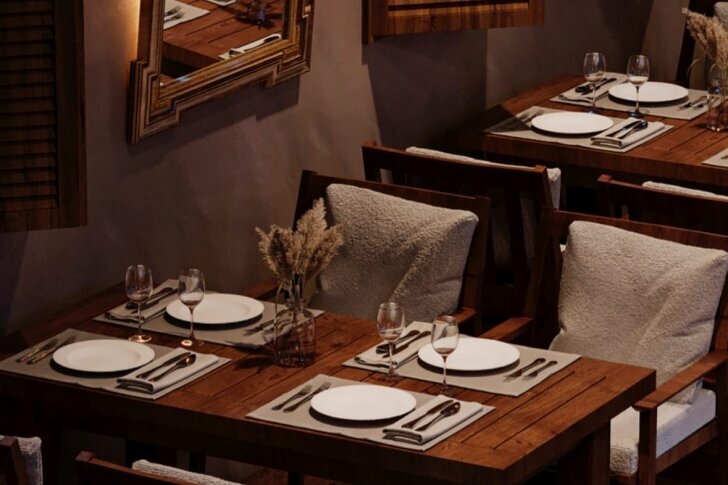
The interiors evoke a colourful Georgian wine tavern. Brick walls are dressed with drinking horns, paintings, an accordion and Georgian flags hung throughout, giving the space a distinctly homely air. Shelves are lined with souvenirs, clay jugs and jars of spices; decorative grapevines wind across the ceiling alongside silk lampshades trimmed with fringe. At each table, salt and pepper shakers shaped like khinkali provide a charming finishing touch. Upstairs, a separate banqueting room opens at weekends and for private events. The menu centres on Georgia’s gastronomic calling cards: succulent charcoal-grilled meat, rich kharcho, classic starters and fresh baking.
Price: UZS 112,000
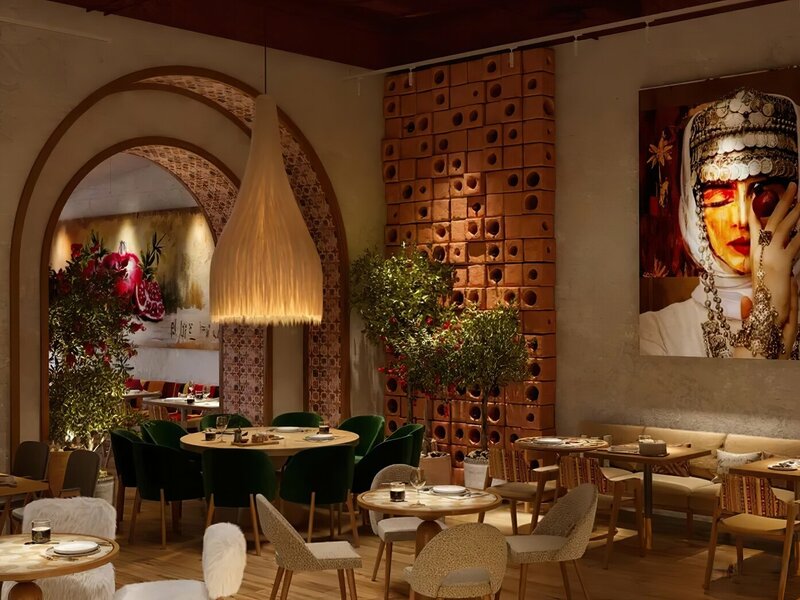
From the moment you step inside, Manana evokes the warmth and easy elegance of a hospitable Georgian home. Textured ceramics and vivid accents animate the room: garlands of red jugs and woven lamps hang above the tables, chairs are upholstered in white fur, and a pomegranate panel holds pride of place on the wall. Vertical arrangements of clay vessels stand out among the interior columns. The restaurant’s defining feature, however, is a living one: Manana, its much-loved sheep mascot, wanders freely through the dining room, lending the place a character all its own. The menu presents traditional Georgian recipes through a contemporary lens.
Not even the air-conditioning working above our table could take the heat out of this khachapuri. In place of a modest boat comes an entire ship. Beneath the puffed, blisteringly hot dough lies a generous cheese filling with a pronounced buttery richness. The filling is stirred to a smooth, elastic consistency, until egg and cheese become one. The crust along the sides lacks a clean crackle, but the depth and intensity of flavour make that easy to forgive.
Price: UZS 98,000
The restaurant is divided between two contrasting settings: a spacious, light-filled terrace and a classic main dining room. The terrace has the air of a summer garden, its ceiling thick with greenery and its panoramic windows looking out onto a landscaped promenade. Guests settle onto pale benches, while a wood-fired oven comes into view at the far end of the room. The main dining room, by contrast, has a more formal, evening-facing mood: herringbone parquet sits alongside tables draped in burgundy linen and windows framed by heavy red curtains. The menu draws on the familiar favourites of a Caucasian feast, with an expected focus on fresh baking and substantial meat dishes.
The Adjarian khachapuri arrives in a small, neatly formed boat. Its cheese filling is noticeably paler than those elsewhere in this selection, with a distinct tang to the flavour. Once again, the crust offers no crunch. What remains is a sound, straightforward bake that falls just short of the benchmark.
This Adjarian khachapuri has a notably slimmer profile than the others in the selection, with far less dough in the mix. Its base is dense and distinctly bread-like in texture. The cheese takes centre stage, its pronounced salinity drawing focus and slightly muting the other notes in the filling. The result is a substantial version whose uneven balance leaves it behind the more harmonious examples.
Price: UZS 95,000
Shavi brings up the rear: an openly weak khachapuri compounded by equally uncertain service.
One place above sits Khachapuri Park, where dense, bread-like edges and an excess of salt in the cheese throw the flavours out of balance.
Manana takes fourth place with a reliable, recognisable everyday classic, though the filling’s characteristic tang gives it away slightly.
Shvili earns bronze for its bold, full-bodied flavour and the cheese’s impressive stretch.
PRO.Khinkali takes silver: a perfectly uniform filling paired with the clean crackle of a beautifully bronzed crust.
Gruzin takes gold without question. Its khachapuri is as authentic and canonical as they come, with a sumptuous buttery flavour that eclipses any minor imperfections.